New Orleans Couple Finds 1,900-Year-Old Roman Tombstone
An anthropologist discovered an ancient Roman soldier's grave marker in her New Orleans backyard, solving an 80-year mystery. The artifact, lost during WWII bombing in Italy, is finally heading home.
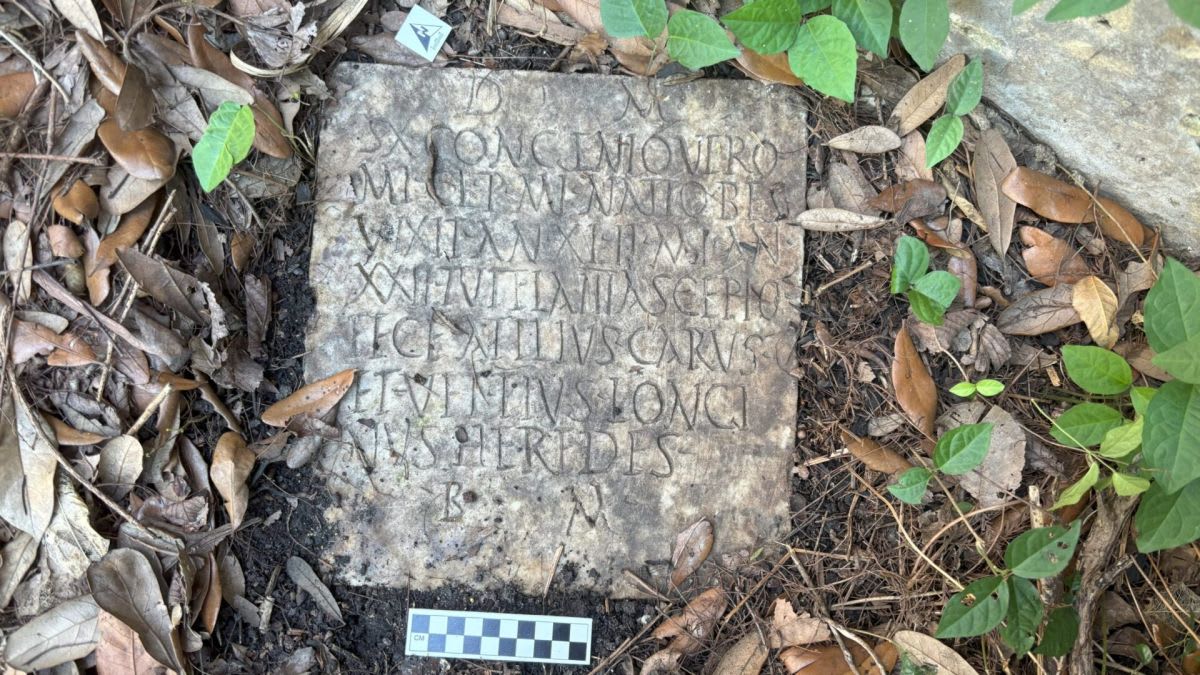
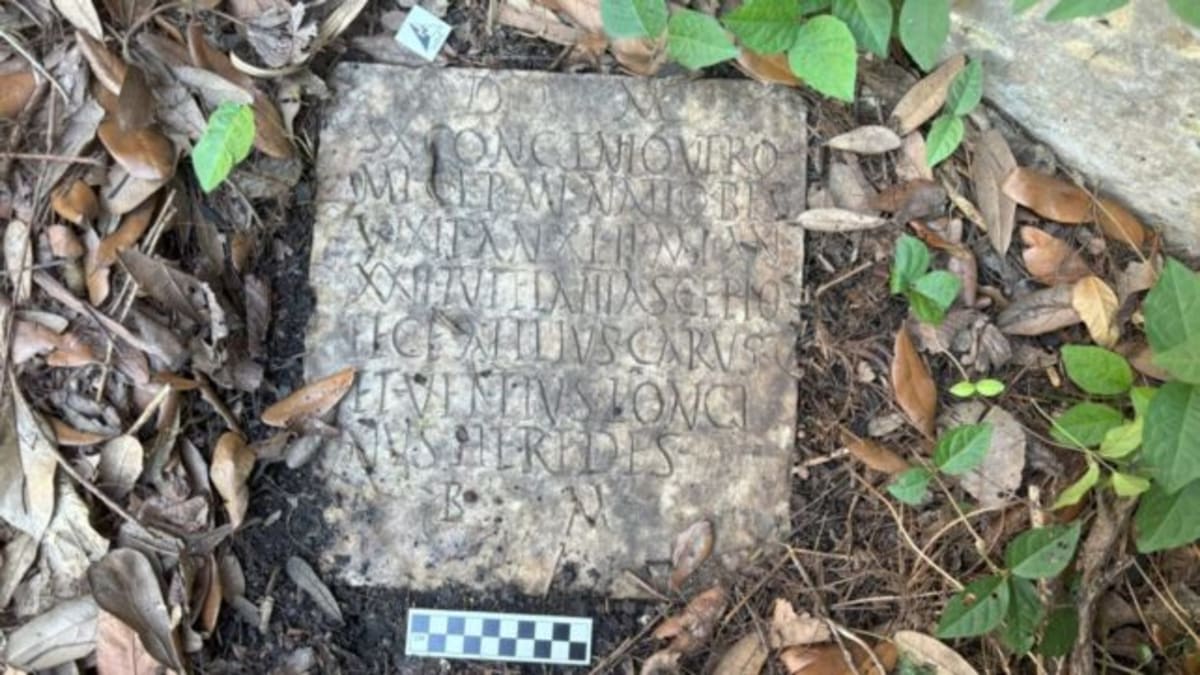
When Daniella Santoro spotted a Latin inscription reading "spirits of the dead" on a marble slab in her overgrown New Orleans garden, her anthropologist instincts kicked in. What looked like a garden decoration turned out to be an authentic Roman grave marker from nearly 2,000 years ago.
Santoro and her husband Aaron Lopez found the stone half-buried in the undergrowth of their historic Carrollton neighborhood home. The Latin phrase "Dis Manibus" gave her pause, so she did what any good scientist would do: she called in the experts.
Archaeologists from Tulane University and the University of New Orleans quickly confirmed her suspicions. The tombstone honored Sextus Congenius Verus, a 42-year-old Roman soldier from Thrace who served 22 years in the military before his death around 100 AD.
But the discovery raised an even bigger question: how did an Italian artifact end up in Louisiana? The answer lay in the home's history and the chaos of World War II.
The stone had once belonged to the National Archaeological Museum of Civitavecchia, a port town in Italy. Allied bombing in 1943 and 1944 heavily damaged the museum, and countless artifacts were lost or displaced. This grave marker was among the missing treasures, its exact measurements matching museum records.
The previous homeowner, Erin Scott O'Brien, inherited the stone from her grandfather, Charles Paddock Jr., who was stationed in Italy during WWII. He brought it home among other heirlooms, and his family displayed it in a cabinet for decades.
When O'Brien moved into the Carrollton house in the early 2000s, her mother gave her the stone as a housewarming gift. "We planted a tree and said this is the start of our new house," O'Brien told reporters. She had no idea she was decorating her garden with a priceless archaeological treasure.
Why This Inspires
This story shows how curiosity and expertise can solve mysteries that span continents and generations. Santoro could have dismissed the stone as a replica, but she trusted her training and reached out for help. Her instincts reunited a long-lost artifact with its rightful home.
The discovery also reminds us that history isn't confined to museums and textbooks. Sometimes it's hiding in plain sight, waiting for someone to pay attention.
The FBI's Art Crime Team is now coordinating the tombstone's return to Italy, where it will rejoin the museum collection after more than 80 years. A Roman soldier's memorial will finally rest again in the land he served.
More Images

Based on reporting by Google: archaeological discovery
This story was written by BrightWire based on verified news reports.
Spread the positivity!
Share this good news with someone who needs it