Complete Byzantine City Found Under Egyptian Desert
Archaeologists just unearthed an entire 1,600-year-old city beneath Egypt's Dakhla Oasis, perfectly preserved under desert sands. The discovery reveals how families lived, worked, and worshiped in a thriving Byzantine community centuries ago.
Deep beneath the sands of Egypt's Dakhla Oasis, archaeologists have discovered something extraordinary: an entire Byzantine city frozen in time for over 1,600 years.
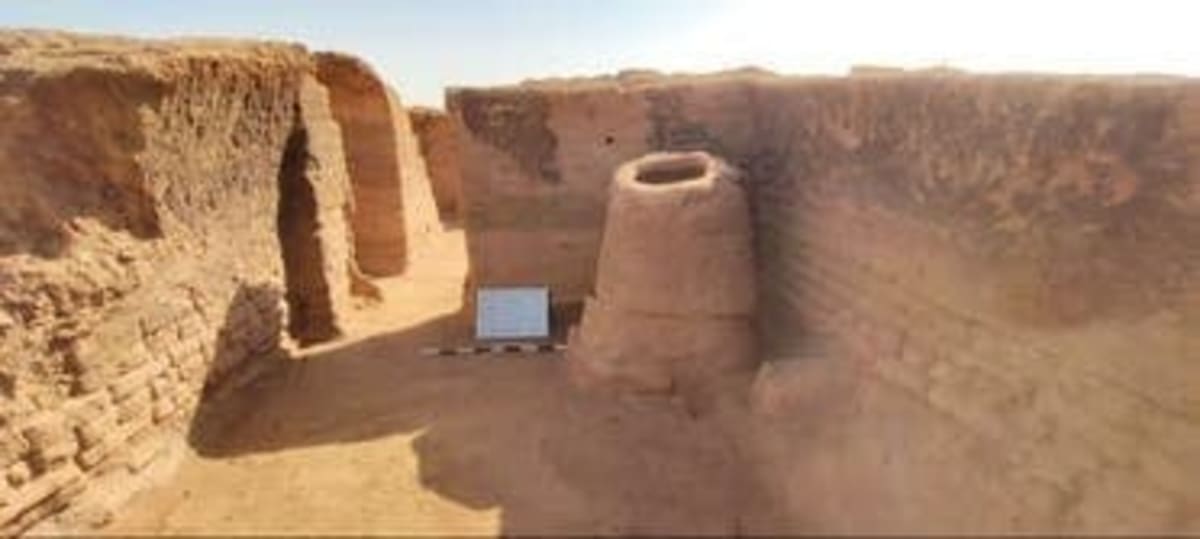
The Egyptian Supreme Council of Antiquities uncovered the complete residential community at the Ain Al-Sabil site in New Valley Governorate. Unlike scattered ruins, this city emerged intact with its streets, homes, and public spaces still showing how people lived during the fourth century AD.
The city was built entirely from mud brick following a carefully planned grid system. Main streets ran north to south, crossing with smaller roads that created bustling public squares where residents once gathered.
At the heart of the city stands a large basilica church dating to the mid-fourth century, overlooking one of the main thoroughfares. Two watchtowers and a defensive fortress protected the community from threats across the desert.
Mission director Mahmoud Massoud describes finding houses with spacious halls and elegant vaulted ceilings. Inside these ancient homes, archaeologists discovered bread ovens, kitchens, and grain-grinding tools that tell stories of daily family life.
The team even identified individual residents. One house belonged to Tissos, a church deacon. Another home, owned by someone named Tabibos, appears to have served as a house church before the larger basilica was constructed.
Among the most exciting finds were around 200 ostraca, pieces of pottery covered in Coptic and Greek writing. These ancient texts document商業 transactions and personal letters between neighbors, offering an intimate glimpse into community relationships.
The excavation also revealed pottery vessels, oil and perfume bottles, lamps, and stone tools. Bronze coins showed images of Byzantine emperors and Christian symbols, while rare gold coins traced back to Emperor Constantius II, who ruled from 337 to 361 AD.
The Ripple Effect
This discovery does more than add artifacts to museums. It transforms the Dakhla Oasis into a major destination for cultural tourism, bringing economic opportunities to New Valley Governorate while preserving its heritage.
The find helps researchers understand how diverse communities thrived in Egypt's remote oases, showing sophisticated urban planning and religious life flourishing in an unlikely desert setting. Each artifact and inscription adds crucial details to our understanding of Byzantine Egypt's social fabric.
For locals and visitors alike, the ancient city proves that vibrant, organized communities have called this desert home for millennia, connecting today's residents to an unbroken chain of human resilience and innovation.
Based on reporting by Google: archaeological discovery
This story was written by BrightWire based on verified news reports.
Spread the positivity!
Share this good news with someone who needs it