80 Years of Argonne Lab: From 4 Bulbs to Quantum Future
In 1951, scientists at Argonne National Laboratory lit four light bulbs with the world's first usable nuclear electricity, launching an industry that now powers nations. Eight decades later, the Chicago-area lab just fired up a supercomputer that performs a quintillion calculations per second.
Four glowing light bulbs changed the world in December 1951. Scientists at Argonne National Laboratory had just created the first usable electricity from nuclear energy, a breakthrough that would eventually power one-fifth of America's homes and businesses.
The lab was only five years old then, founded on July 1, 1946, to explore peaceful uses of atomic power. The University of Chicago has managed Argonne since its birth as an outgrowth of the Manhattan Project, guiding it from those four bulbs to today's cutting-edge science hub.
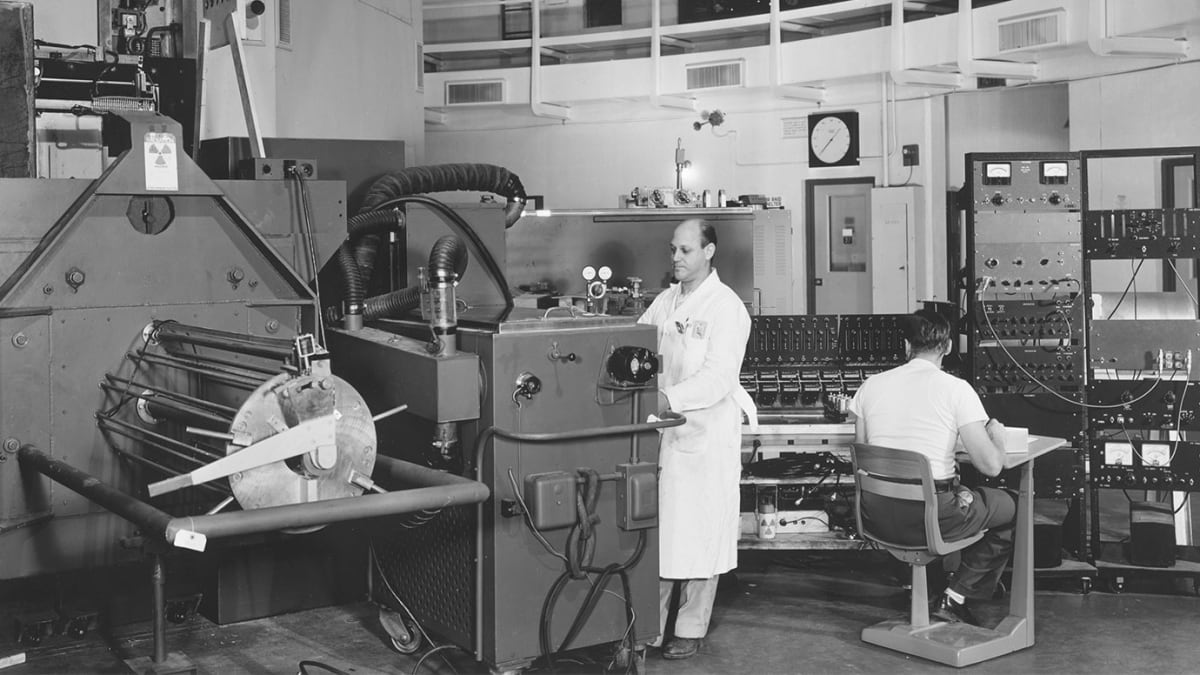
Fast forward to 2025, and Argonne just achieved another historic first. The Aurora exascale supercomputer came online, capable of more than a quintillion calculations per second—an almost unimaginable leap from AVIDAC, the lab's pioneering digital computer from 1953.
The lab's upgraded Advanced Photon Source also set a new world record this year, becoming the brightest synchrotron X-ray light source on the planet. Scientists worldwide depend on this tool to develop better batteries, more efficient engines, and new medicines.
Nearly 8,000 researchers use Argonne's five flagship facilities annually. They're engineering matter at the atomic scale, studying the forces that govern the universe, and unlocking secrets that textbooks haven't written yet.
The Ripple Effect
Argonne's reach extends far beyond its Illinois campus. The lab has forged partnerships with top universities and companies, transforming laboratory discoveries into real-world innovations that improve daily life for millions.
The quantum science hub growing in the Midwest, driven by Argonne and the Argonne Quantum Institute, is building an entirely new way to sense, process, and store information. Meanwhile, the lab's role in the Department of Energy's Genesis Mission promises to revolutionize how quickly scientists can make discoveries by integrating AI with automation and robotics.
These autonomous systems will design, conduct, and refine their own experiments, compressing years of research into months or weeks. It's the kind of acceleration that could bring breakthrough treatments, cleaner energy, and solutions to problems we haven't even identified yet.
The lab continues critical work on energy storage, securing supply chains for essential materials, developing next-generation nuclear reactors, and protecting the electric grid. Each project builds on 80 years of investment in American scientific leadership.
From mathematician Margaret Butler programming those first digital computers in the early 1950s to today's researchers pushing the boundaries of quantum science, Argonne proves what's possible when brilliant minds meet powerful tools.
Eighty years after lighting four bulbs, Argonne is helping illuminate the path to a future where scientific discovery moves at the speed of imagination.
Based on reporting by Google: scientific discovery
This story was written by BrightWire based on verified news reports.
Spread the positivity!
Share this good news with someone who needs it