Aboriginal Artist Weaves 65,000-Year Tradition Into Glass
A Lower Southern Arrernte woman is preserving the world's oldest living weaving practice using an unexpected material: glass. Her stunning pieces blend millennia-old Indigenous patterns with Italian glassblowing techniques, proving culture thrives in contemporary forms.
Jenni Kemarre Martiniello never forgot the anger she felt as a child visiting the South Australian Museum, where Aboriginal weaving was displayed like a relic of an extinct civilization. Her aunties were weavers, and she knew their craft was very much alive.
Decades later, the Lower Southern Arrernte artist asked herself a simple question: "Can I weave glass?" The answer was no, but she found something better.
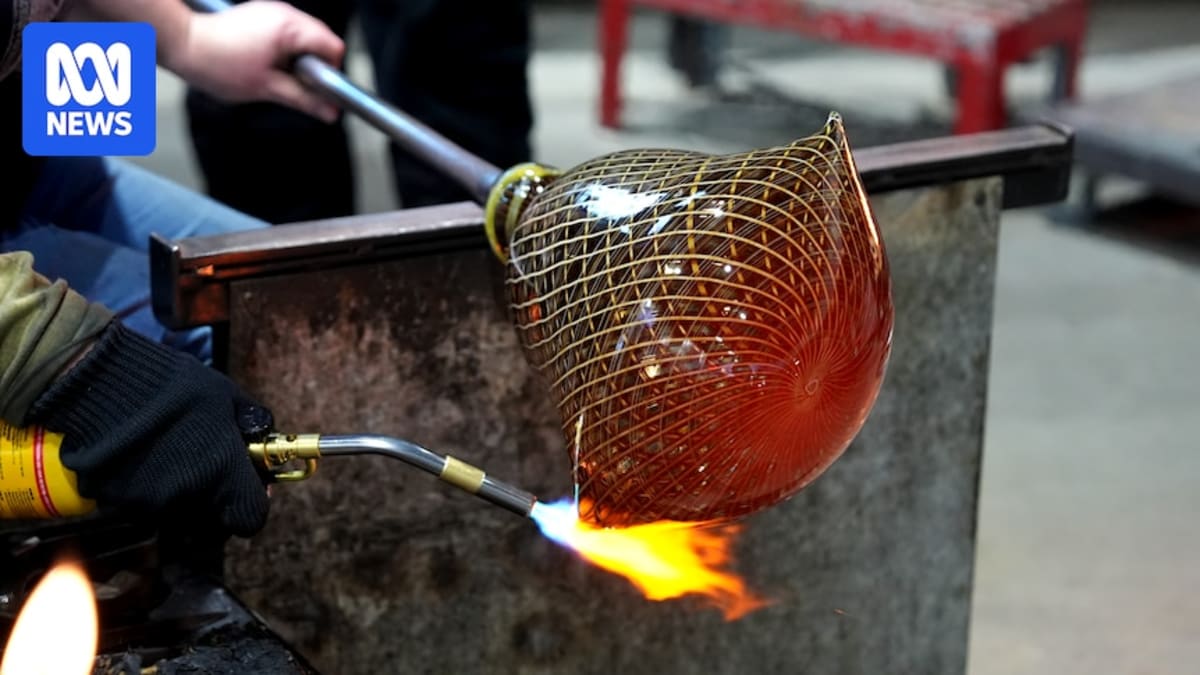
Martiniello discovered an Italian technique using thin colored glass rods to create intricate woven patterns. She adapted it to express traditional Indigenous designs that date back 65,000 years, making her work both an art form and a political statement.
"It really became, for me, a political act to take an Italian cane technique that's centuries old to give expression to a weaving practice that is millennia old," the Canberra-based artist explains. Working with glass quickly became addictive.
Her fragile creations mirror traditional items like dillybags, eel traps, and fish scoops. More recent works draw inspiration from bush medicine plants and Rainbow Serpent eggs, each piece honoring the exquisite beauty of the oldest living weaving practice in the world.
Martiniello's work challenges the notion that culture must stick to traditional materials. "Contemporary materials actually offer an incredible wealth of new ways of preserving culture," she says.
The Ripple Effect
Since her first glass workshop in 2007, Martiniello has opened doors for an entire generation of First Nations glass artists. Wendy Dawes, deputy director of Canberra Glassworks where Martiniello creates her pieces, says the artist has "spearheaded" a new wave.
"There's a 2,000-year history in glass making, and it's linking up with this beautiful 65,000-year story of First Nation artists," Dawes explains. What started as one woman's experiment has become a movement.
This year, Martiniello is a finalist in the National Aboriginal and Torres Strait Islander Art Awards in Darwin, a prize she won in 2013. Her 2026 entry honors her Chinese heritage through a reinterpretation of a Han dynasty hu vase, celebrating her paternal grandfather who left China in the 1860s and married a Lower Southern Arrernte woman in outback South Australia.
"There is so much more to heritage that needs to be told," she says. Her glass tells those stories, one shimmering thread at a time.
More Images


Based on reporting by ABC Australia
This story was written by BrightWire based on verified news reports.
Spread the positivity!
Share this good news with someone who needs it