Africa and China Partner to Boost Rice Production
AfricaRice has signed groundbreaking agreements with five Chinese research institutions to develop climate-resilient rice varieties and train a new generation of African scientists. The collaboration could help Africa reduce its heavy dependence on rice imports while feeding growing populations.
African rice farmers may soon gain access to advanced seed technologies that could dramatically increase their harvests while helping them adapt to climate change.
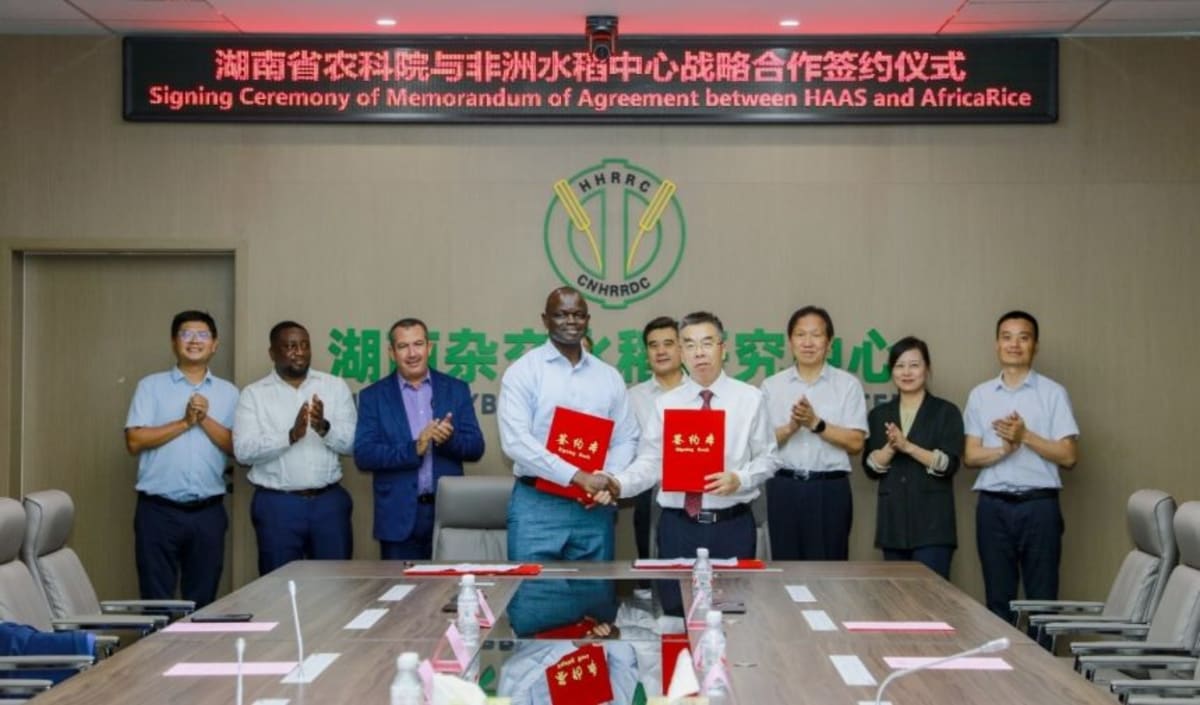
The Africa Rice Center signed strategic agreements with five leading Chinese agricultural institutions in May, creating new pathways for African countries to boost domestic rice production. The partnerships focus on developing hybrid rice varieties, training African scientists, and transferring proven technologies to the continent.
One major agreement with the Hunan Academy of Agricultural Sciences targets hybrid rice breeding and molecular genetics. Another establishes a Joint Laboratory for Rice Research and Innovation with the China National Rice Research Institute, bringing African and Chinese researchers together to solve challenges facing rice farmers across the continent.
The timing matters. Rice consumption continues climbing across Africa, yet many countries remain heavily dependent on imports despite having significant agricultural potential. These new partnerships aim to change that equation.
Scientists are already making progress on promising technologies. AfricaRice has developed two hybrid rice lines using advanced gene editing without foreign DNA traces, marking an important step toward varieties adapted to African growing conditions.
The collaboration also includes work on clonal rice, a technology that could allow farmers to maintain hybrid performance across multiple generations without buying new seed each season. If successful, this innovation could lower production costs and expand access to high-yielding varieties for smallholder farmers.
Beyond the lab work, the partnerships emphasize building Africa's scientific capacity. Chinese institutions will expand training opportunities for African researchers through master's, doctoral, and postdoctoral programs aimed at creating the next generation of rice scientists.
AfricaRice Director General Baboucarr Manneh met with scientists from the Hunan Hybrid Rice Research Center, one of the world's top hybrid rice institutions. Discussions covered third-generation breeding systems, molecular techniques, and innovations ready for deployment in African fields.
The Ripple Effect
When African countries strengthen their rice production, the benefits extend far beyond individual farms. Reduced import dependence means money stays in local economies, supporting jobs and building food system resilience. Training African scientists creates lasting expertise that can tackle future agricultural challenges. And climate-adapted varieties help farmers maintain stable harvests even as weather patterns shift.
Improved access to high-performing rice varieties could help African nations narrow production gaps and build more secure food systems for millions of people.
Based on reporting by Google News - Africa Innovation
This story was written by BrightWire based on verified news reports.
Spread the positivity!
Share this good news with someone who needs it