African Scientists Map 1,000+ Genomes to Fix Medical Bias
A groundbreaking nine-country African collaboration has sequenced over 1,000 genomes from underrepresented communities, revealing millions of new genetic variants that could revolutionize how doctors predict and treat diseases worldwide. The project corrects a dangerous medical blind spot: most genetic research comes from European populations, making current disease predictions dangerously inaccurate for African patients.
Scientists across Africa just took a major step toward making modern medicine work for everyone, not just Europeans.
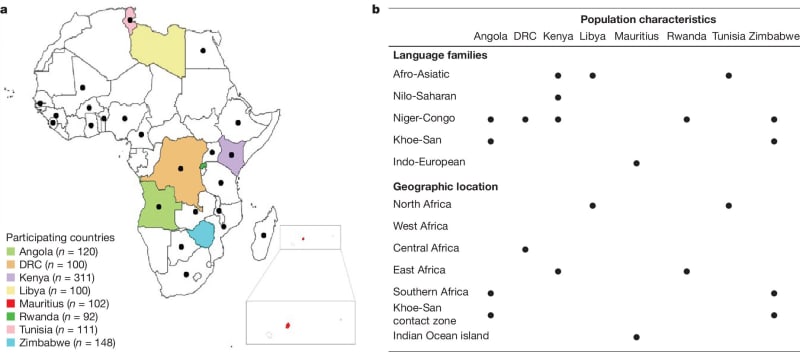
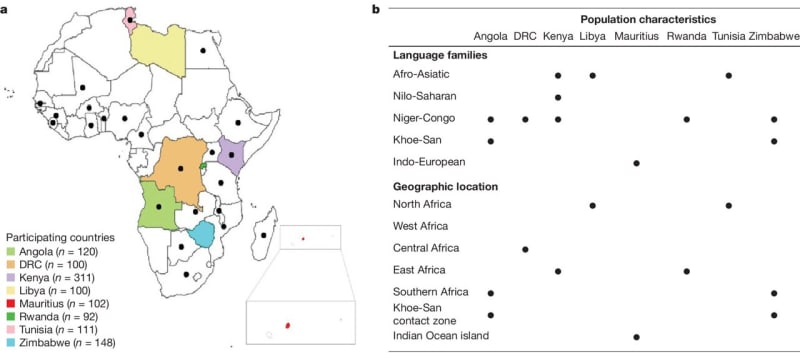
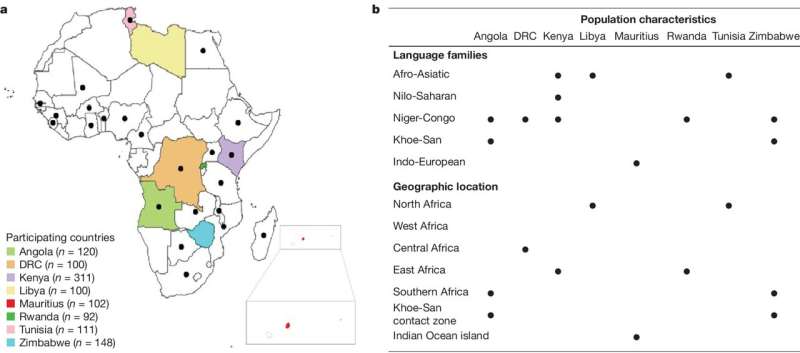
The AGenDA project has mapped complete genomes from more than 1,000 people across nine African countries, published in Nature this year. These genomes represent communities that have been almost invisible in global medical databases, including hunter-gatherer groups, Nilo-Saharan speakers, and island populations from Mauritius to North Africa.
Here's why this matters for all of us. Most genetic tools doctors use to predict your risk for cancer, diabetes, or heart disease were built using DNA from people of European descent. When African patients use these tests, the results are often wrong because their genetic patterns look completely different.
Two Africans from different regions can be more genetically different from each other than a European and an Asian. Africa's genomes are older and more diverse than any other continent's, yet they've been missing from the reference maps guiding modern medicine.
"Without African data, risk prediction models are biased and often inaccurate for African patients," explains Professor Scott Hazelhurst, head of bioinformatics at Wits University's Sydney Brenner Institute. The project expects to uncover millions of novel genetic variants that could change how treatments are designed.
The research spanned Angola, Democratic Republic of Congo, Kenya, Libya, Mauritius, Rwanda, Tunisia, and Zimbabwe, coordinated from South Africa. Each country's local research teams worked with communities in their own languages and cultural contexts before collecting any data.
The Ripple Effect
This isn't just about fixing a scientific gap. It's about correcting centuries of medical research that left billions of people behind.
AGenDA is entirely led by African scientists, not international institutions parachuting in to extract data. African-based committees control who can access the information and for what purposes. Communities aren't research subjects but informed partners who shape how their DNA information gets used and protected.
The project builds on over a decade of work through the H3Africa Consortium, which has trained scientists across the continent and created genomic resources now used worldwide. One flagship study, AWI-Gen, focuses specifically on understanding genetic drivers of diabetes, obesity, and hypertension in African populations.
"AGenDA was designed to increase representation of African genomic data in global datasets to address this disparity and to ensure that African populations can also benefit," says Professor Michèle Ramsay, the study's lead author and Director of the Sydney Brenner Institute.
The long-term impact reaches far beyond Africa. These genomes will improve genetic testing, disease research, and precision medicine for everyone because they capture human diversity that was missing from our scientific understanding.
When the foundation of medical knowledge includes all of humanity, not just a fraction, everyone's health outcomes improve.
More Images
Based on reporting by Medical Xpress
This story was written by BrightWire based on verified news reports.
Spread the positivity!
Share this good news with someone who needs it