%2Ffile%2Fattachments%2F2995%2FP22EV_352208.jpg)
African Solar EVs Export to Europe, Challenge Industry Norms
African electric vehicle manufacturers are turning the continent's abundant sunshine into a competitive advantage, designing solar-powered EVs that now compete in European markets. Tunisia's Bako Motors just completed its first export to Italy, marking a reversal in traditional manufacturing flows.
A Tunisian electric vehicle just rolled off a truck in Italy, representing something far bigger than one delivery.
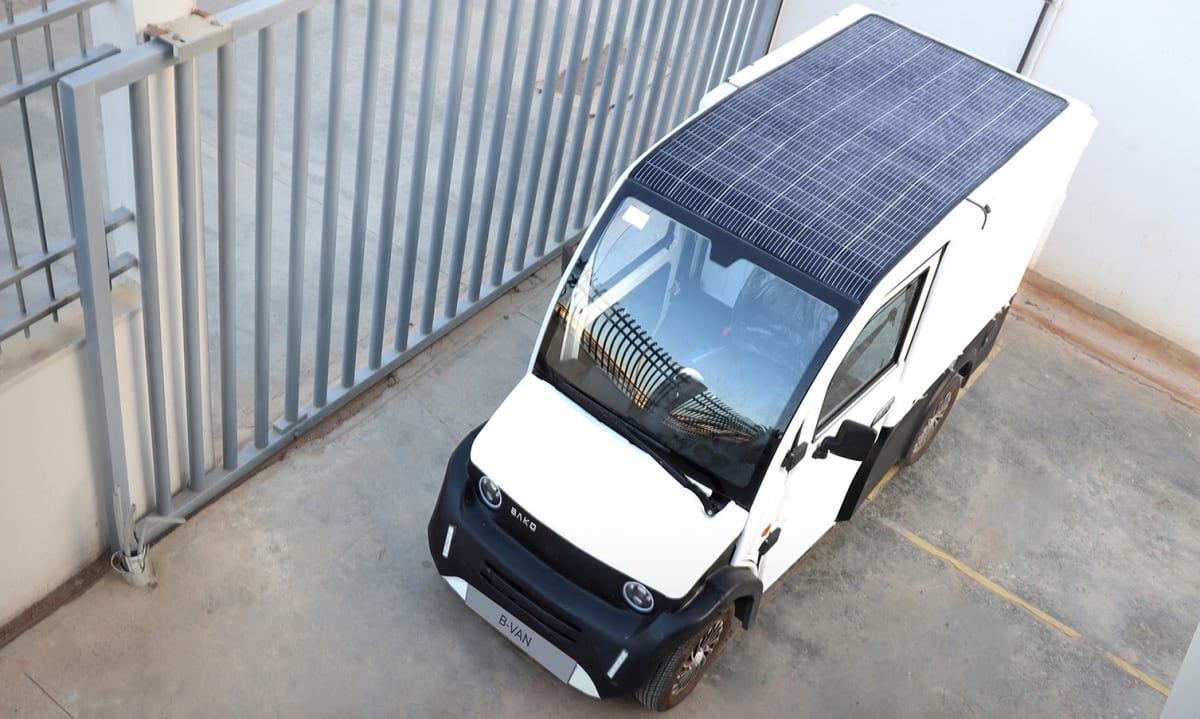
Bako Motors has become one of the first African manufacturers to export solar-assisted electric vehicles to Europe, challenging the traditional direction of automotive innovation. The company's compact Bako Bee integrates rooftop solar panels with lithium batteries, delivering up to 120 kilometers of range while using onboard sunshine to reduce charging needs.
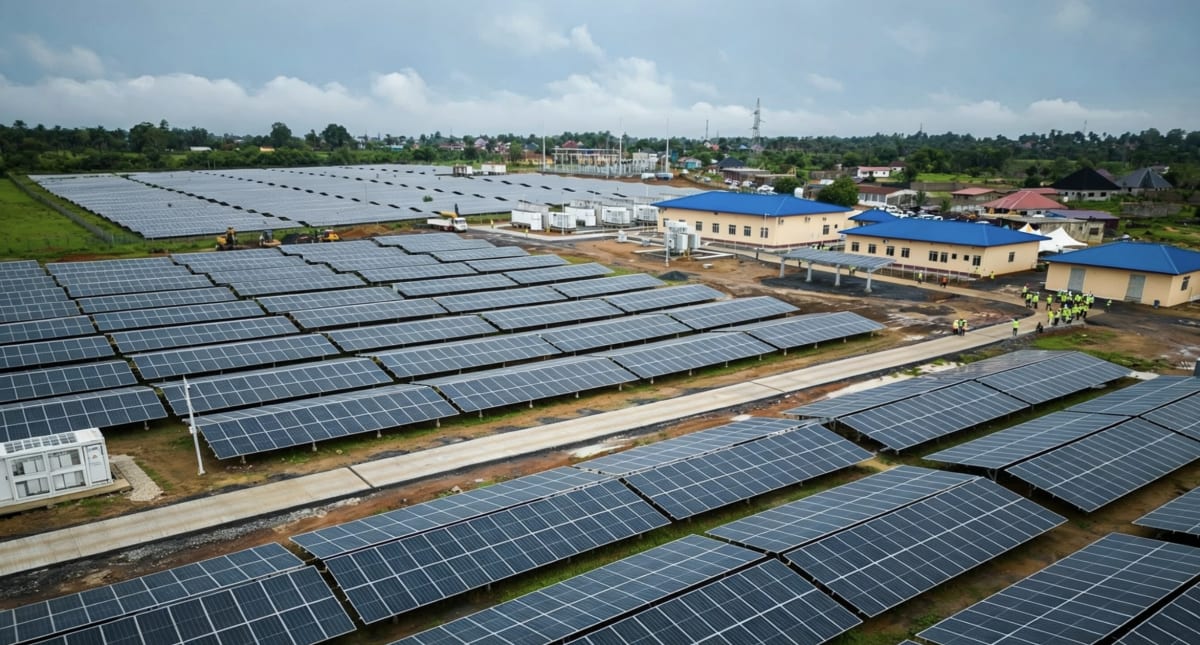
The breakthrough taps into Africa's extraordinary solar advantage. While the continent holds less than 2% of global solar generation capacity, it possesses 40% of the world's theoretical solar energy potential, according to the World Bank. More than 85% of Africa receives annual solar irradiation above 2,000 kilowatt hours per square meter, the highest average on Earth.
"There is a need for a vehicle with zero emissions," says Boubaker Siala, Bako Motors' founder and CEO. His company now dedicates half its business to European exports, with deliveries heading to Italy, Germany and France from a new factory targeting 8,000 vehicles annually.
The technology addresses a practical challenge in regions where charging infrastructure remains sparse. Vehicle-integrated photovoltaics supply supplementary power that extends range and runs auxiliary systems like air conditioning and refrigeration, even though rooftop panels can't replace plug-in charging entirely.
Bako's B-Van commercial vehicle showcases the potential for logistics, offering 300 kilometers of range and 400 kilograms of payload capacity. The integrated solar roof powers onboard refrigeration and lighting, reducing charging frequency for last-mile delivery operations.
The Ripple Effect
The trend extends across the continent. Uganda's Kiira Motors equipped its Kayoola Solar Bus with roof-mounted panels that continuously recharge battery banks. Chinese manufacturer Solarky Mobility Technologies is entering South Africa with its sunV model, already operating in Tanzania, featuring an extendable rooftop system that generates enough electricity to add up to 50 kilometers of daily driving under favorable conditions.
Research from ETH Zurich and the Paul Scherrer Institute projects that EVs supported by dedicated off-grid solar charging could become economically competitive across much of Africa before 2040. Their study of 2,000 locations in 52 African countries found that compact solar installations could reliably support small EVs traveling about 50 kilometers daily.
Not everyone shares the enthusiasm. "It's just generally not really worth the cost," says Tom Courtright, an independent e-mobility consultant who notes the limited surface area of car roofs generates only modest electricity compared to standalone installations.
Yet the commercial momentum continues building. Bako Motors operates a second manufacturing facility in Saudi Arabia serving Gulf markets, reflecting growing international interest in solar-assisted vehicles designed for sunny climates.
Africa's engineers are proving that perceived limitations can become competitive advantages when matched with the right innovation.
More Images
%2Ffile%2Fattachments%2F2995%2FDM-24072026001CPTJHB_671701.jpg)
Based on reporting by Daily Maverick
This story was written by BrightWire based on verified news reports.
Spread the positivity!
Share this good news with someone who needs it