Africa's Top Carriers Build AI in 2,000 Local Languages
Six of Africa's largest mobile operators are creating AI tools that work in over 2,000 African languages, finally bringing voice assistants and translation to hundreds of millions left behind by English-only models. The first success is already live: a Swahili reasoning model that can browse and translate the web.
When most AI tools only speak English, you leave out hundreds of millions of people who could benefit most from the technology.
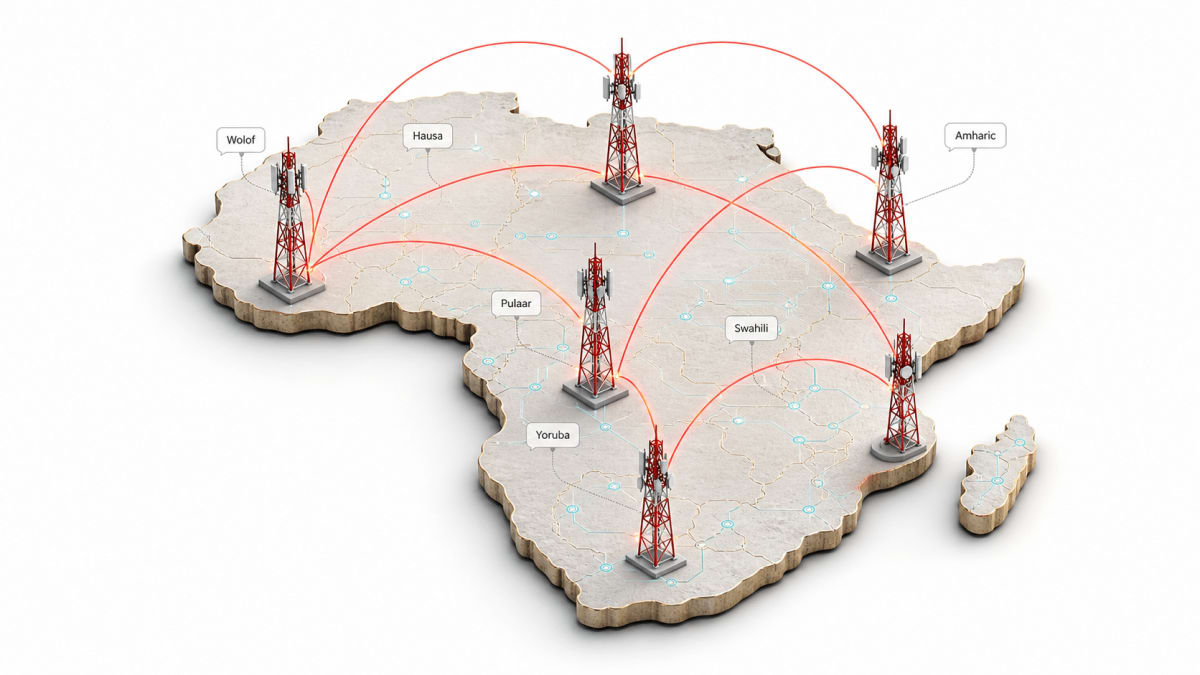
That's changing fast in Africa. Six major mobile operators just joined forces to build artificial intelligence language models trained on the continent's 2,000-plus languages, which account for over 30% of all languages spoken worldwide.
Airtel, Axian Telecom, Ethio Telecom, MTN, Orange, and Vodacom launched the G6 initiative in October 2025 with a simple mission: AI language models in Africa, by Africa, for Africa. The collaboration brings together mobile networks, researchers, startups, and community groups to tackle four big challenges holding back African AI development: data, computing power, talent, and policy.
The group already has something to show for it. At Mobile World Congress Barcelona in early 2026, developers unveiled the first open Swahili reasoning model, built with partner MeetKai Zambia. The model browses websites and translates content in Swahili, creating a blueprint that can be copied for other African languages.
The infrastructure to support these models is falling into place quickly. Cassava Technologies opened an AI factory in South Africa that rents GPU computing power to African developers and businesses. The MTN Skills Academy, a free platform available across 16 African markets, is training people in the AI skills these projects need.
Google's WAXAL project, released in February 2026 after three years of work with African universities, created an open dataset covering speech in 27 Sub-Saharan African languages spoken by more than 100 million people. It gives developers the raw material they need to train voice recognition and speech tools that actually understand how people talk.
In March 2026, GSMA and Zindi, an African data science platform, launched a safety challenge that produced a testing benchmark for AI models across the continent's languages. The tool helps ensure these new models work safely and accurately.
Mobile operators are putting real money behind the effort too. MTN invested in a $45 million funding round for ODC in April 2026, an AI telecoms startup building network technology designed specifically for Africa's mix of equipment and unreliable power supplies.
The Ripple Effect
This isn't just about technology for its own sake. Closing the language gap opens digital services to hundreds of millions of Africans currently shut out by language barriers. That expansion could help push mobile's contribution to Africa's economy from $240 billion in 2025 to $290 billion by 2030, according to GSMA's Mobile Economy Africa 2026 report.
The G6 effort joins other initiatives chipping away at the same problem. Orange partnered with OpenAI and Meta in 2024 to build models for Wolof and Pulaar. Google invested in AI tools for over 40 African languages in July 2025. The Gates Foundation gave research collective Masakhane $5 million to develop more African language models.
For the first time, AI is being built to speak the languages Africa actually uses.
Based on reporting by Techpoint Africa
This story was written by BrightWire based on verified news reports.
Spread the positivity!
Share this good news with someone who needs it