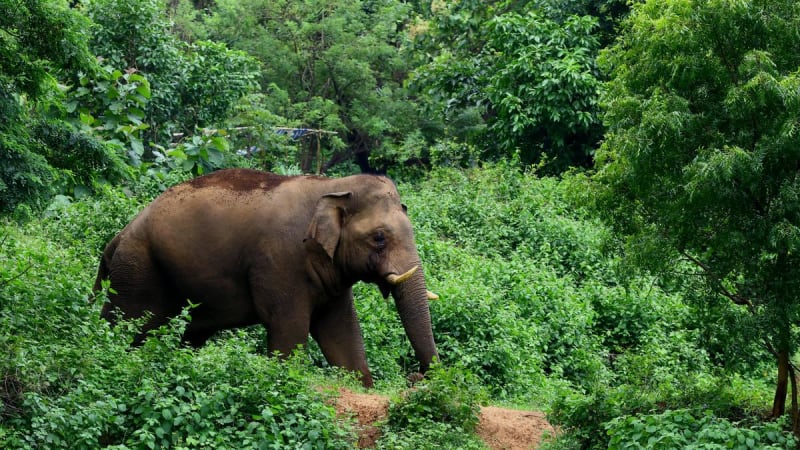
AI Cameras Will Alert Communities When Elephants Approach
India's Forest Department is launching an AI-powered camera system that detects elephants near villages and sends instant alerts, even in areas with no cell service. The technology could save both human and elephant lives by giving communities time to respond safely.
Forests in India are getting a high-tech guardian system that could finally help humans and elephants share space peacefully.
The Forest Department has partnered with Tata Motors and Tata Communications to install AI-powered cameras that detect elephants approaching villages and send instant alerts to residents and rangers. The system works even in remote forest areas with zero cell phone coverage, using special long-range wireless technology called LoRaWAN.
The collaboration was formalized Tuesday at Forest Headquarters, with Chief Wildlife Warden Pramod G. Krishnan signing the agreement alongside representatives from both Tata companies. Head of Forest Force Rajesh Ravindran presided over the ceremony.
Here's what makes this solution special: the cameras use artificial intelligence to recognize elephants in real time, right where they're installed. When an elephant is detected, the system immediately sends alerts through a wireless network designed specifically for areas where regular cell service doesn't reach.
The pilot project includes custom-designed poles that can be quickly taken down and moved to new locations as conflict hotspots shift. That flexibility means communities can stay protected even as elephant movement patterns change with seasons or food availability.
The Ripple Effect
If the pilot succeeds, every conflict-prone forest division across the state will receive at least 20 camera units. That statewide rollout could protect countless villages currently living in fear of surprise elephant encounters.
The technology isn't limited to elephants either. Engineers are already planning to train the AI to recognize other wildlife species based on what animals create conflict in different regions. That means the same system could eventually warn communities about tigers, leopards, or wild boar.
Dr. Krishnan noted the project will dramatically improve how quickly his department can respond to wildlife alerts. Instead of hearing about elephant sightings hours after they occur, rangers and local response teams will know within minutes.
The system represents one of 12 missions the state government created specifically to reduce human-wildlife conflict. By combining cutting-edge AI with problem-solving wireless technology, it tackles one of conservation's toughest challenges: keeping both people and animals safe as their worlds increasingly overlap.
Technology is finally catching up to help communities and wildlife peacefully coexist.
Based on reporting by The Hindu
This story was written by BrightWire based on verified news reports.
Spread the positivity!
Share this good news with someone who needs it