AI Chatbot Solves Physics Puzzle That Stumped Scientists
A powerful AI chatbot cracked a complex physics problem about gluons that had stalled a team of top physicists for months. The breakthrough marks the first significant discovery in theoretical physics made with artificial intelligence as a true research partner.
Four brilliant physicists spent months trying to crack a puzzle about gluons, the invisible glue holding atoms together, but kept hitting dead ends. Then they invited an AI chatbot into their research team, and everything changed.
Harvard physicist Andrew Strominger had been skeptical of AI's abilities after ChatGPT gave him impressive-sounding answers that fell apart under scrutiny. But when his former student Alex Lupsasca, now at OpenAI, invited him to test a more powerful internal version dubbed "Super Chat," Strominger decided to give it one more shot.
He brought a thorny problem about gluon amplitudes, complex calculations that predict how particles behave. His team had already spent considerable time stuck on this particular proof, unable to simplify their calculations into something workable.
The advanced AI system worked for 12 hours straight and solved it completely. Strominger called the moment "incredible," admitting he wasn't sure he could have solved it himself without unlimited time.
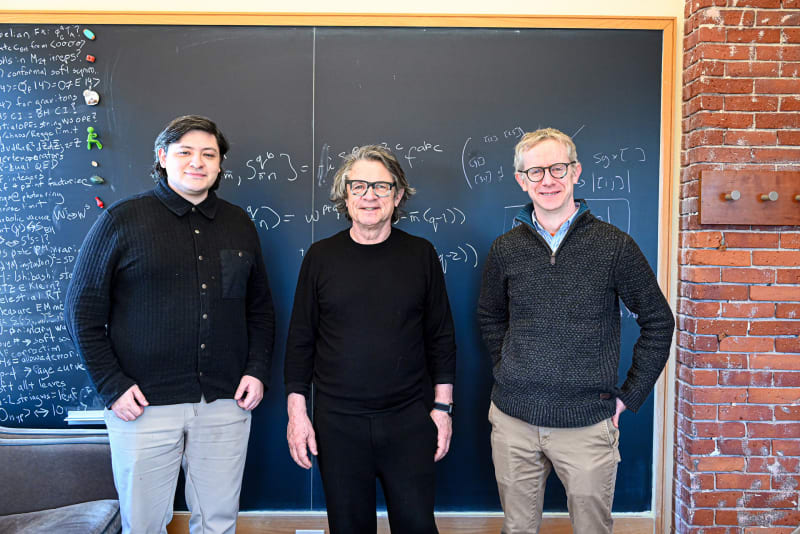
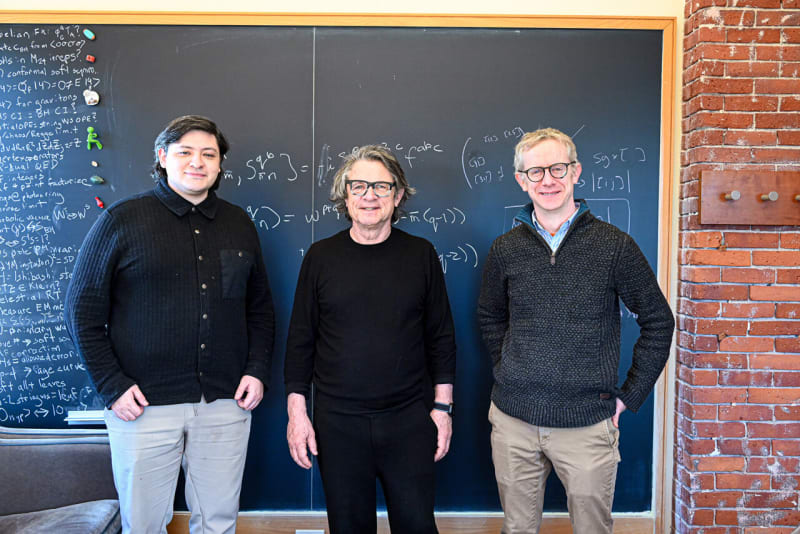
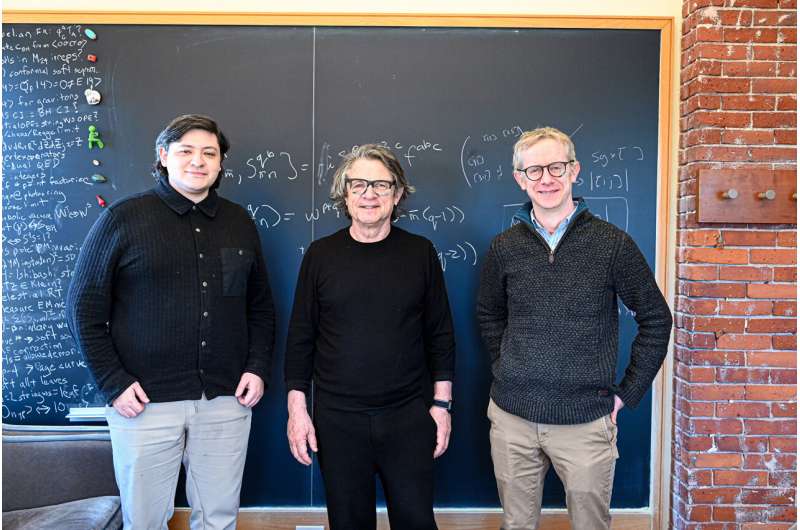
The four physicists, Strominger, Lupsasca, Cambridge's David Skinner, and the Institute for Advanced Study's Alfredo Guevara, spent the next week checking the AI's work by hand. Every calculation held up, and they published their findings in a paper titled "Single-minus gluon tree amplitudes are nonzero."
Lupsasca's own journey with AI mirrors the shift happening across science. Just a year ago, he used it mainly for proofreading grants. Then he got stuck on a pulsar magnetic field problem that typically requires pulling obscure mathematical tricks "out of a hat."
A friend suggested trying the pro version of ChatGPT. In 11 minutes, the AI solved it using a special formula from a 1950s Norwegian math journal that Lupsasca had never encountered.
The turning point came last August when Lupsasca tested the newest version on calculations that had taken him considerable time and brainpower. The AI solved them in under 30 minutes, including work he considered among his proudest achievements.
"There was a moment when I felt like I was working with a creative person," Strominger said about collaborating with the AI. "Not just a machine that was crunching through stuff."
Why This Inspires
This breakthrough shows how AI can amplify human creativity rather than replace it. The physicists brought their expertise, intuition, and ability to frame the right questions. The AI brought tireless computational power and access to obscure mathematical literature spanning decades.
The collaboration produced something neither could have achieved alone. The humans knew which problems mattered and how to verify the answers. The AI found connections and solutions hiding in vast pools of mathematical knowledge.
Scientists are already wondering what other long-stalled problems might yield to this new partnership approach.
The future of discovery might not be humans versus machines, but humans and machines working side by side, each contributing their unique strengths to push the boundaries of what we understand about our universe.
More Images

Based on reporting by Phys.org
This story was written by BrightWire based on verified news reports.
Spread the positivity!
Share this good news with someone who needs it