AI Cuts Catalyst Research From Days to Minutes
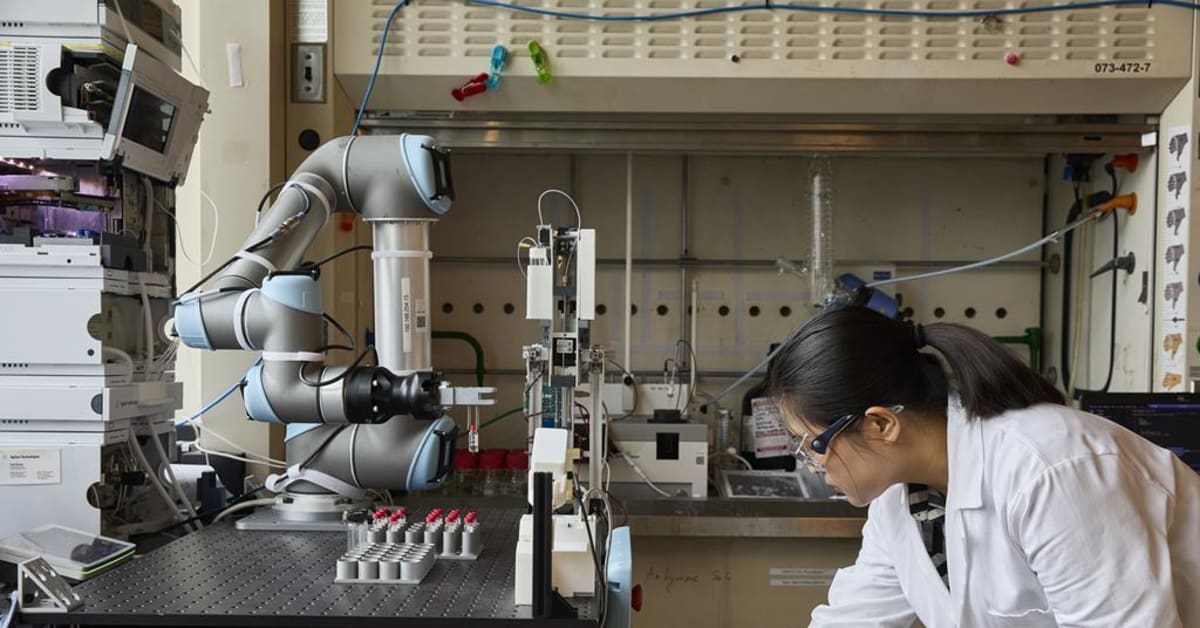
New artificial intelligence tools are transforming chemistry labs, completing complex catalyst calculations in minutes instead of days. The technology promises to slash the decades-long timeline for bringing new catalysts from discovery to industrial use.
Scientists developing catalysts for everything from clean energy to manufacturing just got a powerful new assistant that works at lightning speed.
Varinia Bernales remembers the struggle well. As a computational chemist at Dow Chemical, she couldn't keep up with all the hypotheses her experimental colleagues wanted to test. Weekend work became routine, and many promising ideas sat waiting for her limited time.
Now at the University of Toronto, Bernales has helped create something that changes everything. Her team's AI agent, called El Agente, can complete in minutes what once took her entire days of work creating files, running calculations, and troubleshooting problems.
The impact goes beyond saving time. Currently, bringing a catalyst from initial discovery to large-scale industrial application takes 10 to 25 years. Ted Sargent from Northwestern University believes AI can accelerate the entire lifecycle, from the first spark of discovery through long-term industrial performance.
This isn't just about making one person's job easier. The new AI tools are democratizing catalyst research itself. Experienced chemists who never learned to code can now generate and test hypotheses that previously required specialized computational expertise.
The Ripple Effect
The acceleration potential ripples across industries that depend on catalysts. Chemical manufacturing, clean energy production, and environmental remediation all rely on finding better catalysts faster.
Major tech companies including Meta, Google, and Nvidia are investing heavily in the technology. They're building massive datasets to train these AI systems, combining new experimental measurements with existing research to make the tools even smarter.
Some research groups are pushing even further toward truly autonomous labs. These future facilities would have AI agents developing hypotheses, designing experiments, and testing results with minimal human intervention.
The technology still faces real challenges. Creating high-quality, standardized datasets costs money and requires consistency that doesn't yet exist across the field. Industry labs remain reluctant to share proprietary data, and experimental validation remains essential before any catalyst reaches production scale.
But progress is accelerating. Bernales sees experimentalists gaining a "superpower" that lets them explore ideas they previously couldn't pursue. Her former Friday afternoon side projects can now happen any time, opening space for more innovation.
The technology promises better quality of life for researchers while speeding solutions to pressing global challenges. When catalyst development accelerates, so does progress on clean energy, sustainable manufacturing, and environmental protection.
Based on reporting by Google: scientific discovery
This story was written by BrightWire based on verified news reports.
Spread the positivity!
Share this good news with someone who needs it