AI Designs Magnets Without Rare Earth Metals
Scientists just taught AI to invent entirely new magnetic materials, potentially ending America's dependence on scarce rare earth elements. The breakthrough could transform everything from clean energy to national defense.
Scientists at the Ames Laboratory have created an AI that doesn't just analyze existing materials but actually invents new ones based on physics principles. The breakthrough could free America from relying on rare earth metals that currently come almost entirely from overseas.
The AI workflow, built on a model called DuctGPT, understands the fundamental rules of how electrons behave rather than just memorizing patterns from old data. This means it can dream up materials that have never existed before, specifically designed to work as powerful permanent magnets without any rare earth elements.
The timing couldn't be better. Despite having only one rare earth mine in Mountain Pass, California, the U.S. ships over 95% of those minerals to Asia for processing. Permanent magnets are critical for F-35 fighter jets, submarines, radar systems, and countless defense technologies, creating both security and cost concerns.
The project is part of the Department of Energy's Genesis Mission, which brings together government labs and universities to tackle major challenges in energy and national security. Permanent magnets fit perfectly because they're used in so many critical applications where supply chain disruptions could be devastating.
What makes this AI special is its practical thinking. The system considers real-world factors like production costs and how difficult it would be to source raw materials. This prevents the AI from suggesting replacement materials that are just as hard to obtain as the rare earths they're meant to replace.
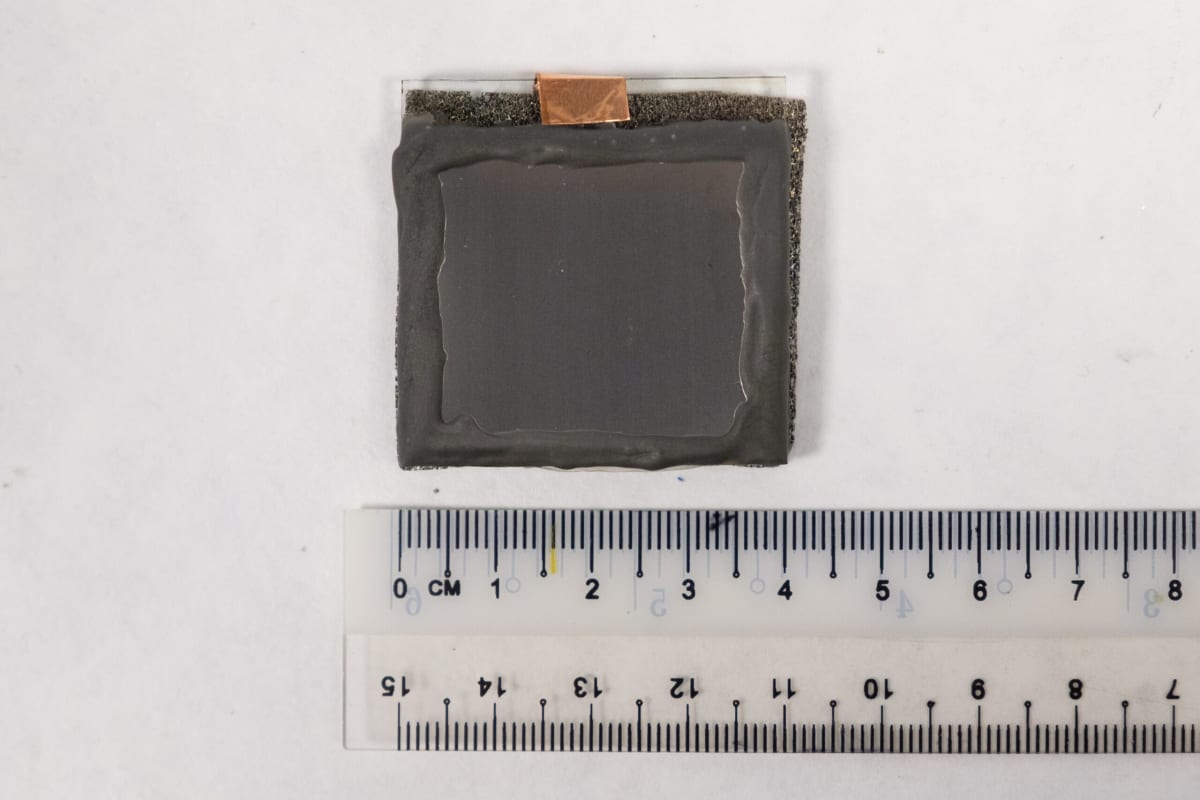
Ames Laboratory has already proven the concept works. Last year, the team developed a rare-earth-free magnet using bismuth and manganese, with a clever polymer coating that prevents the magnetic crystals from interfering with each other. The new AI system aims to speed up discoveries like this while ensuring they can actually be manufactured affordably.
The Ripple Effect
The implications stretch far beyond military applications. Permanent magnets power wind turbines, electric vehicle motors, and countless consumer electronics. A reliable source of rare-earth-free magnets could accelerate the transition to renewable energy by eliminating supply chain bottlenecks and reducing costs.
The breakthrough also represents a new way of doing materials science. Instead of trial and error in the lab, researchers can now ask AI to design materials with specific properties, then focus their experimental work on the most promising candidates. This could dramatically speed up innovation across multiple industries.
Engineers designing next-generation technologies would suddenly have access to a much wider palette of materials, each optimized for specific conditions like extreme heat, mechanical stress, or electromagnetic interference. The AI understands the trade-offs and can suggest solutions tailored to real-world constraints.
American manufacturers could finally compete on cost while maintaining domestic supply chains, creating jobs and reducing vulnerability to international disruptions. The technology could spark a new era of materials innovation right here at home.
More Images



Based on reporting by Google News - AI Breakthrough
This story was written by BrightWire based on verified news reports.
Spread the positivity!
Share this good news with someone who needs it