AI Detects Prediabetes from Heart Rhythms, No Blood Needed
Scientists in Tokyo created an AI that spots prediabetes using just a heart monitor reading, no blood test required. The breakthrough could turn your smartwatch into an early warning system for diabetes.
Millions of people are walking around with prediabetes and don't know it, but a new AI model called DiaCardia just made detecting it as simple as checking your heart rate.
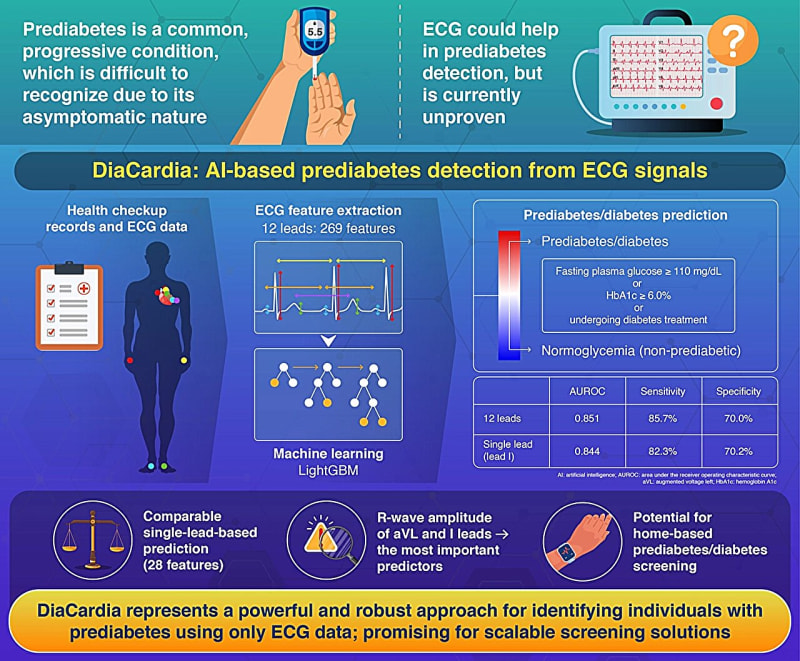
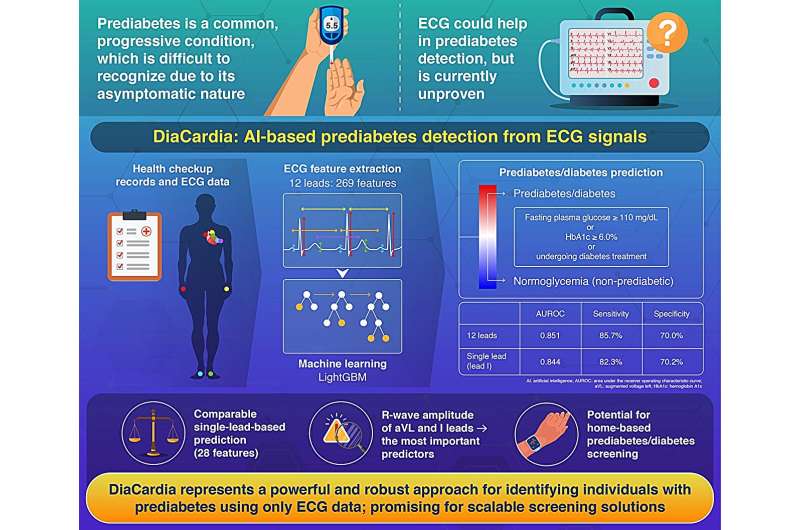
Researchers at the Institute of Science Tokyo developed an artificial intelligence system that identifies prediabetes using only electrocardiogram (ECG) readings. The model achieved 85% accuracy in spotting the condition without a single drop of blood.
The team, led by Junior Associate Professor Chikara Komiya, trained DiaCardia using health records from 16,766 people. The AI learned to recognize subtle patterns in heart rhythms that signal the body's struggle with blood sugar regulation, even before full diabetes develops.
What makes this breakthrough exciting is timing. Prediabetes represents a critical window when lifestyle changes can actually prevent type 2 diabetes from taking hold. But right now, most people miss that window because they skip health checkups or avoid the cost and hassle of blood tests.
DiaCardia solves both problems. In testing, the system worked just as well with a single-lead ECG as it did with the full 12-lead hospital version. That means the same technology powering wrist-worn fitness trackers could soon screen for prediabetes while you sleep.
The AI identifies specific heart features linked to prediabetes, like changes in R-wave amplitudes and reduced heart rate variability. These patterns reflect real physiological changes from insulin resistance and early nerve damage, giving doctors confidence the model isn't just finding random correlations.
When researchers tested DiaCardia on data from a completely different institution, it maintained its accuracy without any retraining. That generalizability suggests the technology could work across diverse populations and healthcare settings.
The Ripple Effect
More than 96 million American adults have prediabetes, but 80% don't know it. Making screening as easy as wearing a watch could catch millions of cases early, when simple interventions like exercise and diet changes can reverse the condition entirely.
The implications extend beyond individual health. Earlier detection means fewer people progressing to full diabetes, reducing the massive healthcare costs and complications associated with the disease. Communities with limited access to regular medical care could particularly benefit from screening that requires no needles, no fasting, and no lab visits.
"DiaCardia has the potential to make prediabetes screening scalable, accessible, and available anytime, anywhere, without a blood test," Komiya explained. The researchers published their findings in Cardiovascular Diabetology, opening the door for other teams to build on this work.
The path from research to your wrist won't happen overnight, but the hardest part is done: proving that your heartbeat tells a story about your blood sugar.
More Images


Based on reporting by Medical Xpress
This story was written by BrightWire based on verified news reports.
Spread the positivity!
Share this good news with someone who needs it