AI Finds 'Hidden Sperm' in Infertile Men, Brings Hope
A new AI-powered system is locating sperm in men told they were infertile, giving couples a chance at biological children. The Star system has already helped create families after years of heartbreak.
After two and a half years of trying to conceive, Penelope and Samuel were running out of hope. Samuel had been diagnosed with Klinefelter syndrome, a genetic condition that left him with almost no sperm, and doctors gave them just a 20% chance of having a biological child together.
Then in November 2025, Penelope got the call she'd been dreaming of. She was pregnant.
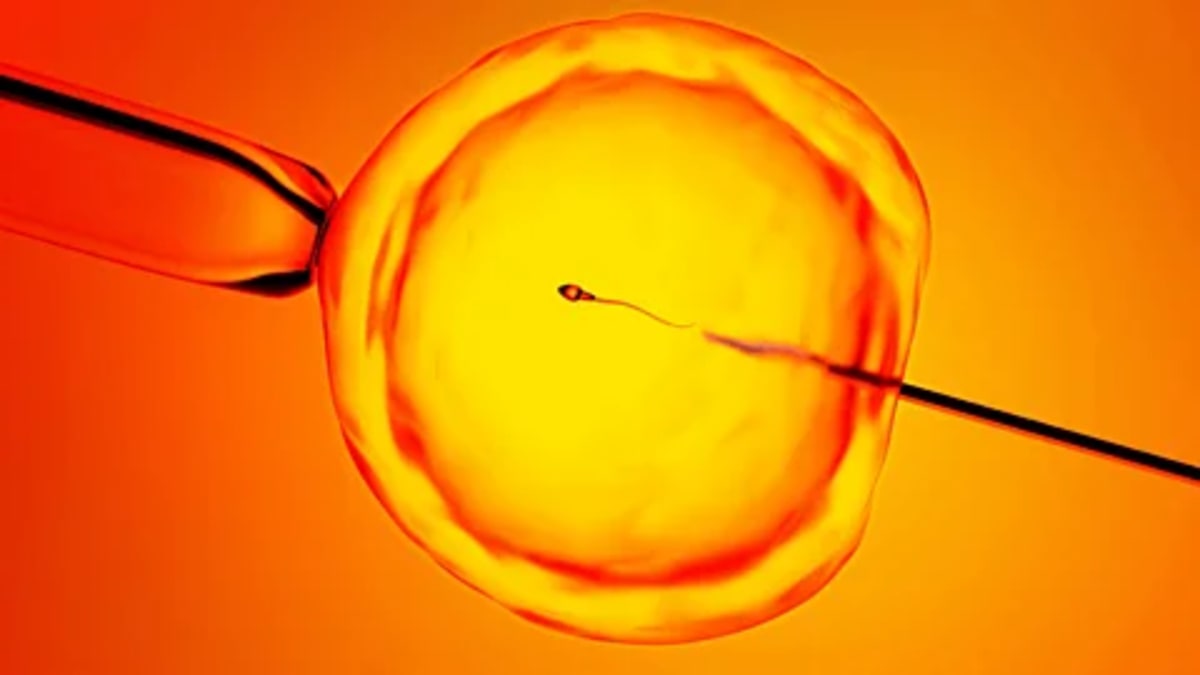
Their miracle came thanks to the Star system, a groundbreaking AI technology developed at Columbia University that finds individual sperm cells in men previously told they had none. The system uses machine learning to detect and capture single sperm cells hidden among millions of cellular fragments.
"I was scared. I thought that I wasn't going to be able to have my own kid," says Samuel. When Penelope shared the pregnancy news, "his face was just a wave of emotion," she recalls.
About 1% of all men have azoospermia, a condition where sperm counts are so low they're essentially undetectable through standard testing. That's potentially millions of men worldwide who have been told biological fatherhood is impossible.
Dr. Zev Williams, director of Columbia University Fertility Center, got the idea for Star in 2020 after reading about how AI helps astronomers find new stars in vast amounts of telescope data. He wondered if the same approach could work for finding rare sperm cells in samples filled with debris.
The Star system flows sperm samples through hair-thin channels while scanning at 300 images per second. Machine learning algorithms analyze each image in real time, detecting and gently extracting any sperm cells without destroying them.
The Ripple Effect
The results have exceeded expectations. In the latest 175 patients who used the technology, Star found sperm in nearly 30% of cases where men had been told they had zero chance of biological children.
In direct comparisons, Star found 40 times more sperm than trained human technicians searching manually. The first Star baby was born at the end of last year to a couple who had struggled with infertility for nearly two decades.
"Everyone was just jumping up and down with joy," says Williams. "There are so few things where the reward for all the effort is something as wonderful as this."
The technology is now in regular use at the fertility center, with hundreds of hopeful couples from around the world on the waiting list. For Penelope and Samuel, who had only one viable embryo from their treatment, the single attempt was all they needed.
Infertility affects one in six people of reproductive age worldwide, with male factors contributing to up to half of all cases. Star is giving hope to families who thought their journey had reached a dead end.
More Images


Based on reporting by BBC Future
This story was written by BrightWire based on verified news reports.
Spread the positivity!
Share this good news with someone who needs it