AI Fish Counter Helps Save Herring in Massachusetts Rivers
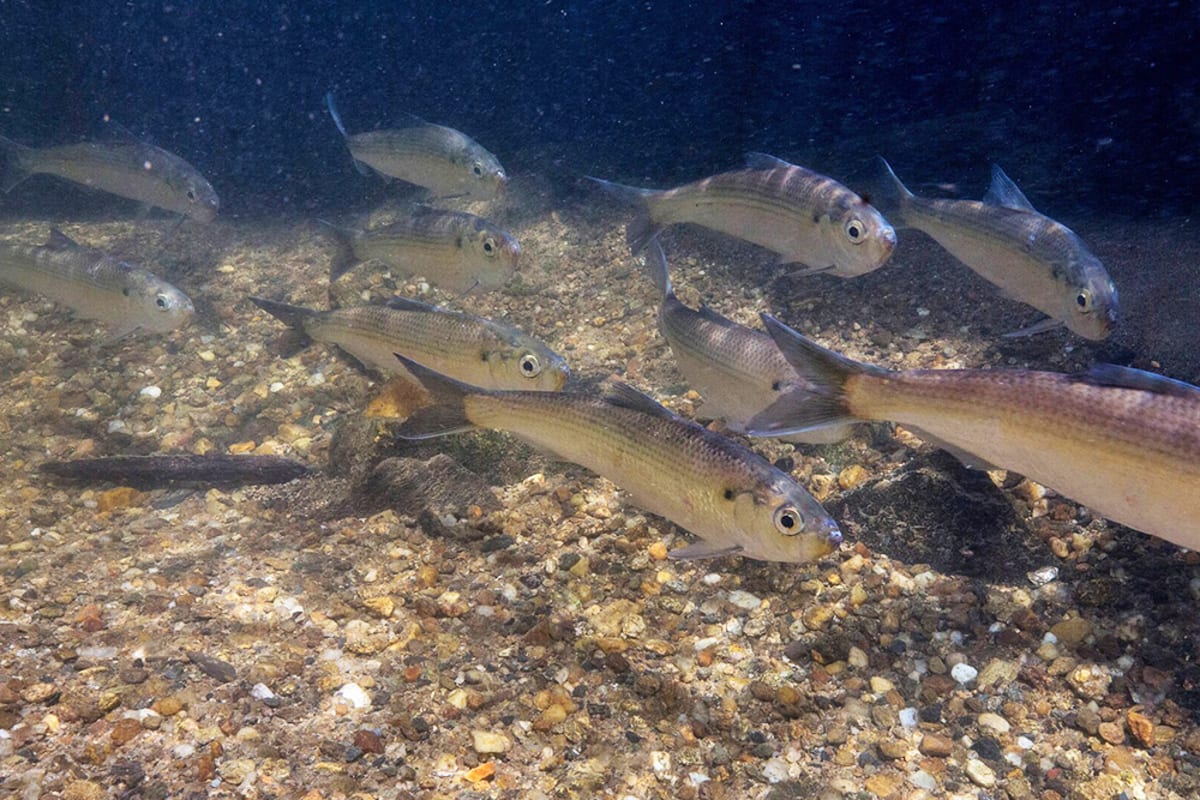
Scientists in Massachusetts developed an AI system that automatically counts migrating river herring 24/7, capturing nighttime movement that volunteers miss. The technology counted over 42,000 fish and revealed new insights about when herring travel to avoid predators.
Every spring, thousands of river herring swim upstream in Massachusetts rivers to spawn, but counting them accurately has always been a challenge that volunteers could only tackle during daylight hours.
Now, researchers from MIT Sea Grant, Woodwell Climate Research Center, and MIT's Computer Science and Artificial Intelligence Lab have created an AI-powered system that watches underwater video around the clock. The technology automatically identifies, tracks, and counts individual fish as they migrate.
The team tested their system on three Massachusetts rivers: the Coonamessett River in Falmouth, the Ipswich River, and the Santuit River in Mashpee. They trained the AI by manually labeling nearly 60,000 video frames, teaching it to recognize fish in different lighting conditions, water clarity levels, and crowding situations.
The results exceeded expectations. During the 2024 Coonamessett River migration, the system counted 42,510 river herring and discovered something volunteers had been missing entirely. While upstream migration peaked at dawn, downstream migration happened mostly at night when fish could avoid predators in darker, quieter waters.
Traditional volunteer counting efforts are limited to brief daytime windows, missing these crucial nighttime movements and short migration pulses when hundreds of fish pass by within minutes. Manual video review worked but took too much time and labor to be practical for continuous monitoring.
The AI system matched human counts and data from fish tagged with tracking chips, proving it could deliver reliable season-long population estimates. More importantly, it provided detailed insights into how environmental factors influence migration timing and behavior, information that's vital for conservation efforts.
The Ripple Effect
This breakthrough extends far beyond counting herring in Massachusetts. River herring populations have declined severely over recent decades, making accurate monitoring essential for conservation and fisheries management decisions that affect entire coastal ecosystems.
The research team published their open-access findings in Remote Sensing in Ecology and Conservation this February, sharing their framework so other conservation groups can adopt the technology. The system is scalable, cost-effective, and works for monitoring many aquatic species facing similar population challenges.
Volunteers remain essential for maintaining cameras and helping label new videos to improve the AI, creating a powerful partnership between citizen science and cutting-edge technology. Traditional counting will continue alongside automated systems to maintain consistency in long-term datasets while fisheries agencies prepare to implement the new tools.
The researchers are already providing education and training for students, the public, and citizen science groups to support these ecologically and culturally important fish populations. What started as underwater cameras and computer code has become a new way to protect species that have traveled these rivers for thousands of years.
Based on reporting by MIT News
This story was written by BrightWire based on verified news reports.
Spread the positivity!
Share this good news with someone who needs it