AI Helps Mathematicians Solve 80-Year-Old Problems
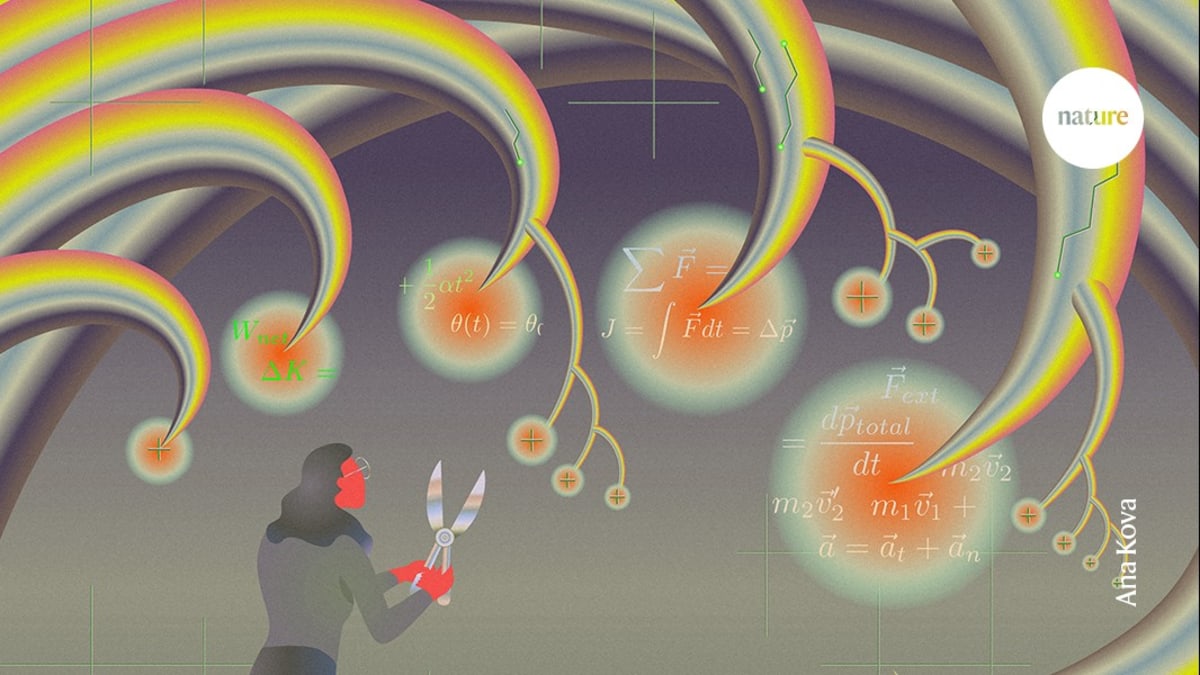
Artificial intelligence is becoming a powerful partner for mathematicians and physicists, solving decades-old puzzles and catching errors humans might miss. Rather than replacing scientists, AI is helping them work faster and think deeper.
Artificial intelligence just cracked problems that have stumped mathematicians for 80 years, and the best part? It's making human researchers better, not replacing them.
At the London Institute for Mathematical Sciences and labs worldwide, AI tools are transforming how scientists tackle the toughest questions in math and physics. These systems check proofs line by line, hunt for counterexamples, and suggest helpful steps that bridge gaps in complex arguments.
The progress has been remarkable. A system called Aristotle helped solve several notoriously difficult problems posed by legendary mathematician Paul Erdős. Axiom Math, a startup in Palo Alto, found solutions to research-level problems that professional mathematicians hadn't cracked yet.
Mathematics offers AI unique advantages over experimental sciences. There are no test tubes to clean, no cells to culture, and no waiting for chemical reactions. Mathematical experiments are fast, digital, and the data is incredibly clean.
When mathematician Terence Tao ran one of his own published papers through an AI proof assistant called Lean4, he discovered something surprising. The system caught a subtle gap in his logic that had seemed perfectly clear before.
Why This Inspires
This partnership between human creativity and machine precision shows technology at its best. AI isn't taking over the most intellectually rewarding parts of mathematics. Instead, it's handling tedious verification work and systematic searches, freeing researchers to focus on the creative leaps that only humans can make.
The technology is helping scientists decide which questions are worth asking in the first place. AI can scan massive mathematical databases and scientific archives to spot overlooked connections between different fields, potentially revealing new directions for discovery.
These systems remain limited in important ways. They lack the intuition and "taste" that helps human researchers sense which problems matter most or how questions fit into a field's evolving structure. They can't replicate moments like Einstein noticing contradictions between classical mechanics and Maxwell's equations, leading to special relativity.
What AI can do is accelerate the pipeline from idea to verified result. Problems that might have taken months of painstaking checking now get resolved in hours. Young mathematicians can test hunches faster and explore more creative directions.
The collaboration is already bearing fruit across theoretical physics and pure mathematics, turning what seemed like an either-or question into a powerful both-and answer.
Human insight plus machine speed equals breakthroughs that neither could achieve alone.
More Images




Based on reporting by Nature News
This story was written by BrightWire based on verified news reports.
Spread the positivity!
Share this good news with someone who needs it