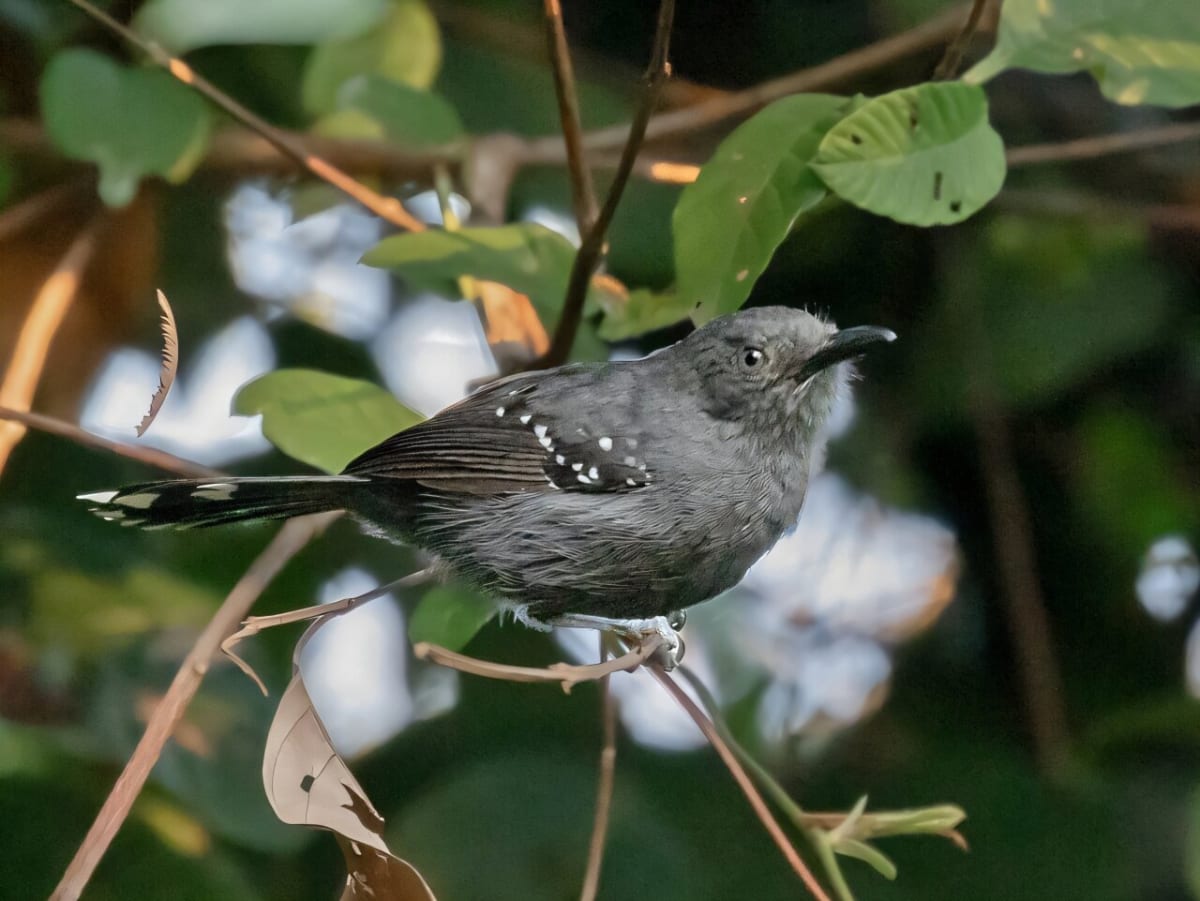
AI Helps Scientists Discover Two New Bird Species in Amazon
What scientists thought was one Amazonian bird species turned out to be five distinct species, including two brand new to science. Researchers used artificial intelligence and vocal analysis to uncover hidden biodiversity in Earth's richest rainforest.
Deep in the Amazon rainforest, what looked like identical birds were hiding an extraordinary secret. A team of Brazilian scientists has discovered that a common antbird is actually five separate species, with two never before known to science.
The gray antbird had been fooling researchers for years. While these small, insect-eating birds look nearly identical, they sing completely different songs across the Amazon Basin.
Scientists from São Paulo State University and the University of São Paulo Museum of Zoology cracked the case by combining old-school museum work with cutting-edge technology. They used BirdNET, an artificial intelligence tool from the Cornell Lab of Ornithology, to analyze bird songs collected across thousands of miles of rainforest.
The AI converted bird calls into numerical data, revealing vocal patterns humans might have missed. When the team cross-referenced these sound signatures with physical specimens and plumage patterns, the hidden diversity became clear.
Major Amazonian rivers like the Madeira and Tapajós act as natural barriers between populations. Over thousands of years, birds on opposite riverbanks evolved independently, developing unique songs that function as acoustic fingerprints.
The researchers named one new species Cercomacra mura, honoring the Mura people who are Indigenous to the western Amazon where these birds live. The second earned its name from its distinctive raspy, two-note song: Cercomacra raucisona, from the Latin words for "hoarse sound."
The Ripple Effect
This discovery reveals just how much we still don't know about the Amazon, even among birds we thought were well-studied. The research shows that artificial intelligence isn't replacing traditional science but supercharging it, helping scientists work faster and more precisely than ever before.
Recognizing these as distinct species is the crucial first step toward protecting them. Each population faces unique threats in their specific river-bound territories, and conservation efforts can now be tailored to their actual needs.
The study demonstrates a new era of discovery where machine learning and museum collections work together to reveal Earth's hidden wonders, one song at a time.
More Images



Based on reporting by Phys.org
This story was written by BrightWire based on verified news reports.
Spread the positivity!
Share this good news with someone who needs it