AI Meets Physics: 80 Scientists Tackle Molecule Discovery
Researchers from eight countries gathered at Cornell Tech to solve one of science's newest puzzles: how to make AI discover life-changing molecules while staying true to the laws of physics. Their breakthrough approach could speed up the creation of new materials and medicines.
Scientists are teaching artificial intelligence to follow the rules of physics, and the result could transform how we discover new medicines and materials.
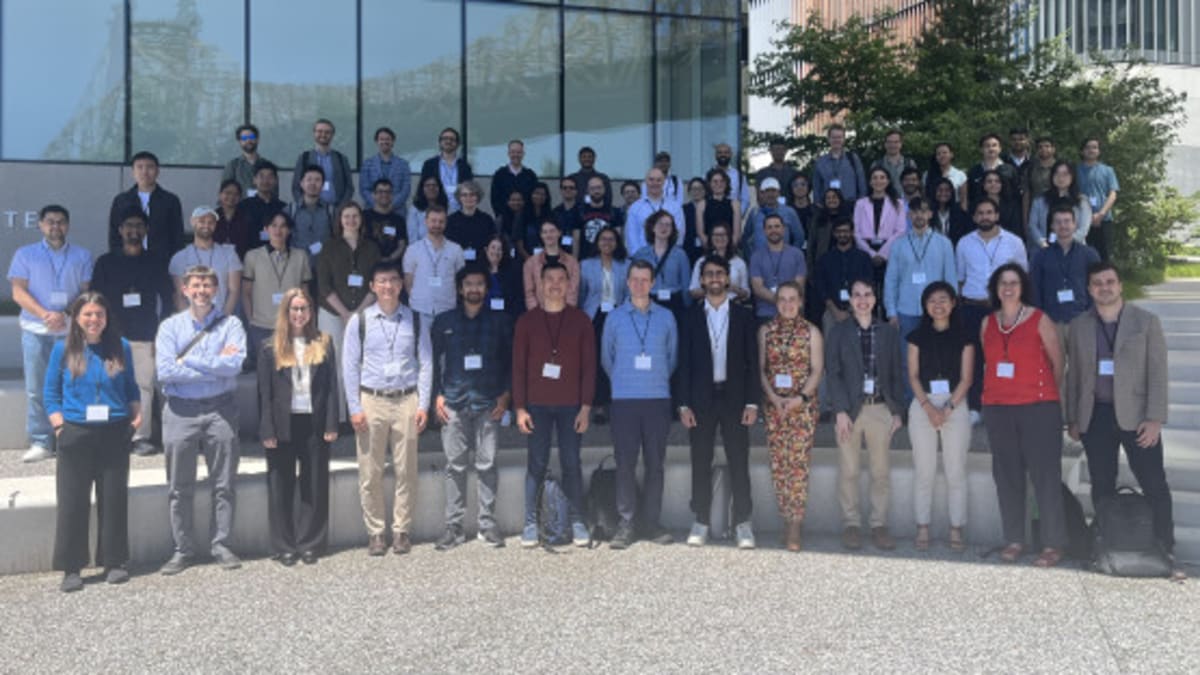
Around 80 researchers from universities, national labs, and companies recently met at Cornell Tech in New York City for a three-day workshop focused on a crucial question: how do we keep AI grounded in the physical laws that govern our universe while using it to speed up scientific discovery?
The workshop brought together 28 speakers from the United States, Canada, the United Kingdom, Germany, Switzerland, India, and Australia. Their mission was to figure out how machine learning can predict molecular behavior and accelerate materials design without losing accuracy or reliability.
Assistant Professor Shuwen Yue from Cornell's School of Chemical and Biomolecular Engineering organized the event. She explained that the goal goes beyond just making accurate predictions. "We want machine learning models that get the right answers for the right reasons," Yue said.
The researchers tackled complex challenges like incorporating physical laws into AI models and improving how well scientists can interpret what these models are doing. They debated when physical knowledge is essential and when powerful data-driven models alone might be enough.
One major theme emerged: success shouldn't just mean AI performs well on test datasets. The real measure is whether these models can solve actual scientific problems and match what researchers observe in real-world experiments.
The team explored how to build in fundamental principles like symmetry and conservation laws. They also worked on methods to measure uncertainty in AI predictions, a critical feature when these tools could guide expensive experiments or influence medical treatments.
The Ripple Effect
This collaboration represents a turning point in scientific discovery. When AI can reliably predict how molecules will behave, researchers can test thousands of potential new materials or medicines in computers before ever stepping into a lab. That means faster development of everything from better batteries to life-saving drugs.
The workshop received support from organizations spanning three continents, including the Centre Européen de Calcul Atomique et Moléculaire, multiple universities, and leading research companies. This global backing shows how seriously the scientific community takes this challenge.
The discussions identified the field's biggest open questions and set priorities for future research, creating a roadmap that could guide molecular science for years to come.
Based on reporting by Google: scientific discovery
This story was written by BrightWire based on verified news reports.
Spread the positivity!
Share this good news with someone who needs it