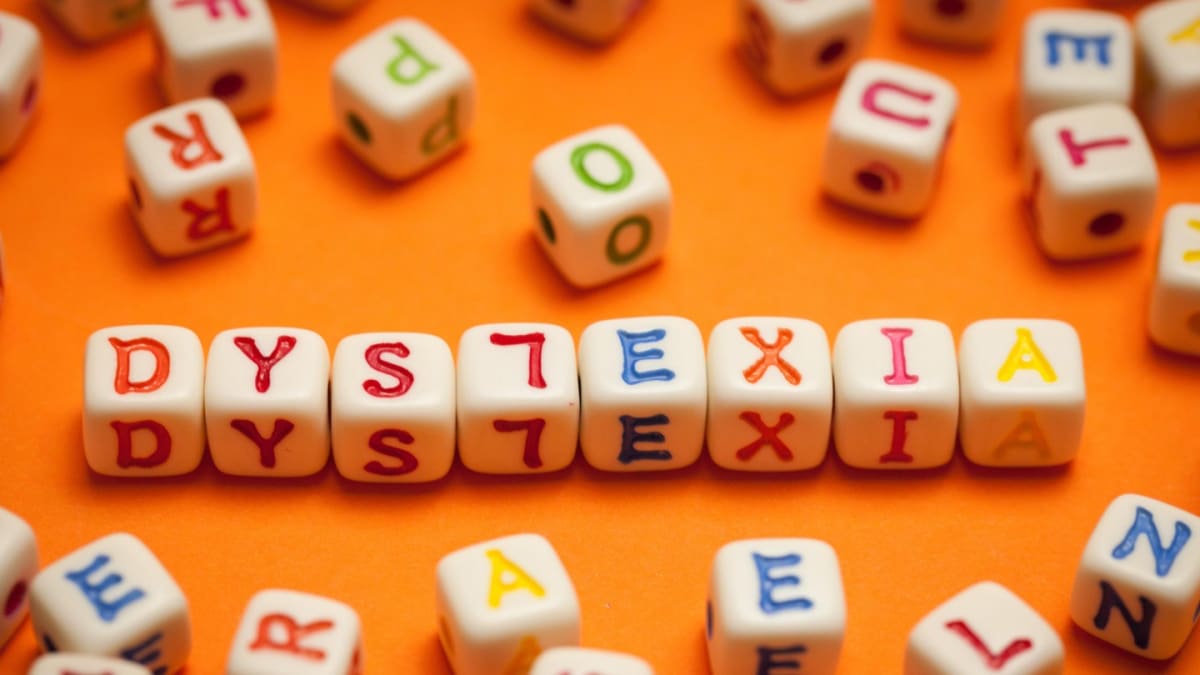
AI Models Dyslexia, Opens Door to Better Treatments
Scientists at EPFL have successfully recreated dyslexia in an AI model for the first time, revealing how the brain processes reading and pointing toward new treatment possibilities. The breakthrough could help 20% of the global population affected by this common learning disorder.
For the first time ever, researchers have taught an artificial intelligence to experience dyslexia, opening a revolutionary new path to understanding and treating the world's most common learning disorder.
Scientists at Switzerland's EPFL NeuroAI Lab used cutting-edge Vision Language Models to recreate the entire reading process, from seeing words on a page to understanding their meaning. When they identified the AI's equivalent of a brain's "visual word form area" and disabled it, something remarkable happened.
"The AI had trouble reading, but it could still understand images and language in general, just as with people affected by dyslexia," explained lead researcher Melika Honarmand. The digital brain showed the same struggles that affect up to 20% of people worldwide.
This breakthrough solves a problem that has frustrated scientists for decades. Studying dyslexia in human brains is ethically complicated because you can't simply turn off neurons to see what happens. In the AI model, researchers can safely test theories that would be impossible to explore in living patients.
The team didn't stop at modeling the disorder. They tested different fonts on their dyslexic AI and found something encouraging: fonts specifically designed for people with dyslexia helped the model read significantly better, while problematic fonts made reading harder.
Now the researchers are using their AI to design the optimal font for dyslexic readers, fine-tuning every detail based on what helps the model perform best.
The Ripple Effect
The real game-changer isn't just about dyslexia. The EPFL team has created a framework that could work for investigating nearly any brain disorder or dysfunction.
They're already applying the same approach to visual hallucinations in Parkinson's disease and exploring applications for depression. Professor Martin Schrimpf, who heads the NeuroAI Lab, believes this represents the first time anyone in the neuro-AI field has successfully modeled a patient population rather than just healthy brains.
The timing couldn't be better. This research only became possible in recent months when the latest generation of combined vision and language AI models were released. Earlier models simply weren't sophisticated enough to tackle something as complex as dyslexia.
"Vision only and language only models do predict some brain activity and some behaviors, but they are far from perfect," Schrimpf noted. The exponential advances in AI technology finally gave his team the tools they needed.
While not every clinician will immediately embrace AI-based digital brains as research tools, Schrimpf is optimistic. "If the results are there then at the very least, it just might be a useful tool," he said.
For millions of children and adults who struggle with reading, writing, and spelling, this AI breakthrough offers something precious: hope that better understanding will lead to better help.
Based on reporting by Google News - AI Breakthrough
This story was written by BrightWire based on verified news reports.
Spread the positivity!
Share this good news with someone who needs it

%2Fhttps%3A%2F%2Ftf-cmsv2-smithsonianmag-media.s3.amazonaws.com%2Ffiler_public%2F0a%2F75%2F0a75c260-fa9a-425c-bf5e-b90eaf93c0f5%2Fmouse-brain.png)