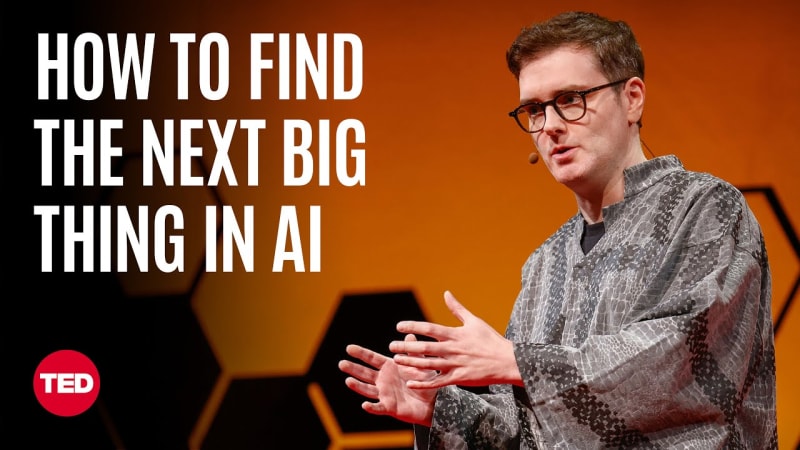
AI Pioneer Llion Jones Calls for Collaborative Research
The co-author of the groundbreaking paper that launched the AI revolution is sounding an optimistic alarm: we need to change how we innovate. Llion Jones believes the next big breakthrough will come from bold exploration, not corporate competition.
The man who helped spark the AI revolution thinks we're doing innovation wrong, and he has a solution that could unlock even bigger breakthroughs.
Llion Jones co-wrote "Attention Is All You Need," the 2017 paper that introduced transformers and launched generative AI as we know it. Now speaking at TEDAI San Francisco, he's calling for a major shift in how the tech industry approaches artificial intelligence research.
Jones warns that the current corporate arms race between tech giants is actually slowing down the next generation of AI advances. When companies compete in secrecy rather than collaborate openly, the kind of bold exploration that led to transformers becomes nearly impossible.
His message isn't one of doom, though. Jones believes we can recapture the spirit of innovation that created the breakthrough he helped pioneer.
The transformer architecture emerged from collaborative research environments where scientists could share ideas freely and take risks without the pressure of quarterly earnings or beating competitors to market. That openness allowed researchers to explore unconventional approaches that eventually revolutionized the field.
Why This Inspires
Jones represents a rare voice in tech: a pioneer who achieved massive success but remains focused on collective progress over individual gain. His willingness to challenge the industry he helped create shows that real innovation requires courage and collaboration.
The timing matters too. As AI becomes increasingly central to our lives, the way we develop it determines who benefits and how quickly progress happens. Jones is advocating for a return to the research culture that made his own breakthrough possible, where scientists work together toward solutions rather than racing to patent them first.
His call for collaborative exploration offers a roadmap back to the kind of bold thinking that creates genuine leaps forward. When researchers can share failures and successes openly, they build on each other's work faster and more effectively than any single company working in isolation.
The next AI revolution might not come from the biggest tech company with the most resources, but from the kind of open, exploratory research that gave us transformers in the first place.
Based on reporting by TED
This story was written by BrightWire based on verified news reports.
Spread the positivity!
Share this good news with someone who needs it