AI Predicts Medical Crises in Indian Hospitals Hours Early
Hospitals across India are using mattress sensors and AI to spot deteriorating patients hours before emergencies become visible. The technology is saving lives in tier-2 cities where doctors and nurses are stretched thin.
In hospitals across India, artificial intelligence is catching medical emergencies before they happen.
A network of health facilities from Bengaluru to Chennai has quietly installed monitoring systems that watch patients around the clock, spotting tiny warning signs that human eyes might miss. These systems are flagging deteriorating patients hours before visible symptoms appear, giving doctors time to intervene when it matters most.
The technology works through sensors placed beneath hospital mattresses. Using ballistocardiography, they detect micro-vibrations from heartbeats, breathing, and body movement without touching the patient's skin.
AI algorithms process this information continuously, watching for dangerous patterns. When respiratory rate, heart rhythm, oxygen levels, and movement begin shifting in ways that precede a crisis, nurses receive automatic alerts on their dashboards.
The breakthrough addresses a critical gap in hospital care. Most general wards rely on nurses checking vital signs every few hours, but conditions like sepsis and respiratory failure often begin with subtle changes that unfold gradually between those checks.
In busy hospitals dealing with staff shortages, these early warning signs slip through unnoticed. Patients can deteriorate for hours before anyone realizes something is wrong.
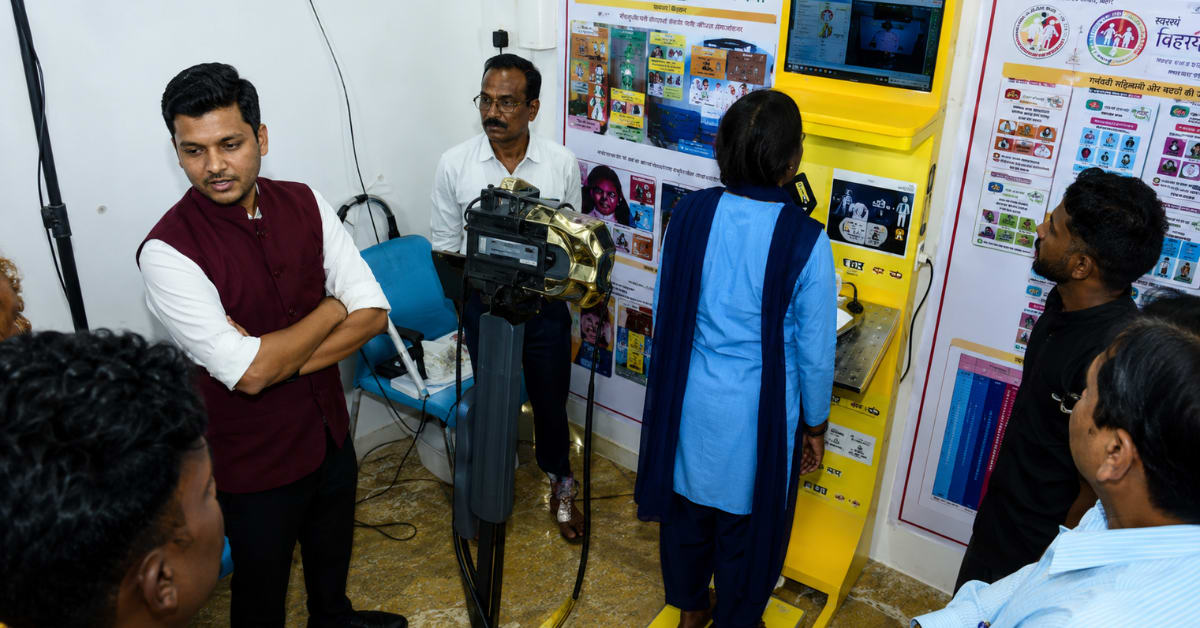
Bengaluru-based health tech company Dozee has deployed its AI monitoring systems across hundreds of Indian hospitals. Yashoda Super Speciality Hospital and facilities in Mangaluru have introduced the technology across non-ICU wards, extending surveillance without requiring constant manual observation.
The adoption is spreading fastest in tier-2 cities where specialist access is limited and healthcare workers are already overstretched. A single nurse can now remotely monitor multiple patients while the AI watches for trouble, creating an extra layer of protection in understaffed facilities.
The systems are moving patients from general wards into critical care earlier, when treatments work better. Early intervention in conditions like cardiac deterioration and respiratory failure dramatically improves survival rates.
The Ripple Effect
The shift from reactive to predictive medicine is changing what's possible in Indian healthcare infrastructure. Hospitals that once could only respond to emergencies are now preventing them, extending specialist-level oversight to facilities that have operated without it for decades.
The technology is particularly powerful for monitoring post-surgical patients and those with chronic conditions who appear stable but remain vulnerable to sudden decline. These are precisely the cases where early detection makes the biggest difference.
India faces persistent shortages of doctors and nurses, especially outside major metros. Government data shows the doctor-patient ratio remains deeply uneven across states, placing impossible pressure on healthcare workers in semi-urban and rural regions.
Continuous AI monitoring isn't replacing human judgment. It's amplifying what limited staff can accomplish, catching patterns that would be invisible during manual checks spaced hours apart.
Hospitals are finding that many preventable medical emergencies occur outside intensive care units, in general wards where patients seem fine until suddenly they're not. The AI systems are catching those invisible transitions, the moments when intervention still works.
The technology represents something rare: a healthcare innovation designed specifically for resource-constrained settings, solving problems that matter most where help is hardest to find.
More Images
.png)
%2Fenglish-betterindia%2Fmedia%2Fmedia_files%2F2026%2F05%2F25%2F1-2026-05-25-17-45-03.png)

Based on reporting by The Better India
This story was written by BrightWire based on verified news reports.
Spread the positivity!
Share this good news with someone who needs it