AI Redesigns 3,395 "Impossible" Materials Into Reality
Scientists at Seoul National University created an AI that transforms materials once deemed too difficult to make into versions labs can actually synthesize. The breakthrough could unlock thousands of discarded discoveries for batteries, semiconductors, and more.
Imagine discovering the perfect material for a next-generation battery, only to realize you can't actually make it in a lab. That frustration has plagued materials scientists for years, leaving countless promising discoveries gathering digital dust.
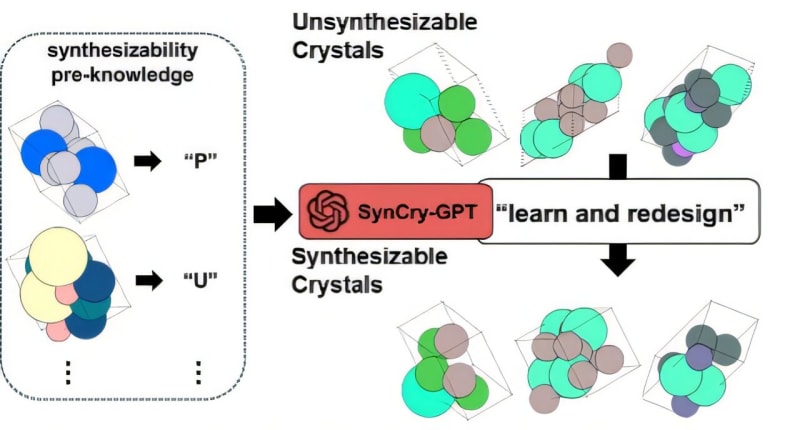
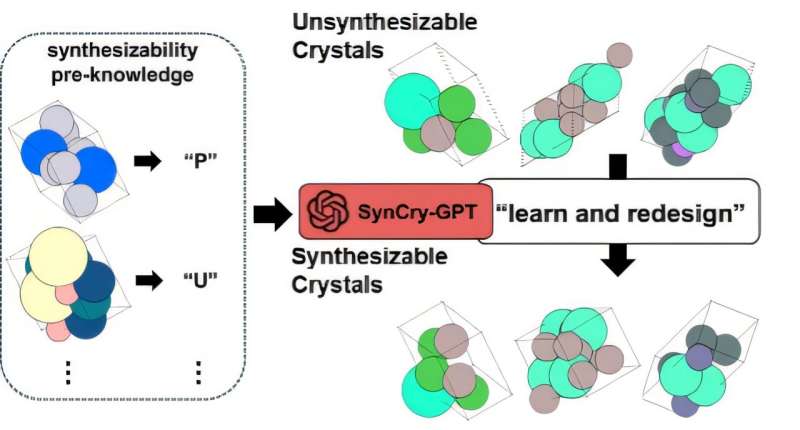
Researchers at Seoul National University just changed the game. Led by Professor Yousung Jung, the team developed an AI system called SynCry that doesn't just predict whether a material can be made. It actually redesigns "impossible" materials into versions scientists can synthesize in real labs.
The technology uses large language models, similar to ChatGPT, but trained specifically on the chemistry of materials. SynCry reads crystal structures like sentences and learns to rewrite them into forms that work in the real world.
The results speak for themselves. Starting with materials predicted to be too difficult to synthesize, SynCry successfully redesigned 3,395 structures into feasible alternatives through repeated learning cycles.
Here's the most exciting part: when researchers checked their top 100 redesigned materials, 34 matched real substances that other scientists had already successfully created and published. The AI had independently figured out how to make materials it had never seen before.
This matters because modern computational chemistry can dream up thousands of potentially revolutionary materials. Researchers identify promising candidates for better batteries, more efficient semiconductors, and stronger building materials every day. But the gap between theory and practice has been enormous.
The Ripple Effect
This breakthrough could resurrect an entire graveyard of discarded research. Materials that scientists abandoned because they seemed too hard to synthesize might get a second chance at changing the world.
The technology could dramatically speed up development timelines for advanced materials. Instead of years spent trying to synthesize one theoretical material, researchers can now get AI-suggested alternatives that maintain the desired properties while being actually makeable.
Graduate student Jaehwan Choi, who co-led the research, described the motivation simply: "Could we bring back virtual materials that had been discarded because they were considered too difficult to synthesize?" The answer is now yes.
The team published their findings in the Journal of the American Chemical Society in October 2025. They're already planning to expand the system to handle more types of materials and larger datasets.
Dr. Seongmin Kim, who worked on the project, called it "an important example showing that AI can play a creative design role in materials science." The technology moves AI beyond prediction into actual problem-solving.
The implications stretch across industries that depend on materials innovation: renewable energy, electronics, construction, aerospace, and medicine all stand to benefit from faster materials development.
A technology that turns scientific dead ends into new beginnings might be exactly what the world needs right now.
More Images


Based on reporting by Phys.org
This story was written by BrightWire based on verified news reports.
Spread the positivity!
Share this good news with someone who needs it