AI Shrinks Chip Parts 500 Times Smaller Than Ever Before
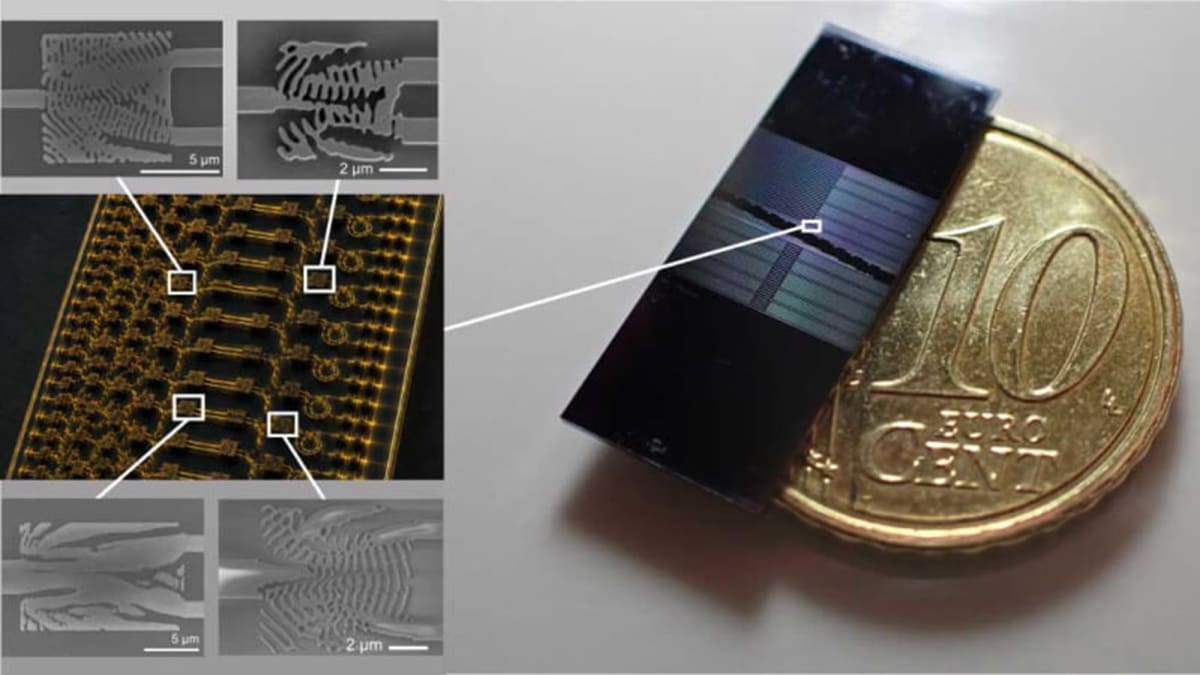
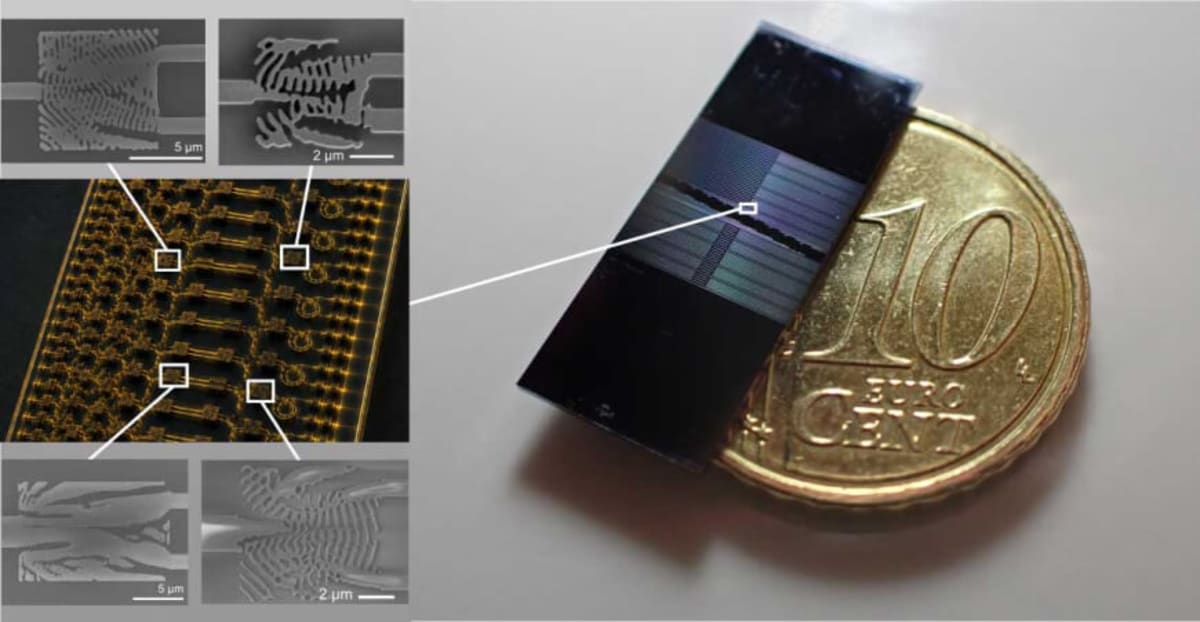
Scientists used artificial intelligence to design photonic microchip components 500 times smaller than human engineers could create, opening the door for faster, more powerful computer chips. The breakthrough shows AI can now generate practical, boundary-pushing designs that were previously "beyond human intuition."
Scientists just proved that artificial intelligence can design computer chip components so tiny they make human-engineered versions look massive.
Researchers at the Max Planck Institute for the Science of Light used an AI algorithm to shrink three essential photonic microchip components by up to 500 times their normal size. The breakthrough, published in Nature Communications, leaves dramatically more room on chips for additional features and faster processing power.
Unlike regular computer chips that use electrons, photonic chips use particles of light called photons. This means they can process and transmit data at the speed of light while using less energy and offering higher bandwidth.
The magic happened when researchers told the AI exactly what they needed the components to do, then let it work backward to find solutions. The algorithm tested and refined thousands of designs until it created delicate nanostructures that achieved the desired result.
"Inverse design lets us define what we want light to do, and the optimization finds a structure that does it, often one no human would have drawn," said study author Toby Bi. The same AI framework successfully designed three different jobs on the same chip: routing light by wavelength, sorting it by spatial mode, and creating tiny mirrors.
The resulting components are incredibly small yet highly effective. The mirrors, about 11 micrometers long, reflected up to 98.5% of incoming light. The wavelength splitter measures roughly the size of a single bacterium, approximately 5 micrometers across.
Traditional chip design requires engineers to start with proven designs and painstakingly optimize them for new uses. This process takes weeks and limits what geometries designers can explore. The AI approach slashed design time from weeks to hours while discovering shapes human engineers never would have imagined.
Why This Inspires
This breakthrough represents more than just smaller components. It demonstrates that AI can move from theoretical promise to practical manufacturing, creating designs that work in the real world. The extra space on chips could unlock entirely new capabilities in fiber-optic communications, data centers, autonomous vehicle sensors, and quantum computing.
While researchers haven't yet combined these components into a complete integrated circuit, that's the next step. The team believes their work paves the way for scalable, high-performance photonic systems that could transform how we process information.
The future of computing might just be designed by machines that think beyond what humans can imagine.
More Images


Based on reporting by Live Science
This story was written by BrightWire based on verified news reports.
Spread the positivity!
Share this good news with someone who needs it