AI System Saves Elephants From Trains in India
A new AI system detects elephants near railway tracks before drivers can see them, giving trains time to stop. After 81 elephants died in train collisions over five years, India is using vibration sensors to protect wildlife.
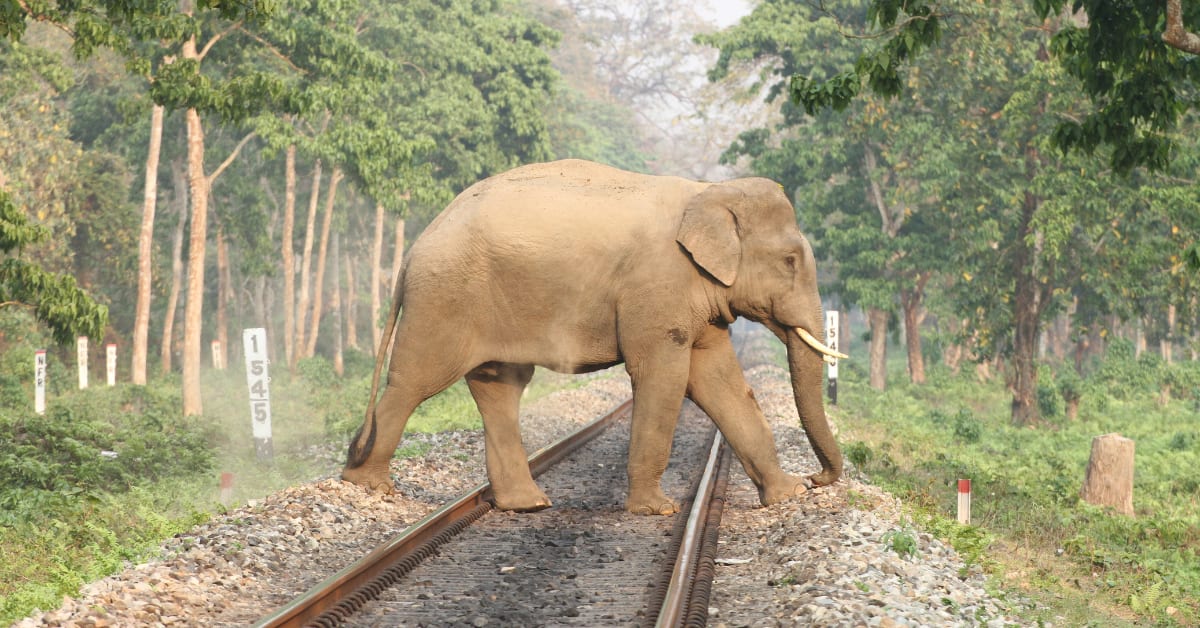
An elephant herd crosses a landscape they've traveled for generations when a train rounds the bend, leaving the driver only seconds to brake before tragedy strikes.
This deadly scenario has killed 81 elephants on Indian railway tracks between 2019 and 2024. But now, artificial intelligence is giving both elephants and train drivers something crucial: time.
Indian Railways has developed Gajraj Suraksha, an AI system that detects elephants before they reach the tracks. The technology turns fiber optic cables running alongside railway lines into a vast network of sensors that pick up vibrations from elephant footsteps.
When elephants walk near the tracks, the system analyzes their movement patterns and sends real-time alerts to train drivers, station masters and control rooms. Instead of spotting an elephant in the darkness with seconds to react, railway teams now receive warnings while animals are still approaching.
The timing matters enormously. A fully loaded train can require 1.6 kilometers to halt after emergency braking, far more distance than a driver gets when elephants suddenly appear on the tracks.
India is home to 22,446 wild elephants, nearly 60 percent of the world's wild Asian elephant population. These herds navigate 150 identified corridors that increasingly cross roads, railway lines and settlements built across their ancient migration routes.
By February 2026, Gajraj Suraksha was protecting 141 route kilometers in Northeast India, with installations approved for eight railway zones across vulnerable stretches. The technology represents a shift from asking drivers to do the impossible to preventing collisions before they become unavoidable.
A similar system in Tamil Nadu shows what early warning combined with human coordination can achieve. Near Coimbatore, 24 AI-enabled thermal cameras monitor elephant movement around the clock.
When elephants approach the railway line, alerts reach forest teams and railway officials who coordinate with station masters and drivers. Over two and a half years, this system generated more than 7,100 alerts and helped facilitate 9,481 safe elephant crossings with zero elephant deaths on that stretch.
The lesson is clear: detection works best when alerts trigger rapid, coordinated responses.
The Ripple Effect
Beyond saving individual elephants, this technology protects entire herds and the genetic diversity crucial for species survival. It also prevents train derailments like the December 2025 collision in Assam that killed seven elephants and derailed a locomotive and five coaches.
The system demonstrates how technology can help humans and wildlife share increasingly crowded landscapes. As settlements expand into traditional elephant territory, solutions that give both species room to coexist become essential for conservation.
India's investment in AI wildlife protection could inspire similar systems worldwide, wherever railway lines cross migration routes. The technology proves that protecting elephants doesn't require choosing between wildlife and transportation, just smarter ways to keep both safe.
More Images
%2Fenglish-betterindia%2Fmedia%2Fmedia_files%2F2026%2F08%2F13%2Fwildlife-sos-5-2026-08-13-12-42-27.png)
%2Fenglish-betterindia%2Fmedia%2Fmedia_files%2F2025%2F11%2F20%2Fwild-at-heart-banner-image-microsite-banner-2025-11-20-16-17-04.jpg)
%2Ffilters%3Aformat(webp)%2Fenglish-betterindia%2Fmedia%2Fmedia_files%2F2026%2F08%2F13%2Fwildlife-sos-6-2026-08-13-12-46-37.png)
Based on reporting by The Better India
This story was written by BrightWire based on verified news reports.
Spread the positivity!
Share this good news with someone who needs it