AI Systems Team Up Like Humans to Speed Up Discoveries
Three AI research systems spontaneously learned to share knowledge with each other, accelerating material discoveries just like human scientists do in research communities. This breakthrough could transform how thousands of AI labs worldwide work together to solve big problems.
Scientists just witnessed something remarkable: artificial intelligence systems teaching each other without being programmed to do so.
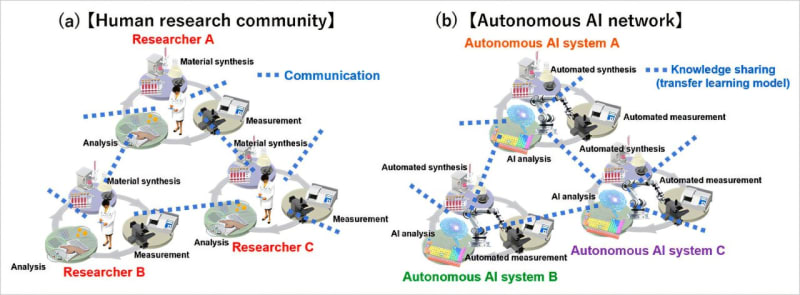
Researchers from Japan's National Institute for Materials Science and University of Tsukuba created three separate AI systems, each hunting for different advanced materials. Instead of working alone like current AI labs do, these systems started sharing what they learned with each other and got faster results.
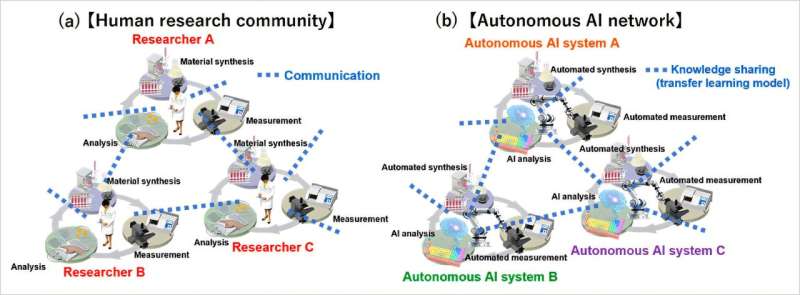
The breakthrough mirrors how human researchers collaborate. When scientists meet at conferences or chat over coffee, they don't just hand over raw data. They share insights, patterns, and knowledge they've discovered. The AI systems now do the same thing.
Here's how it works: each AI system explores different materials and discovers patterns. Instead of keeping that knowledge to itself, it shares those insights with the other AI systems. The receiving systems then use that knowledge to make smarter decisions in their own research.
When the team tested three AI systems working together, each one improved its speed at finding optimal materials. The systems weren't competing. They were genuinely collaborating, building on each other's discoveries.
Why This Inspires
Thousands of autonomous AI research systems already exist worldwide, each working in isolation on everything from new batteries to stronger building materials. This technology could connect them all into one giant problem-solving network.
Think of it like turning thousands of solo musicians into an orchestra. Each AI system brings unique expertise, but together they could tackle challenges no single system could handle alone. Climate solutions, medical breakthroughs, and sustainable materials could emerge faster when AI systems pool their collective intelligence.
The research team published their findings in December 2025, and they're already planning to expand the network to include many more AI systems. As these networks grow, they could accelerate discovery across every scientific field.
What makes this truly hopeful is the spontaneous nature of the collaboration. The systems weren't forced to work together through rigid programming. They developed a natural knowledge-sharing relationship, much like human friendships that form around shared interests and mutual benefit.
The future of scientific discovery might not be humans versus AI, but humans and interconnected AI networks working as partners, each bringing their strengths to solve humanity's biggest challenges together.
More Images

Based on reporting by Phys.org
This story was written by BrightWire based on verified news reports.
Spread the positivity!
Share this good news with someone who needs it