AI That Knows When It's Wrong Speeds Up Science By 40%
Scientists at EPFL created an AI system that combines doubt with discovery, helping researchers find the best experimental setups using 40% fewer tests. The breakthrough could save labs months of time and countless dollars across chemistry, materials science, and drug development.
Teaching artificial intelligence to doubt itself just became science's secret weapon.
Researchers at Switzerland's EPFL developed GOLLuM, an AI system that pairs a language model with what they call a "doubt detector." The combination helps scientists find optimal experimental conditions faster and cheaper than ever before.
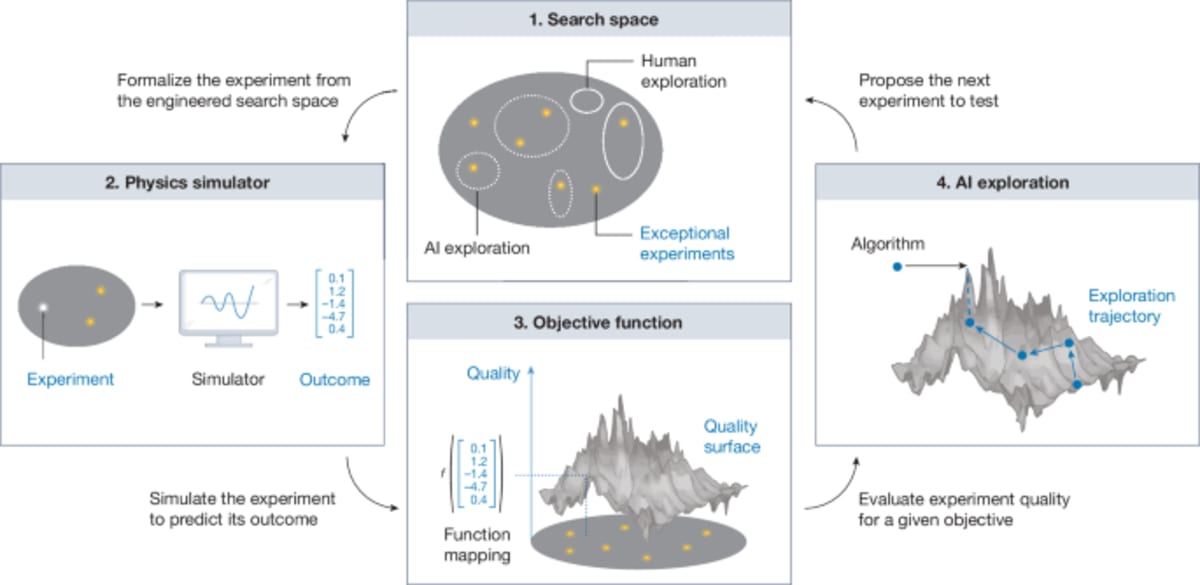
Here's the problem GOLLuM solves: Modern labs can explore millions of possible molecules, materials, and chemical reactions. Testing every option costs too much money and time. Scientists need a smart way to pick which experiments are worth running.
Traditional AI language models hallucinate and make confident claims that turn out wrong, sending researchers down expensive dead ends. Bayesian optimization methods work better but need to be rebuilt from scratch for every new scientific field.
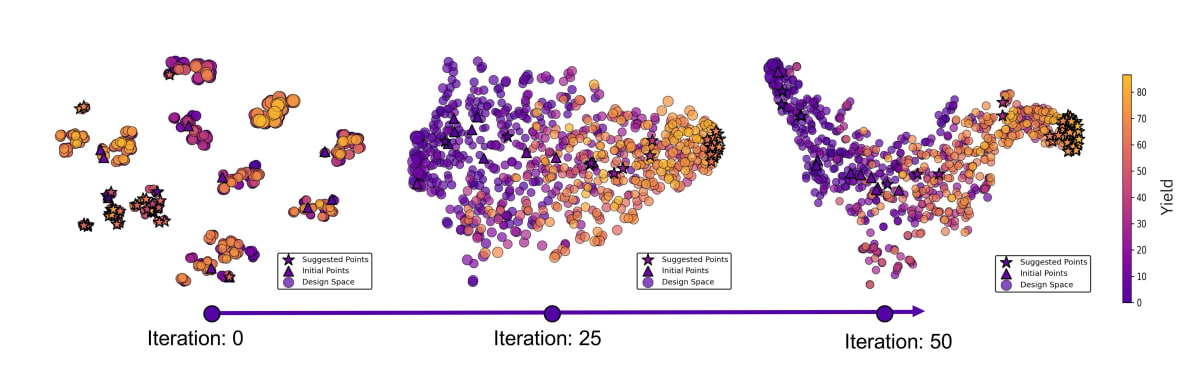
GOLLuM bridges that gap. It trains the language model using uncertainty scores from a Gaussian process, a mathematical tool that measures how confident predictions should be. As the system learns from past experiments, it reorganizes its internal map, grouping similar experiments together and pushing different ones apart.
Bojana Ranković, who created the method during her doctoral research, explains it simply: "Language models are notoriously bad at knowing when they're wrong. In GOLLuM, that uncertainty becomes the very signal that trains them."
The team tested GOLLuM across 23 different scientific challenges, from organic chemistry to materials design to drug development. They used the exact same setup for every test, proving the system adapts without needing custom tweaking.
The results speak clearly. Within a budget of 50 experiments, GOLLuM placed 36.3% of its tests in the top 5% of all possible outcomes. Traditional methods only achieved 29.7%. Overall, GOLLuM matched traditional approaches using 40% fewer experiments.
When the researchers tested language models without the doubt detector, failure rates jumped between 10% and 80%. The AI invented nonexistent chemical structures, repeated the same tests, and suggested impossible experiments.
The Ripple Effect
This advancement means chemistry labs can start optimizing experiments immediately instead of spending six months designing custom testing frameworks. Professor Philippe Schwaller notes they now "optimize directly on a plain English representation of the experimental procedure."
The method works across organic synthesis, analytical chemistry, catalysis research, and molecular property optimization. Any lab using experimental trial and error can potentially benefit, from pharmaceutical companies developing new drugs to materials scientists creating better batteries.
By making AI humble about what it doesn't know, scientists gave it the power to learn what matters most. The framework was published in Nature Machine Intelligence this year.
One AI system that knows when to doubt itself just saved researchers worldwide countless hours and resources.
More Images
Based on reporting by Google: scientific discovery
This story was written by BrightWire based on verified news reports.
Spread the positivity!
Share this good news with someone who needs it