AI Tool Cools City Streets by 3.5°C With Smart Trees
Australian researchers created an AI tool that chooses exactly which trees to plant and where to cool urban areas by up to 3.5 degrees Celsius. The breakthrough could help cities fight deadly heat waves while making neighborhoods greener and more livable.
Cities could soon fight extreme heat with a powerful new ally: an AI system that knows exactly which trees to plant and where to drop temperatures by 3.5 degrees Celsius.
Researchers at Queensland University of Technology developed a tool that solves a problem city planners have struggled with for years. While planting trees always helps, most cities choose species for looks rather than cooling power, missing huge opportunities to protect residents from dangerous heat.
The AI framework analyzes how different tree shapes, sizes, and cooling abilities interact with specific street layouts and climate conditions. It then creates customized planting maps showing exactly where each species will have maximum impact.
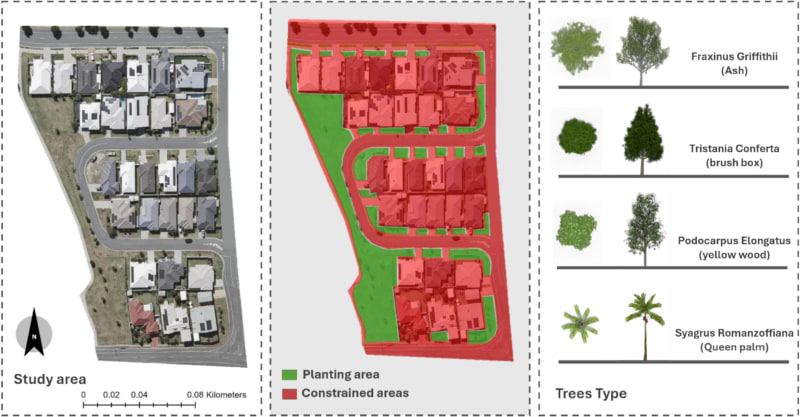
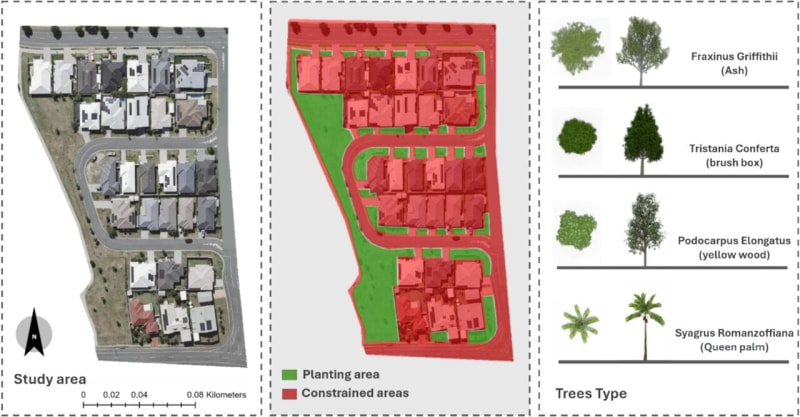
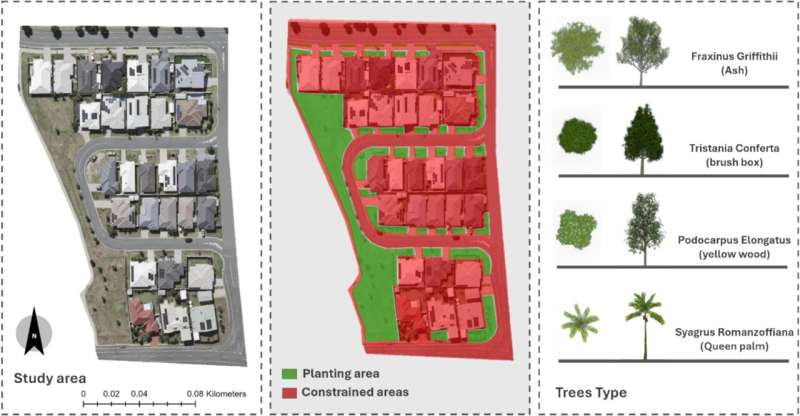
The team tested their system in a recently developed suburb on Bribie Island, Queensland, during extreme summer conditions. They selected four tree species with different canopy shapes: rounded ash trees, dome-shaped brush boxes, narrow yellow woods, and fan-shaped queen palms.
The results impressed even the researchers. The optimized configuration reduced dangerously hot areas (above 39°C) by 22% and increased comfortable zones by 18%.
Lead researcher Abdul Shaamala, a Ph.D. candidate at QUT's School of Architecture and Built Environment, explains why this matters now more than ever. Urban heat islands make built-up areas significantly hotter than surrounding regions, creating serious health risks for elderly people, children, and low-income communities who often lack air conditioning.
Traditional tree planting brings benefits through shade and evapotranspiration, the process where trees cool air by releasing water vapor. But without strategic planning based on heat flow patterns and species-specific traits, cities leave enormous cooling potential untapped.
The Ripple Effect
The implications extend far beyond one Australian suburb. As climate change intensifies heat waves worldwide, cities desperately need cost-effective cooling strategies that don't require expensive infrastructure or drain power grids.
The AI tool gives urban planners something they've never had before: a scientifically optimized blueprint for fighting heat that accounts for local conditions, available space, and maintenance constraints. City managers can input their specific geography and climate data to generate custom planting strategies.
The framework also helps cities avoid common mistakes, like planting the wrong species in locations where they might actually increase nighttime temperatures or fail to thrive. Every tree gets matched to the spot where it will perform best.
The research team published their findings in the journal Cities, making the methodology available to urban planners worldwide. Several municipalities have already expressed interest in adapting the tool for their own heat mitigation programs.
As summers grow hotter and urban populations expand, this AI-powered approach to greening cities offers hope that technology and nature can work together to keep our communities livable.
More Images
Based on reporting by Phys.org - Earth
This story was written by BrightWire based on verified news reports.
Spread the positivity!
Share this good news with someone who needs it