AI Tool Cuts Brain Cancer Research Time by 90%
A new AI assistant called Claude Science is helping medical researchers analyze genetic data in a fraction of the time, potentially accelerating breakthroughs in cancer treatment and drug discovery. One brain cancer researcher now completes analyses in days instead of months.
Imagine cutting months of cancer research down to just a few days. That's exactly what's happening at the UCSF Brain Tumour Centre, where researchers are using a powerful new AI tool to unlock genetic secrets faster than ever before.
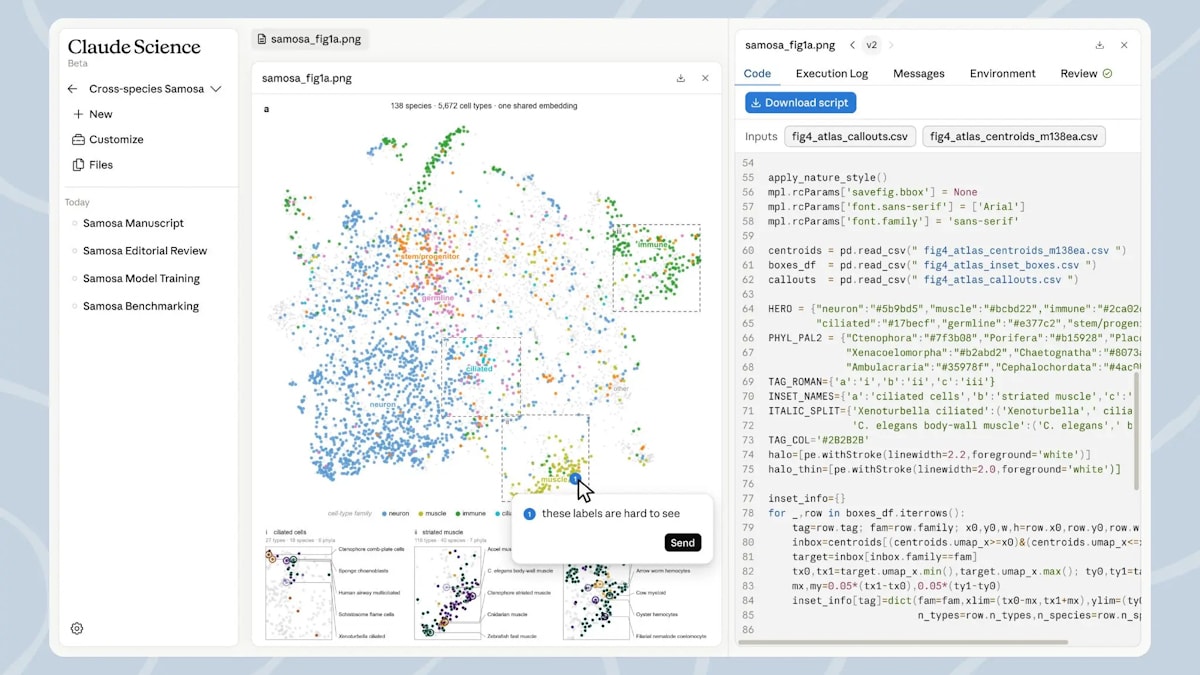
Anthropic just launched Claude Science, an AI workbench designed specifically for life science researchers working on drug discovery and disease research. The tool brings together more than 60 specialized functions into one platform, helping scientists analyze everything from protein structures to genome maps without switching between dozens of different programs.
Dr. Stephen Francis, an epidemiologist studying brain cancer, tested the system for months before its official release. He uses Claude Science to investigate how different genetic variants combine to make some people more susceptible to glioma, a devastating form of brain cancer. The work that once took him weeks now takes about a tenth of the time.
"After months of beta testing Claude Science, I'm convinced," Francis said. "This tool is going to accelerate scientific discovery in a big way."
The system includes access to EDEN, described as the world's largest biological dataset with information from millions of microbe species. What used to require several weeks of research per pathogen now happens in a single conversation with the AI. Researchers can render 3D protein structures, analyze genome maps, design CRISPR experiments, and examine single-cell data all in one place.
Anthropic is offering the beta version early so scientists can test it on real problems and provide feedback. The company is also providing research credits worth up to $30,000 and special funding for ambitious projects that push scientific boundaries, particularly in biology and biomedical research. Applications stay open until July 15th.
The launch comes after the US government briefly restricted exports of Anthropic's advanced AI models over safety concerns but recently lifted those restrictions after the company added new protective guardrails. These safeguards prevent the technology from being misused for dangerous purposes while still empowering legitimate research.
The Ripple Effect
The real magic happens when time saved compounds across thousands of researchers. Every day shaved off a protein analysis or genome study means faster paths to new treatments. For patients waiting for breakthroughs in brain cancer, Alzheimer's, or rare diseases, that acceleration could mean new therapies arriving years sooner. Claude Science joins similar tools from OpenAI and Google in a growing movement to put AI's pattern-recognition abilities to work solving humanity's toughest medical puzzles.
The future of drug discovery just got a whole lot faster.
More Images
Based on reporting by Google: scientific discovery
This story was written by BrightWire based on verified news reports.
Spread the positivity!
Share this good news with someone who needs it