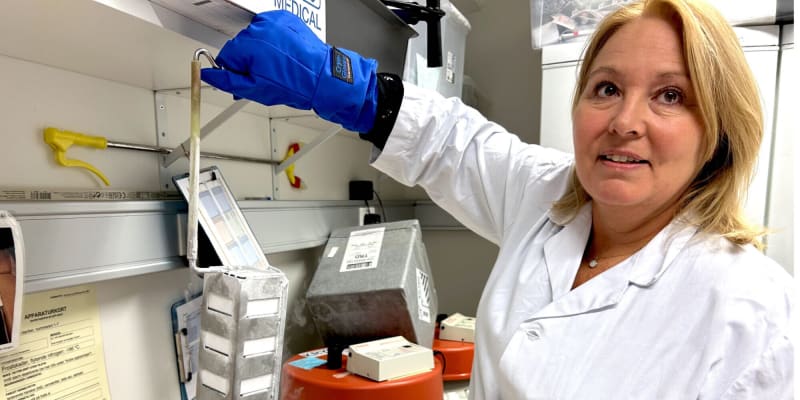
AI Tool Helps Doctors Spot Prostate Cancer More Accurately
Norwegian researchers have developed an AI tool that helps doctors read prostate MRIs faster and more accurately, reducing unnecessary biopsies. The technology is already showing promise in hospital trials, but patients still want doctors to confirm AI findings.
Thousands of men could soon avoid unnecessary prostate biopsies thanks to a new AI tool that helps doctors read MRI scans with greater speed and accuracy.
Researchers at the Norwegian University of Science and Technology developed PROVIZ, an artificial intelligence system that analyzes prostate MRI images. Tests at St. Olavs Hospital show the tool helps radiologists quickly determine whether a patient needs a biopsy and exactly where tissue samples should be taken.
The timing matters. Prostate cancer is the most common cancer among men in Western countries, with about 5,000 new cases diagnosed each year in Norway alone. As more men take PSA blood tests, doctors face a growing flood of MRI scans that need interpretation.
"AI tools can take over the detection of simple and clear-cut cases, allowing doctors to spend their time on more complex ones," said Professor Tone Frost Bathen, who leads the PROVIZ project.
Here's an important context: prostate cancer is closely linked to aging, found in 10% of 50-year-olds, 50% of 60-year-olds, and 70% of men over 80. Most men die with prostate cancer, not from it, making accurate diagnosis crucial to avoid unnecessary treatment.
Why This Inspires
The research team didn't just build technology. They asked patients what they actually wanted.
Ph.D. researcher Simon Berger interviewed 18 men diagnosed with prostate cancer using PROVIZ. His findings, published in Qualitative Health Research, reveal a reassuring truth about how people view medical AI.
Patients welcome AI for straightforward cases like bone fractures. But for cancer diagnoses, they want something more: a doctor to confirm and explain the findings. Trust in the technology flows directly from trust in their physicians.
"The relationship between patient and doctor is still key," Berger explained. "For AI to be accepted in clinical practice, health professionals must be active communicators and guarantors of safety."
This human-centered approach to medical technology offers a blueprint for the future. The best innovations don't replace doctors but give them superpowers to serve patients better. PROVIZ handles the routine image analysis, freeing radiologists to focus on complicated cases and patient communication.
The researchers are now working to patent PROVIZ and make it commercially available. Their work shows that medical AI succeeds when it strengthens rather than threatens the doctor-patient relationship.
Technology and compassion working together is exactly the kind of progress healthcare needs.
More Images

Based on reporting by Medical Xpress
This story was written by BrightWire based on verified news reports.
Spread the positivity!
Share this good news with someone who needs it