AI Tool Offers Hope for 13,000 Rare Cancer Patients
A free artificial intelligence system can now match rare cancer patients with potential treatments in minutes, offering new hope for thousands whose tumors have few dedicated clinical trials. The open-source tool worked for all 260 sarcoma patients tested.
Patients with rare cancers have waited decades for the precision medicine revolution to reach them, but a new artificial intelligence pipeline could finally change that.
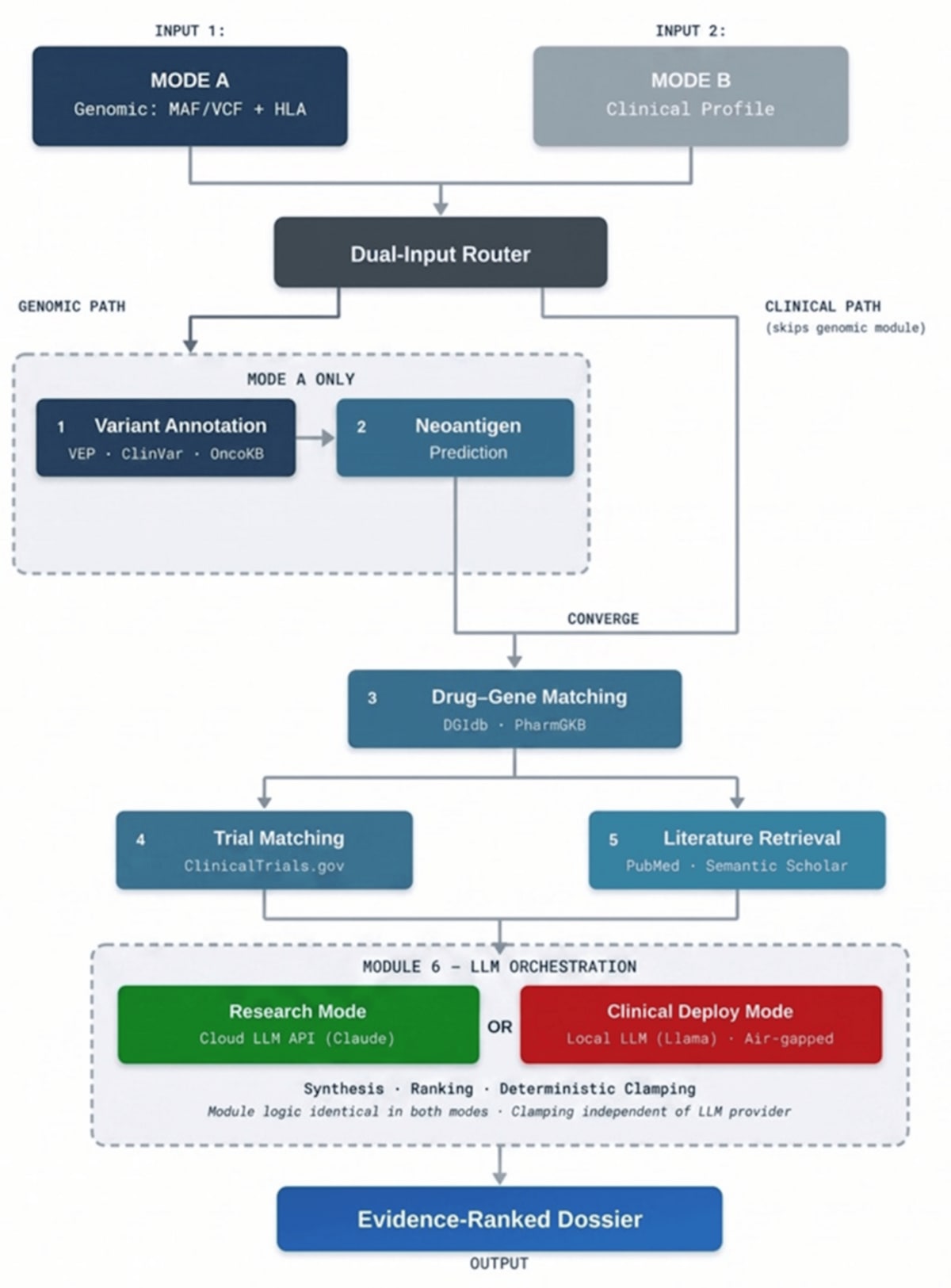
RareCure, a free open-source tool released this month, automatically matches rare tumor patients with potential treatments by analyzing their unique genetic profile. The system processes patient data through six integrated modules that were previously scattered across disconnected tools, delivering ranked treatment options in a single report.
Researchers tested the pipeline on 260 soft tissue sarcoma patients, a group representing one of medicine's toughest challenges. Sarcomas come in over 50 distinct subtypes, affect about 13,000 Americans yearly, and fewer than 5% of subtypes have dedicated clinical trials. Five-year survival for metastatic cases has stayed below 20% for decades.
The results offer genuine hope. The system found at least one FDA-approved or genomically matched drug for 30% of patients, matching rates seen in independent sarcoma studies. Even more promising, it identified biomarker-driven options for nearly 79% of patients, potentially opening doors to basket trials and experimental approaches that rare subtype searches often miss.
The breakthrough extends beyond the science. Running the analysis on all 260 patients cost just $303.74, or about $1.17 per patient, excluding the initial genetic sequencing. That price point makes precision oncology accessible to community hospitals and resource-limited research centers that couldn't afford expensive proprietary systems.
Why This Inspires
Rare cancers account for up to 30% of all cancer diagnoses in America, yet research dollars flow overwhelmingly to common tumor types. Patients with unusual sarcomas, carcinomas, and other orphan cancers often face a heartbreaking reality: their oncologists have few evidence-based treatment paths to follow.
RareCure levels the playing field. Released under an MIT license with no usage restrictions, the tool can be adopted by any academic medical center, community practice, or researcher in the country. The system even includes options for hospitals to run it locally to protect patient privacy under HIPAA regulations.
The pipeline's "deterministic weight clamping" design pattern represents another quiet innovation: it keeps AI reasoning within auditable bounds, creating a template for other clinical AI tools that need regulatory traceability. That framework could accelerate safe AI adoption across medicine.
Lead researcher Danielmartin Arogyasami and team have designated external validation and module testing as next steps, but the core accomplishment stands: end-to-end treatment discovery for rare solid tumors can now happen automatically, affordably, and transparently.
For 13,000 American sarcoma patients diagnosed this year and thousands more with other rare cancers, that's not just a technical achievement—it's a lifeline arriving exactly when medicine needs it most.
Based on reporting by Google News - Cure Discovery
This story was written by BrightWire based on verified news reports.
Spread the positivity!
Share this good news with someone who needs it