AI Turns 27 Years of Black Hole Data Into Stunning Video
Scientists used artificial intelligence to transform 116 telescope images spanning nearly three decades into the highest-resolution video ever made of a black hole jet shooting through space. The breakthrough could revolutionize how astronomers study cosmic phenomena.
Astronomers just unveiled a cosmic movie 27 years in the making, and it's rewriting what we know about black holes.
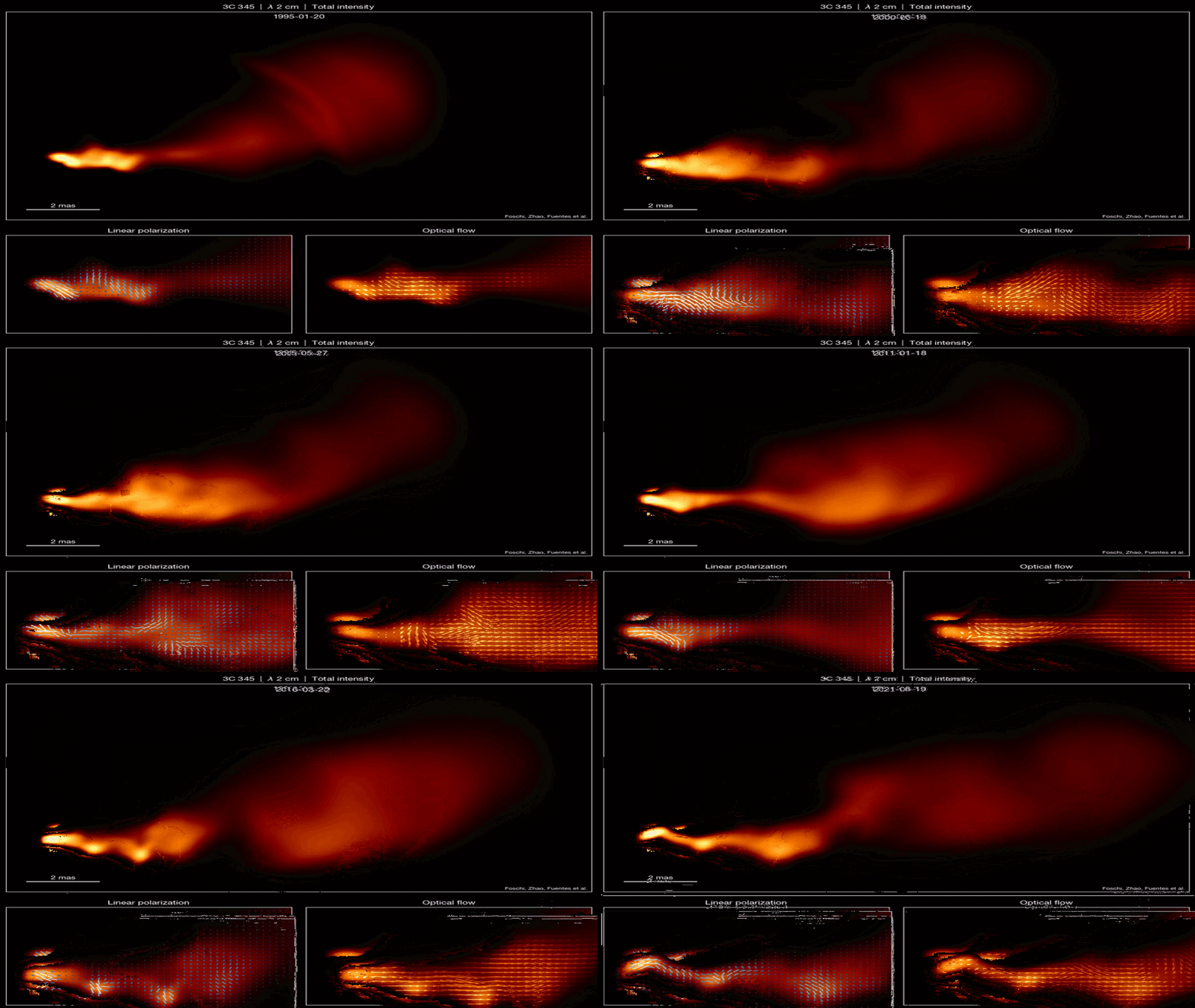
Using an AI tool called Kine, researchers transformed 116 telescope images taken between 1995 and 2022 into a stunning high-definition video of a supermassive black hole jet blasting through space. The jet belongs to a blazar called 3C 345 in the constellation Hercules, and it's moving at nearly the speed of light.
The images came from the Very Long Baseline Array, a network of 10 radio telescopes spread across the United States. While these telescopes provide a sweeping view of the universe, their individual images lack fine detail because of limited pixel resolution.
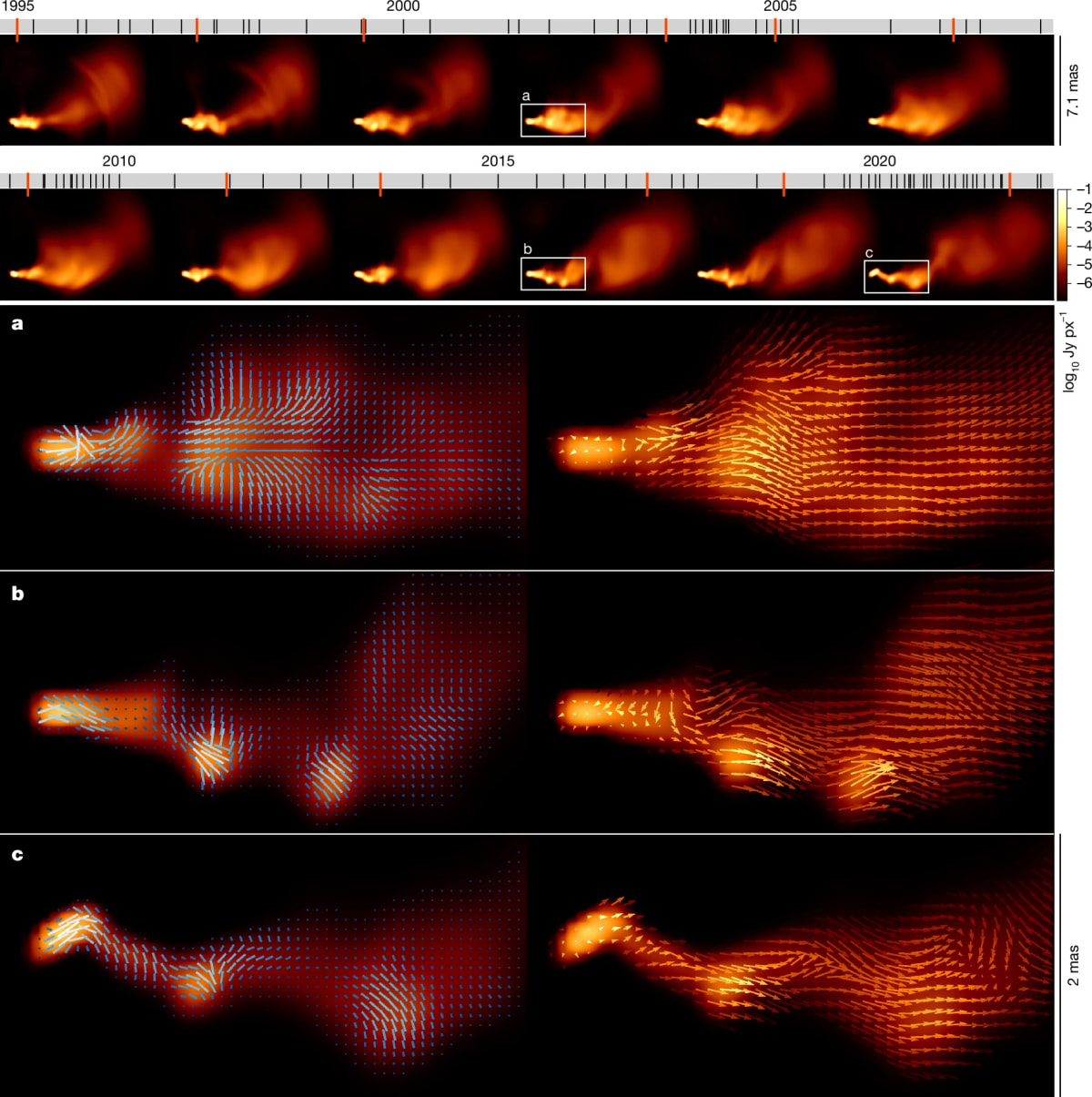
That's where AI changed the game. The Kine neural network learned to process all the observations together, creating a video with four times higher resolution than any single image. Think of it like turning a blurry flipbook into an IMAX movie.
"The higher quality of our video reconstruction enabled a detailed measurement of the plasma velocity in the jet," said study lead author Marianna Foschi, a researcher at Caltech. Her team included scientists who previously worked on capturing the first-ever image of a black hole.
The Ripple Effect
The improved resolution revealed something scientists didn't expect. The jet's brightest components were actually moving slightly slower than the surrounding gas, contradicting the long-held theory that these bright spots are shock waves racing ahead of the plasma flow.
This discovery challenges fundamental assumptions about how black hole jets behave. The team doesn't believe the entire shock wave model is wrong, but their findings suggest scientists need to rethink how these cosmic fire hoses work.
The breakthrough extends far beyond one black hole. Foschi and her colleagues are already planning to apply Kine to other astronomical observations, potentially transforming how researchers study everything from distant galaxies to variable stars.
The technology bridges a crucial gap in astronomy: helping telescopes see not just where things are, but how they move and change over time with unprecedented clarity.
Future astronomers may look back at this moment as the beginning of a new era in space observation, where artificial intelligence helps human eyes see the universe in ways never before possible.
More Images

Based on reporting by Live Science
This story was written by BrightWire based on verified news reports.
Spread the positivity!
Share this good news with someone who needs it

%2Fhttps%3A%2F%2Ftf-cmsv2-smithsonianmag-media.s3.amazonaws.com%2Ffiler_public%2Ff0%2Ffe%2Ff0fe19e4-e68b-474d-b0a4-19c5beb9d19d%2Fspeedy-star.webp)