AI Turns Weather Satellites Into Ocean Current Trackers
Scientists just taught artificial intelligence to transform everyday weather satellite images into detailed maps of ocean currents that were previously invisible. This breakthrough reveals the hidden underwater highways that control our climate without launching a single new satellite.
Scientists have unlocked a hidden superpower in the satellites already orbiting Earth. Using artificial intelligence, they've turned weather satellites into precise ocean current trackers that reveal movements scientists could never see before.
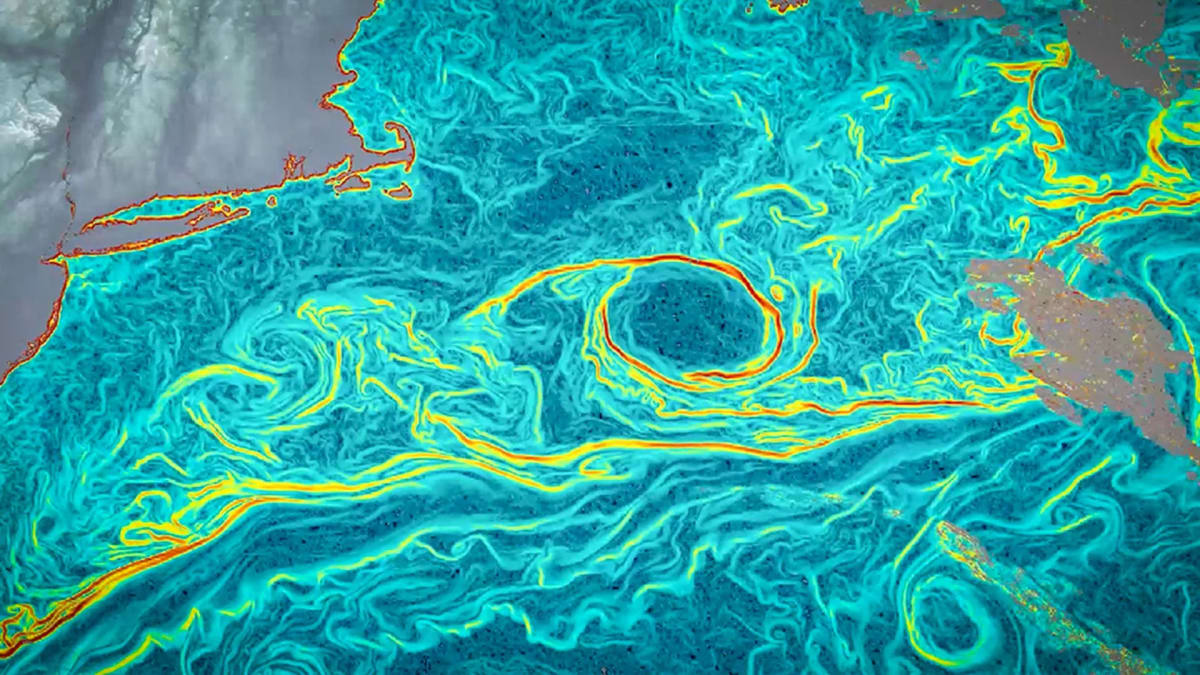
The technique, called GOFLOW, was developed by researchers at UC San Diego's Scripps Institution of Oceanography. It works by teaching a neural network to watch how warm and cool water patterns shift across the ocean surface, then calculating the currents causing those changes.
The timing couldn't be better. Ocean currents act like Earth's circulatory system, moving heat around the planet, transferring carbon dioxide from the atmosphere to the deep ocean, and circulating nutrients that feed marine ecosystems. But until now, scientists lacked the tools to see the small, fast-moving currents where the most important action happens.
Traditional satellite methods could only check the same ocean spot once every 10 days, far too slow to catch currents that form and disappear within hours. Ships and coastal radar work faster but only cover tiny areas. The gap left scientists blind to crucial processes like vertical mixing, where surface waters dive deep and nutrient-rich water rises up.
Lead researcher Luc Lenain got the idea in 2023 while examining thermal images from GOES-East, a weather satellite. He noticed that major currents like the Gulf Stream showed up clearly in the temperature patterns captured every five minutes. The question was whether those patterns could be converted into current measurements.
The team trained their AI on detailed computer simulations that linked specific temperature patterns to known water speeds. Once trained, the system could analyze real satellite images and track how patterns bent, stretched, and moved over time to reveal the currents beneath.
When tested against direct measurements from research ships in the Gulf Stream, GOFLOW matched perfectly. But it provided something traditional methods couldn't: sharp detail of small eddies and boundary layers that usually get smoothed into averages.
Why This Inspires
This breakthrough opens doors that seemed locked without billion-dollar satellite launches. Scientists can now measure the small, intense currents that drive how the ocean absorbs heat and stores carbon, testing theories that previously lived only in computer models.
The method works with satellites already watching our weather, turning existing infrastructure into a powerful climate monitoring network. Search and rescue teams can use it to track currents during emergencies. Marine biologists can follow nutrient highways that sustain ocean life. Climate scientists can finally see the missing pieces of Earth's heat and carbon cycles.
The research, published in Nature Geoscience and funded by the Office of Naval Research, NASA, and the European Research Council, proves that sometimes the biggest discoveries come from seeing what's already there in a new way.
Earth's oceans are finally revealing their secrets, one satellite image at a time.
Based on reporting by Science Daily
This story was written by BrightWire based on verified news reports.
Spread the positivity!
Share this good news with someone who needs it