AI Unlocks Secret to More Efficient Electric Motors
Scientists in Japan developed an AI tool that reveals hidden energy waste inside electric motors, offering a path to make electric vehicles run longer and cleaner. The breakthrough could transform how we build sustainable transportation.
Scientists just figured out how to see the invisible energy drain hiding inside every electric motor, and it could change the future of electric vehicles.
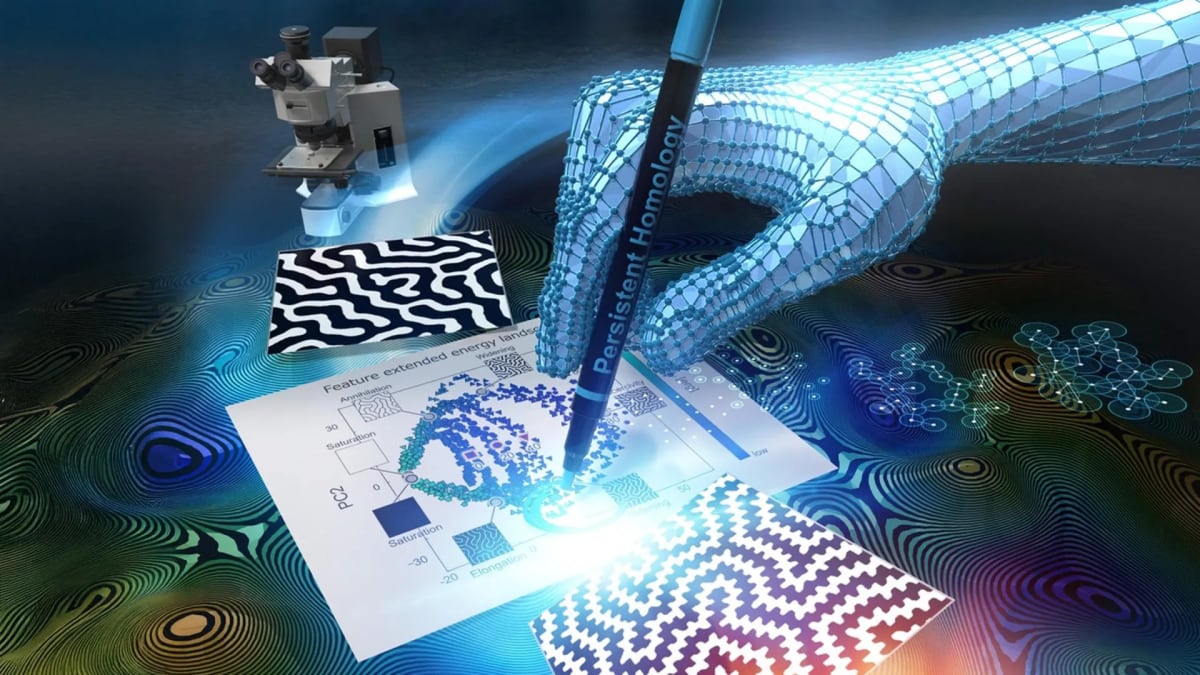
Researchers at Tokyo University of Science developed an AI-powered physics model that peers into the microscopic magnetic structures inside motor materials. These tiny magnetic regions, called maze domains because of their zigzag labyrinth patterns, have been secretly wasting energy as heat every time a motor runs.
Professor Masato Kotsugi and his team from four Japanese universities created a tool called the entropy-feature-eXtended Ginzburg-Landau model. It combines artificial intelligence with advanced physics to map exactly how these magnetic mazes shift and waste energy when temperatures change.
The problem affects every electric vehicle on the road today. When magnetic fields inside motors repeatedly flip direction, a phenomenon called magnetic hysteresis loss converts valuable energy into useless heat instead of motion. High temperatures make it even worse, partially demagnetizing the motor materials and draining efficiency further.
Previous attempts to understand this energy loss hit a wall. Traditional computer simulations oversimplified the problem, while real-world experiments showed complexity without explaining the underlying causes. The gap left engineers guessing how to make motors more efficient.
The new AI model bridges that gap by identifying four major energy barriers that control how magnetic domains behave. Using a mathematical method called persistent homology, the system analyzes microscopic images of magnetic structures at different temperatures and reveals the hidden mechanisms driving energy waste.
The Ripple Effect
The implications stretch far beyond electric vehicles. Since the model uses free energy as its foundation, a universal measure in thermodynamics, researchers can apply the same approach to other magnetic systems and related materials. That means better transformers, generators, and any technology relying on magnetic materials.
The breakthrough also democratizes cutting-edge physics research. By automating the interpretation of complex magnetic behavior, the tool makes advanced analysis accessible to more researchers and engineers worldwide. Problems that once required years of specialized expertise can now be understood in far less time.
For electric vehicle owners and the climate, the timing couldn't be better. As the world races to electrify transportation, every percentage point of efficiency gained means longer battery life, reduced charging needs, and lower environmental impact. Understanding exactly where and why energy disappears inside motors gives engineers the roadmap they need to design the next generation of ultra-efficient electric machines.
The research, published in Scientific Reports and supported by the Japan Society for the Promotion of Science, represents years of collaboration between institutions. Now that scientists can finally see inside the magnetic maze, they can start redesigning the path to waste less energy along the way.
Based on reporting by Science Daily
This story was written by BrightWire based on verified news reports.
Spread the positivity!
Share this good news with someone who needs it