Alabama's Civil Rights Trail: 8 Sites Where History Was Made
The churches, bridges, and parks where Americans fought for equality still stand today, inviting visitors to walk the same ground where courage changed a nation. From Birmingham to Selma, these landmarks tell the story of the movement that transformed American life.
Alabama holds more than memories of the Civil Rights Movement. It holds the actual places where history turned.
These aren't distant monuments. They're the church basement where the Montgomery Bus Boycott began, the bridge where 600 marchers faced violence that shocked a nation, and the park where children stood against fire hoses. Walking these sites means stepping inside the moments that changed America.
Eight locations across five Alabama cities trace the movement from the 1940s through the 1960s. Each one tells a story of courage that led to laws protecting every American's rights.
Bethel Baptist Church in Birmingham became the command center for nonviolent protest under Rev. Fred L. Shuttlesworth in the 1950s. The church was bombed three times, including on Christmas night 1956. The very next morning, Shuttlesworth led 200 people onto segregated city buses in defiance. Today, visitors can tour the church and see markers where each bomb was planted.
Just blocks away, Kelly Ingram Park served as the staging ground for the Children's Crusade of May 1963. Thousands of young demonstrators, many of them school-aged, gathered before marching into a city that met them with police clubs and fire hoses. The televised images catalyzed congressional support for federal civil rights legislation. Now the park functions as an outdoor museum with sculptures depicting the demonstrations and a Freedom Walk with interpretive markers.
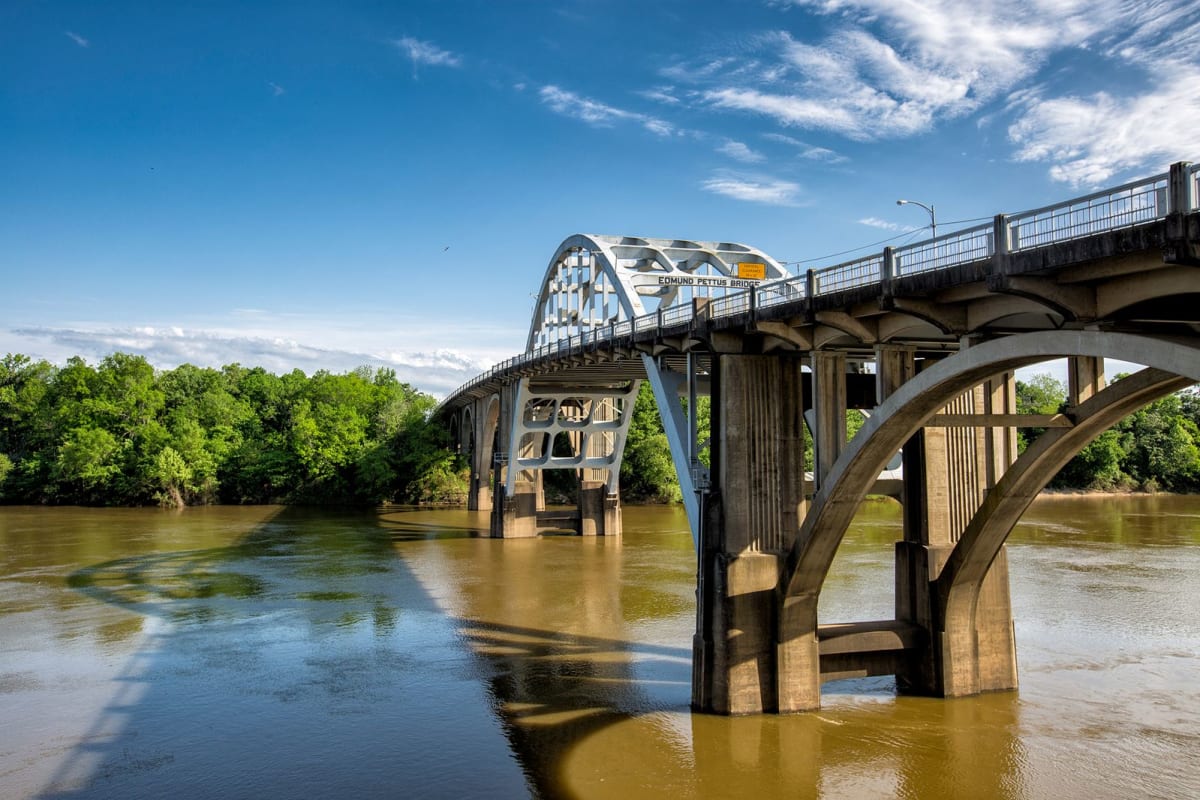
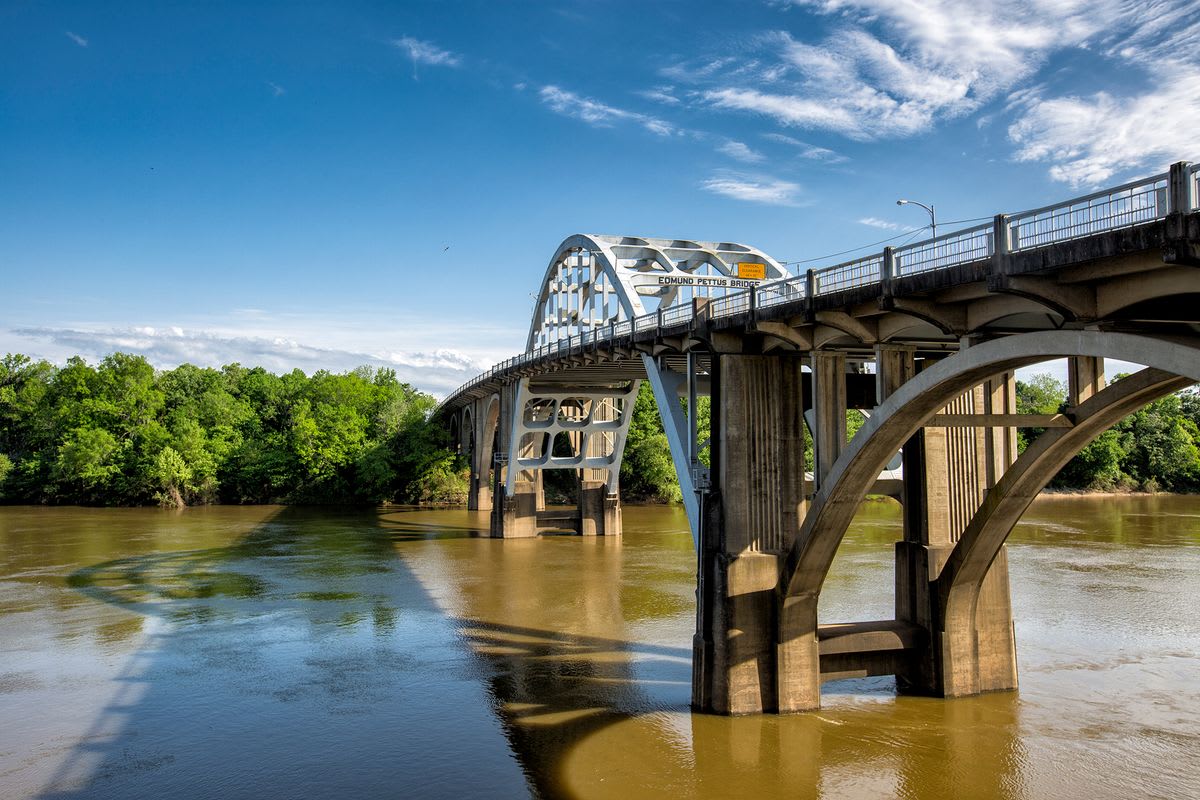
The Edmund Pettus Bridge in Selma stands as perhaps the most recognized symbol. On March 7, 1965, state troopers attacked 600 peaceful marchers with clubs and tear gas on what became known as Bloody Sunday. Networks interrupted regular programming to broadcast the assault. Five months later, President Johnson signed the Voting Rights Act of 1965.
In Montgomery, the Rosa Parks Museum marks the exact block where Parks was arrested on December 1, 1955, for refusing to give up her bus seat. Her arrest sparked 381 days of organized resistance. Nearby, Dexter Avenue King Memorial Baptist Church preserves the pulpit where a young Dr. Martin Luther King Jr. preached from 1954 to 1960, shaping the philosophy of nonviolent resistance.
The Ripple Effect: These sites collectively welcome hundreds of thousands of visitors each year, many retracing the Selma to Montgomery march route. Schools bring students to understand how ordinary people organized extraordinary change. The locations demonstrate that democracy requires constant work and that citizens can reshape unjust laws through sustained, peaceful action.
Today, all eight sites remain open to the public. Some still function as active churches while serving as museums. Together, they form a trail through the geography of justice, showing visitors exactly where Americans stood up and changed the future.
More Images
%2Fhttps%3A%2F%2Ftf-cmsv2-smithsonianmag-media.s3.amazonaws.com%2Ffiler_public%2F4c%2F12%2F4c12e7a6-c188-4b0a-82e3-1d72cc89c51a%2F043014_edmundpettisbridge0004_2.jpg)
%2Fhttps%3A%2F%2Ftf-cmsv2-smithsonianmag-media.s3.amazonaws.com%2Ffiler_public%2F0d%2Faa%2F0daadfa0-2dde-4a01-a6d4-c449021b6625%2F221028_uscrt_16th-bethel__0732_2.jpg)
%2Fhttps%3A%2F%2Ftf-cmsv2-smithsonianmag-media.s3.amazonaws.com%2Ffiler_public%2F4a%2F5a%2F4a5ae40d-c1bd-4129-896a-ebf1b66ecff7%2F170308_kellyingrampark0008_2.png)
Based on reporting by Smithsonian
This story was written by BrightWire based on verified news reports.
Spread the positivity!
Share this good news with someone who needs it