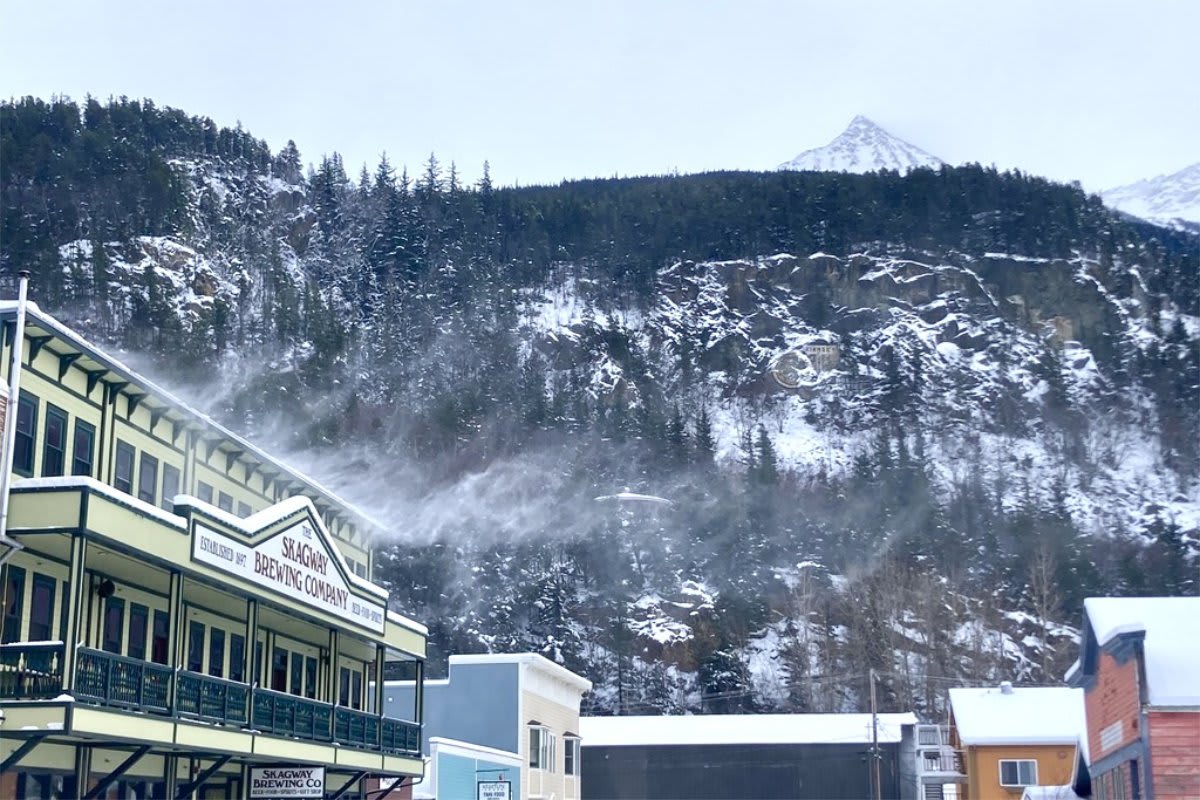
Alaska Brewery Grows 250 Pounds of Lettuce Weekly Upstairs
In remote Skagway, Alaska, a brewery built an indoor farm on its third floor that produces fresh lettuce year-round for a town that once relied on unreliable barge deliveries. The system captures CO2 from brewing beer to grow greens without soil, solving a very local food problem.
When your town of 1,000 people is cut off by winter weather and fresh lettuce arrives brown and wilted, you get creative.
That's exactly what happened in Skagway, Alaska, where brewery owner Mike Healy built an aeroponic farm on the top floor of his restaurant. The system now produces 250 pounds of fresh, crisp lettuce every single week.
Skagway sits in remote southeast Alaska, where residents depend on barges from the Lower 48 to bring groceries to their single market. In winter, supply chains freeze up. Lettuce that does arrive is often damaged, expensive, or both.
Healy's solution was unconventional. He installed an aeroponic growing system above his brewery, where plants grow in mist instead of soil. The farm sprays nutrient-rich water directly onto plant roots while capturing CO2 from the beer-making process below to speed up growth.
The setup uses minimal water and zero pesticides. It supplies all the lettuce the brewery's restaurant needs, even during the busiest summer months when over 1.3 million cruise passengers visit town.
Farm manager John Michael Mead said the difference is dramatic. "Lettuce is the hardest to get up here, because of how delicate it is," he explained. "It shows up bad or partially bad and we spend hours picking through it."
Now the Raven's Nest farm grows four varieties of lettuce plus basil in quick growing cycles. In winter, when demand drops, excess greens go to the local school, senior center, and market at cost or free.
The brewery opened its current building in 2019 with the farm designed into the top floor from the start. Brewing happens on floor one, the restaurant on floor two, and farming on floor three. Even the spent yeast from brewing gets composted for town gardens.
The Ripple Effect
Healy believes his model can work anywhere food security is a challenge. The system cost $150,000 in 2018, though the company that sold it to him disappeared right after he paid. He eventually got the equipment delivered and working, proving the concept even when things went wrong.
For Skagway residents, having fresh local greens in February isn't just physically healthy. It's a mental boost in a place where winter isolation is real and food choices are limited.
Other remote Alaskan communities are watching closely. If a brewery in a town of 1,000 can grow fresh food year-round using beer production waste, the model might work anywhere supply chains struggle.
Fresh lettuce in the middle of an Alaskan winter is now normal in Skagway, one misted leaf at a time.
More Images

Based on reporting by Reasons to be Cheerful
This story was written by BrightWire based on verified news reports.
Spread the positivity!
Share this good news with someone who needs it