Alaska Village Races to Save 500-Year-Old Artifacts
After a typhoon scattered centuries-old treasures across an Alaska beach, archaeologists and villagers are working together to rescue precious pieces of their heritage before the next storm hits. The emergency dig is uncovering hand-carved dolls, wooden masks, and tools that connect today's Yup'ik community to their ancestors.
The day after Typhoon Halong battered western Alaska last October, Jenny Matthew spotted something unusual on the torn-up beach near her village of Quinhagak. It was a smooth wooden bowl, carved by her ancestors between 400 and 600 years ago.
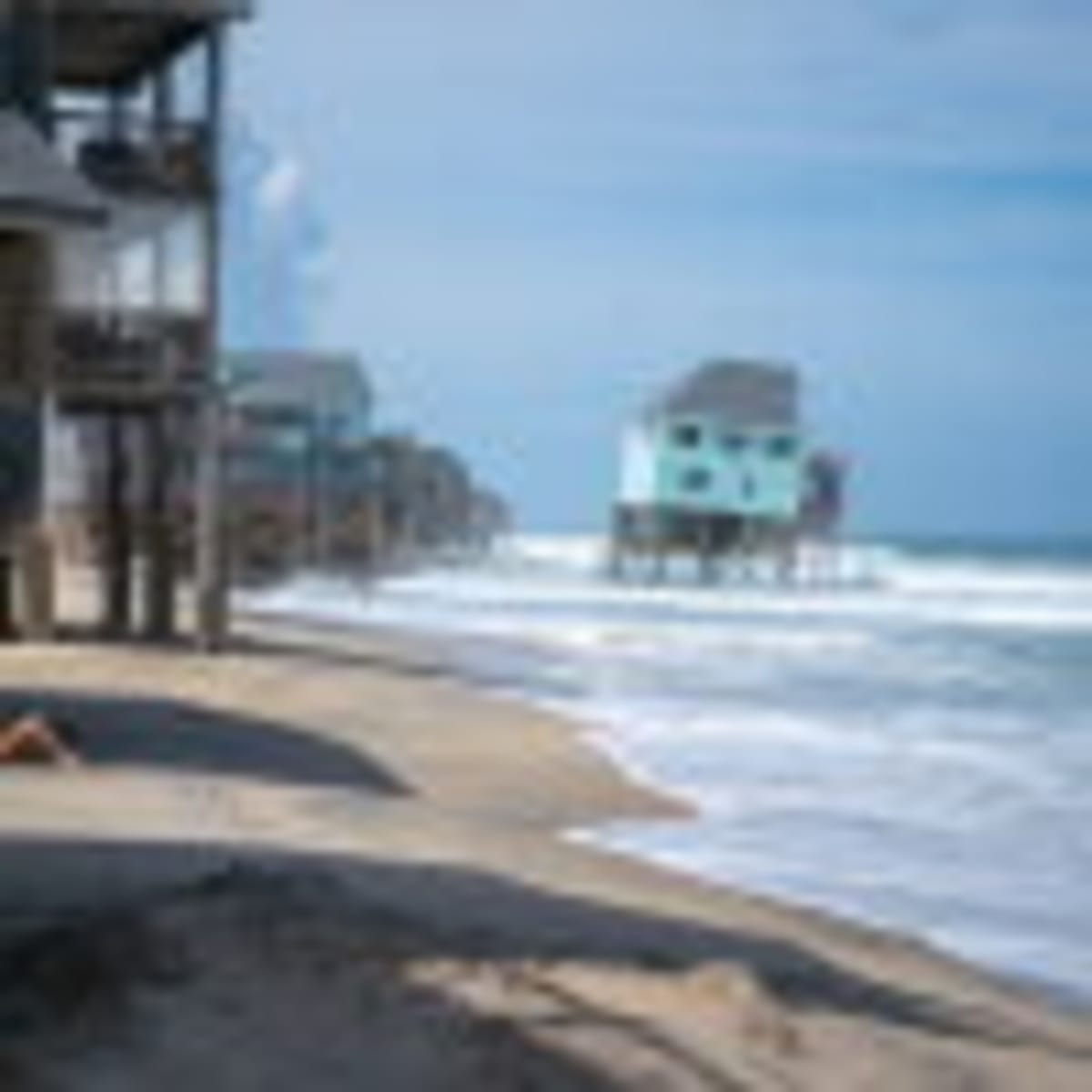
The storm had done more than scatter objects from the nearby Nunalleq archaeological site. It had stripped away precious land, pushing the Bering Sea dangerously close to thousands of artifacts still buried in the frozen ground.
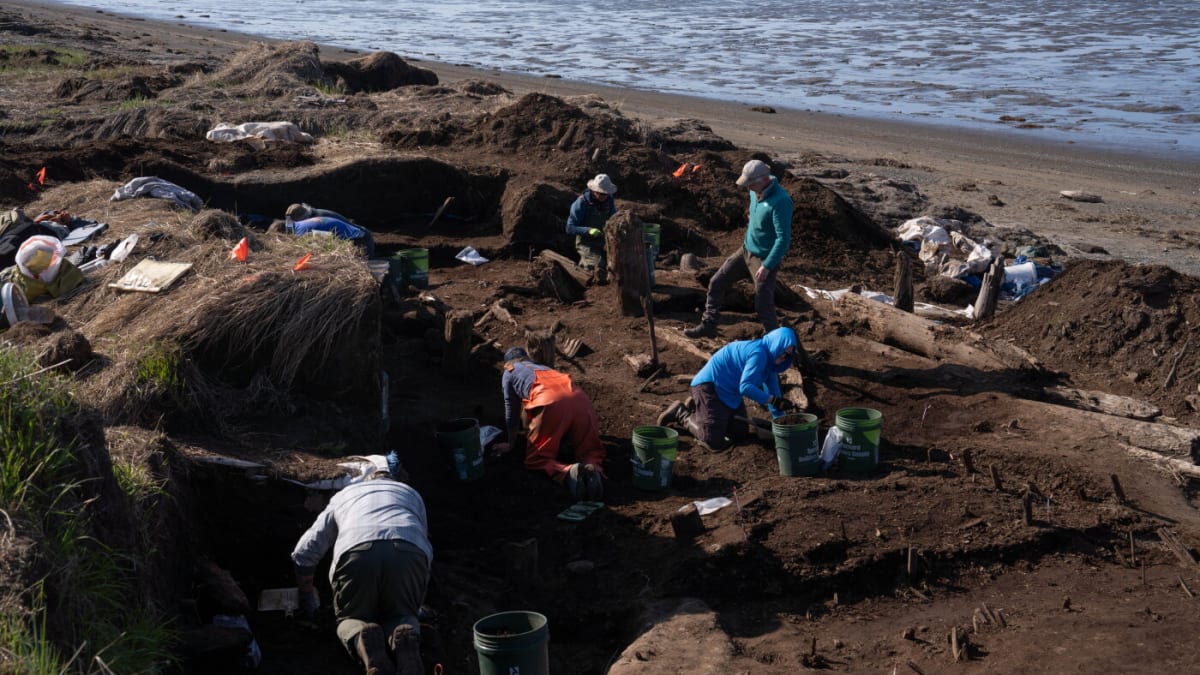
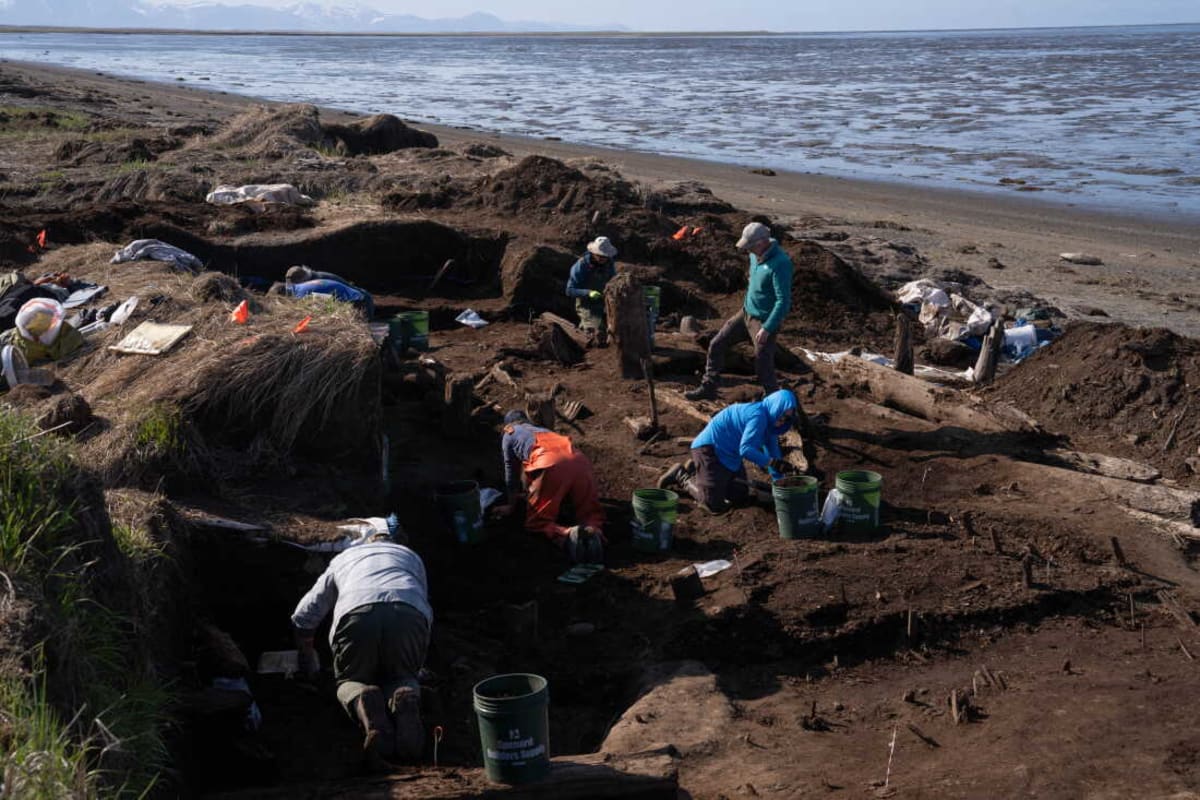
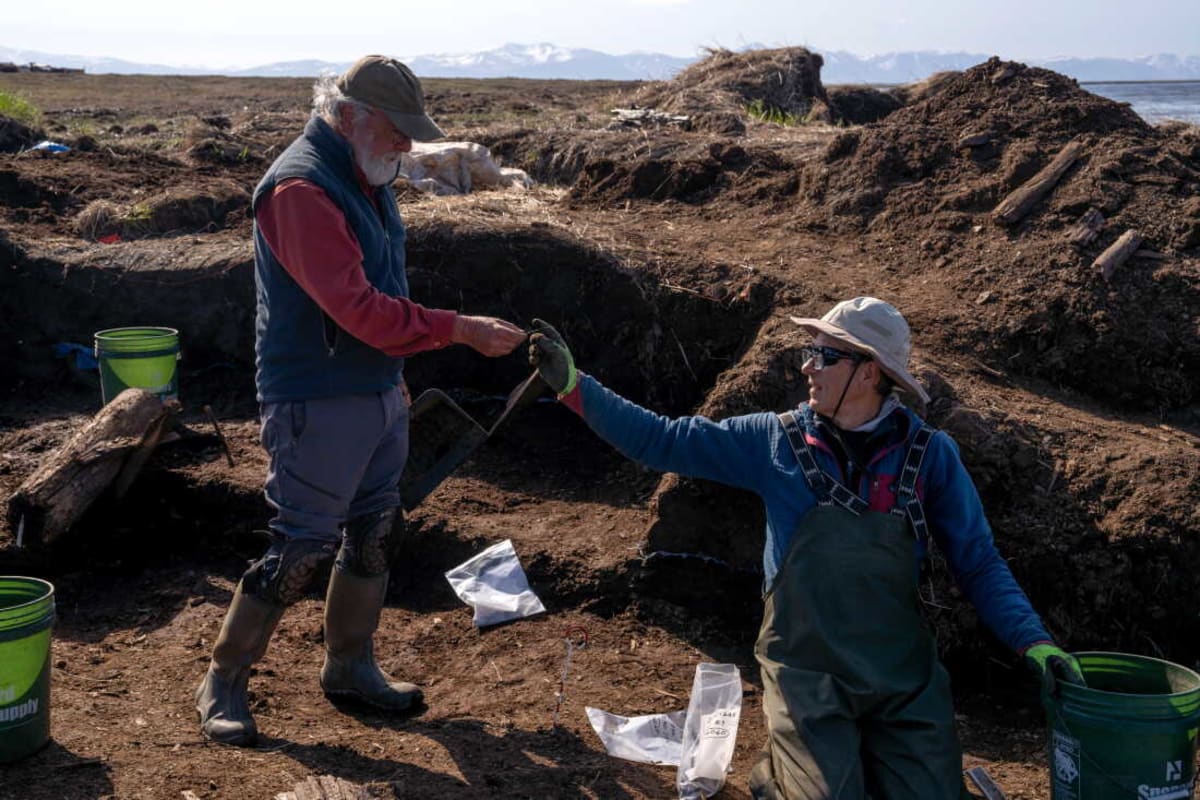
This summer, lead archaeologist Rick Knecht returned with a team of volunteers for an emergency dig. Their mission: save as much as possible before the next big storm arrives.
The Nunalleq site has been carefully excavated since 2009, after thawing permafrost first revealed these treasures in the early 2000s. The frozen ground preserved what would have eroded elsewhere: hand-carved animals, grass rope, sewing needles, ornate wooden masks, and pieces of kayaks.
The village deliberated and decided these pieces of Yup'ik culture were worth saving. Now they're in a race against time and rising waters.
Charlotta Hillerdal, who has worked this dig for over 15 years, was home in Scotland when she heard about the storm damage. "I was crying," she said. "It was a horrible feeling."
The team has watched the sea creep closer year after year. Decreasing sea ice and permafrost thaw, both fueled by climate change, have made these shorelines vulnerable. At some high tides now, seawater reaches into the excavation pit.
The emergency dig area is small, about the size of a backyard pool. But it contains the buried remnants of several sod houses and countless objects that tell the story of life here centuries ago.
The Ripple Effect
The Nunalleq Culture and Archaeology Center now houses these recovered treasures, where community members and the public can connect with the past. Elizabeth Church, director of Quinhagak Heritage Inc., which manages both the center and the dig, says the artifacts do more than educate.
"We all as humans want to know who we are and where we come from, and having the Nunalleq there for us strengthens that," Church explained. When young people see the intricate carvings and tools their ancestors made, they understand the resilience woven into their heritage.
The team runs on a shoestring budget, funded by the Pacific Northwest Archaeological Society, the Daughters of the American Revolution, and donations through GoFundMe. They hope to return next summer, though they're still raising money.
Knecht refuses to give up on what remains in the ground: "I'll be damned if I'm going to leave this for the waves."
Every artifact rescued is a bridge between generations, proving that some treasures are worth racing against the tide to save.
More Images
Based on reporting by NPR Science
This story was written by BrightWire based on verified news reports.
Spread the positivity!
Share this good news with someone who needs it