Alaska Volunteers Free 2-Year-Old Humpback From Net
A team of volunteers in Petersburg, Alaska spent two days tracking and rescuing a young humpback whale trapped in fishing net. After 30+ attempts and help from a federal whale expert, they freed the whale back into open water.
When Heath Whitacre finally checked his phone after chopping wood, he had a dozen missed calls about a whale in serious trouble.
A two-year-old humpback was tangled in a gillnet near Petersburg, Alaska, still connected to a fishing boat in Frederick Sound. Whitacre grabbed his gear and headed out with the Petersburg Marine Mammal Center, a volunteer-run nonprofit that rescues distressed wildlife.
The first day didn't go as planned. The whale had drifted toward the Stikine River, where glacial runoff made the water too murky to see how badly it was entangled. After eight hours on the water, the team had to retreat.
But before leaving, they attached a bright green tracking buoy to the net. The device would beam the whale's location back to them in real time while they regrouped.
The team called in Ed Lyman, NOAA's Large Whale Entanglement Response Coordinator, who'd been rescuing whales for decades. He was already teaching whale rescue techniques in nearby Tenakee Springs and flew to Petersburg the next morning.
What happened next looked like an Avengers assembly. Trained volunteers, boat owners, an Alaska State Trooper, and Lyman gathered for a quick briefing, then set out to find that green buoy.
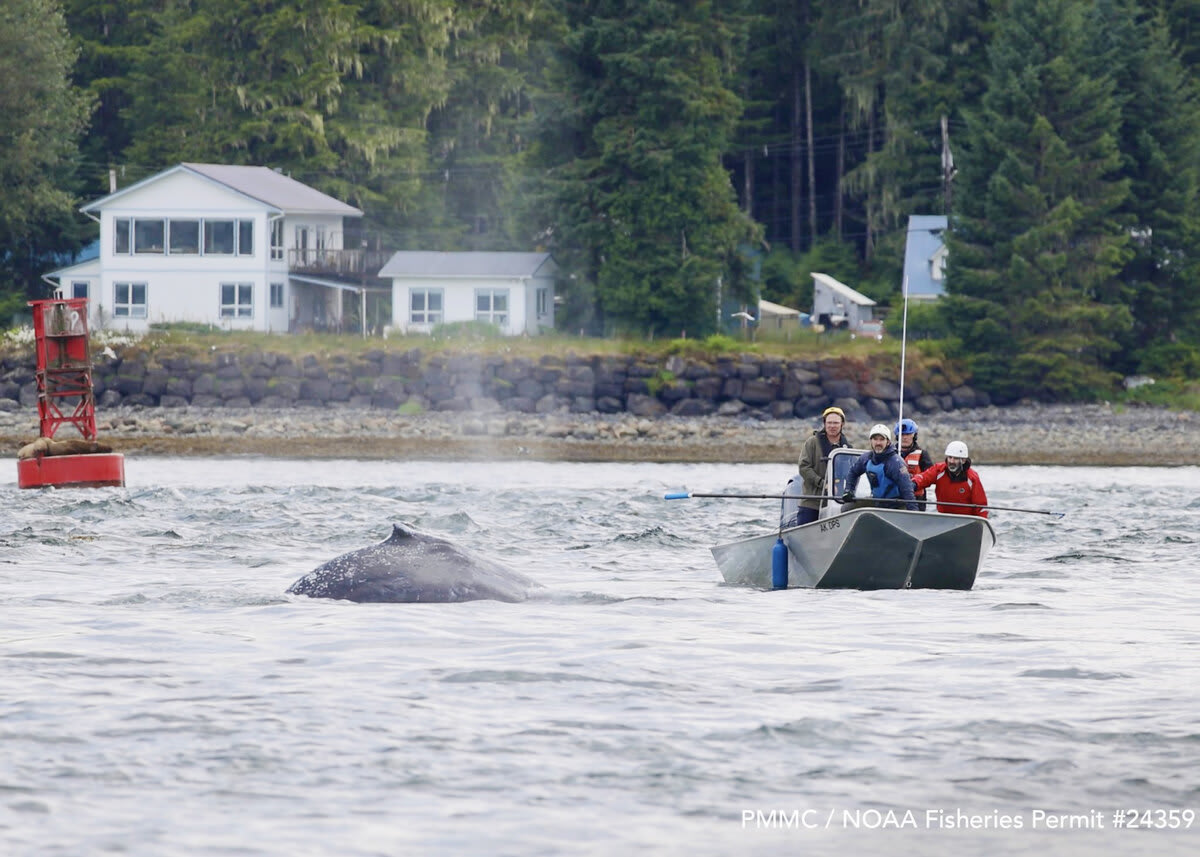
Whitacre's cutting tool was simple but effective: a long telescoping pole with a homemade knife attached. Toby Bakos, the center's stranding coordinator, stood behind him on the bow, gripping Whitacre to keep him from falling overboard.
The whale wasn't cooperating. It dove repeatedly, trying to escape the approaching boat. The murky water meant they could barely see its tail most of the time.
After two hours and more than 30 attempts to cut the line, Whitacre finally got it. The net popped to the surface, the buoys stopped moving, and the young humpback swam away free.
Why This Inspires
This rescue shows what's possible when communities invest in training everyday people to respond to wildlife emergencies. The Petersburg Marine Mammal Center runs entirely on volunteers who juggle day jobs with rescue work.
Lyman travels across Alaska teaching these exact skills so small coastal towns can act fast when whales get in trouble. His decades of experience, combined with local volunteers willing to drop everything and spend hours on cold water, saved this young whale's life.
The tracking technology made the difference too. Without that telemetry buoy, finding the whale again in Alaska's vast waterways would have been nearly impossible.
Now that two-year-old humpback has a fighting chance to grow up, migrate, and maybe return to these same waters someday.
Based on reporting by Google News - Volunteer Saves
This story was written by BrightWire based on verified news reports.
Spread the positivity!
Share this good news with someone who needs it