Algorithm Solves Quantum Materials Problem in Seconds
Scientists at Aalto University created a quantum-inspired algorithm that solved a materials simulation problem so complex it would overwhelm today's supercomputers. The breakthrough could help design better quantum computers and electronics that never waste energy.
Scientists just cracked a problem so massive that even the world's most powerful supercomputers couldn't touch it, and they did it in seconds.
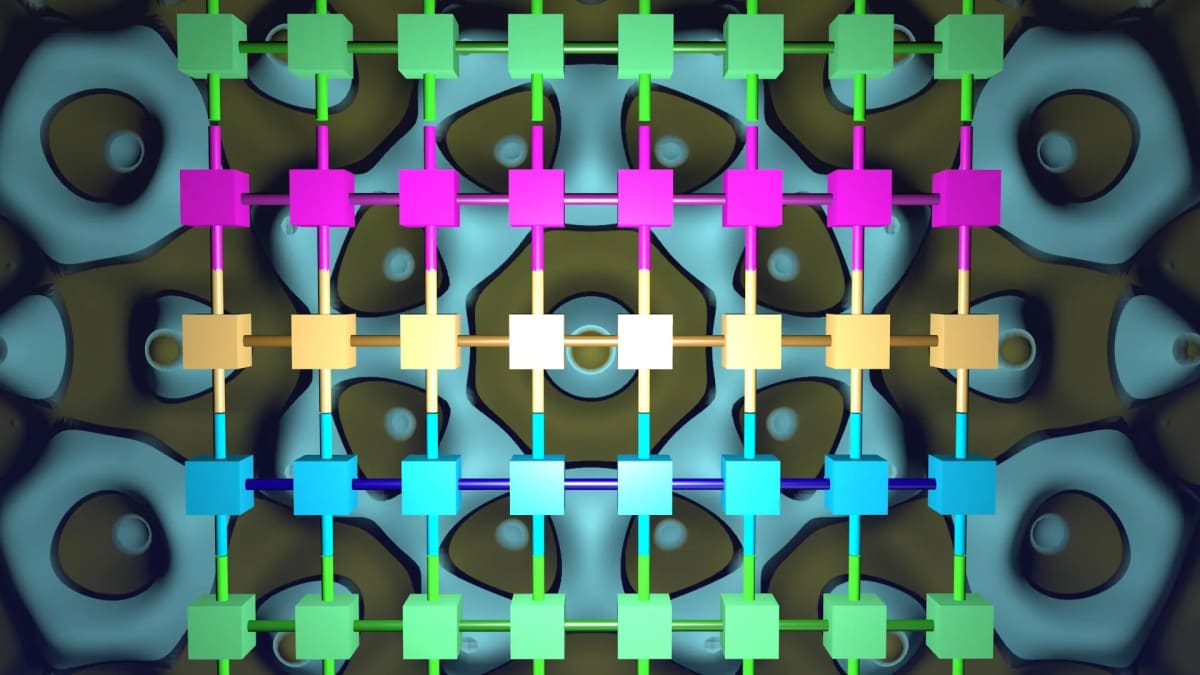
Researchers at Aalto University in Finland developed a quantum-inspired algorithm that simulates extraordinarily complex materials called quasicrystals. These exotic materials are so mathematically intricate that modeling them normally requires tracking more than a quadrillion numbers at once.
The breakthrough matters because quasicrystals could hold the key to building better quantum computers and creating electronics that conduct electricity without losing any energy. That second part could help cool down the growing heat and power demands of AI data centers.
Assistant Professor Jose Lado led the team that found an elegant solution. Instead of trying to calculate every detail directly, they reformulated the problem using methods similar to how quantum computers think.
Doctoral researcher Tiago Antão, the paper's lead author, explained that their algorithm works in exponentially large computational spaces using tensor networks. The team successfully simulated a quasicrystal with over 268 million sites, something conventional methods can't even approach.
The algorithm tackles topological quasicrystals, unusual materials that host special quantum properties. These properties help protect electrical conductivity from disruptive noise, making them ideal candidates for building stable quantum computers.
Why This Inspires
This research creates an exciting feedback loop. The quantum-inspired algorithms help design new quantum materials, which in turn can build better quantum computers, which then enable even more advanced materials research.
The work remains theoretical for now, but practical applications are already taking shape. Lado says the algorithm could soon design super-moiré quasicrystals for use in topological qubits, a promising building block for quantum computers.
Once quantum computing hardware advances enough, the algorithm could run on actual quantum machines. Finland's new AaltoQ20 and the Finnish Quantum Computing Infrastructure are positioned to test these methods in real-world conditions.
The research brings together two major areas of Finnish quantum science: quantum materials and quantum algorithms. It's part of Lado's European Research Council grant ULTRATWISTROICS and the Center of Excellence in Quantum Materials.
The findings suggest that designing exotic quantum materials may become one of the earliest practical uses for quantum computing systems. What once seemed impossible now takes seconds, opening doors scientists didn't even know existed.
Based on reporting by Science Daily
This story was written by BrightWire based on verified news reports.
Spread the positivity!
Share this good news with someone who needs it