Amazon Tribe Welcomes First Baby in Decades After Genocide
After violent attacks nearly wiped out the Akuntsu people, a newborn boy brings hope for both an Indigenous community and the rainforest they protect. The birth marks an unexpected turn for a tribe reduced to just three women who thought their line would end.
For years, three women lived as the last survivors of the Akuntsu, an Indigenous tribe in Brazil's Amazon decimated by gunmen hired to clear the forest for cattle ranches. With no men left and the women aging, many believed the Akuntsu would disappear forever.
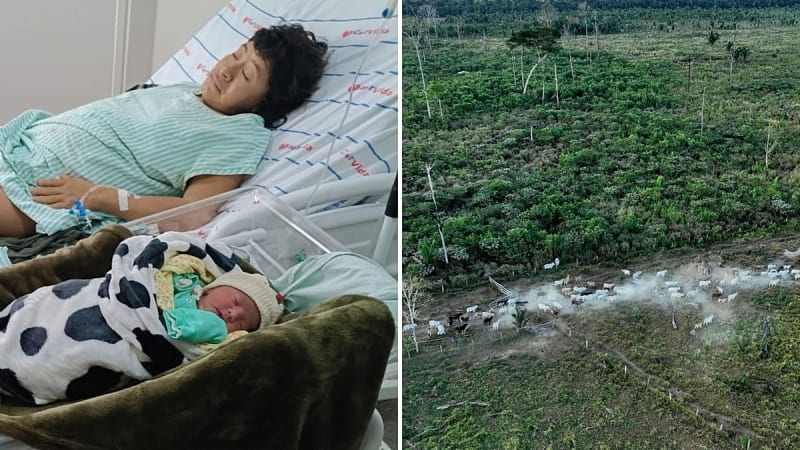
Then in December, everything changed. Babawru, the youngest woman in her 40s, gave birth to a boy named Akyp, bringing new life to a people who had survived genocide.
The Akuntsu story traces back to Brazil's 1970s military regime, when the government encouraged settlers to clear the Amazon for farmland. In the 1980s, Rondonia state's population more than doubled as people flooded in, and settlers were told they'd lose their land claims if Indigenous people were present.
What followed was brutal. Hired gunmen attacked the Akuntsu in the mid-1980s, killing most of the community of about 20 people. When Brazilian officials finally made contact in 1995, they found just seven survivors, some still bearing gunshot wounds.
The last Akuntsu man died in 2017, leaving Pugapia and her daughters Aiga and Babawru alone. The women had decided they wouldn't have children, believing their world was too broken and disorganized to raise them properly. Without Akuntsu men to teach hunting and spiritual practices, they felt conditions weren't right for new life.
The women now share their protected forest territory with the Kanoe, another small Indigenous group. Though the two tribes were once enemies and don't share a language, they've learned to cooperate. Babawru became pregnant by a Kanoe man last year.
Carolina Aragon, the only linguist who can communicate with the women, was with Babawru during an ultrasound that confirmed the pregnancy. Babawru was shocked, telling Aragon she had always taken precautions to avoid becoming pregnant.
The Ripple Effect
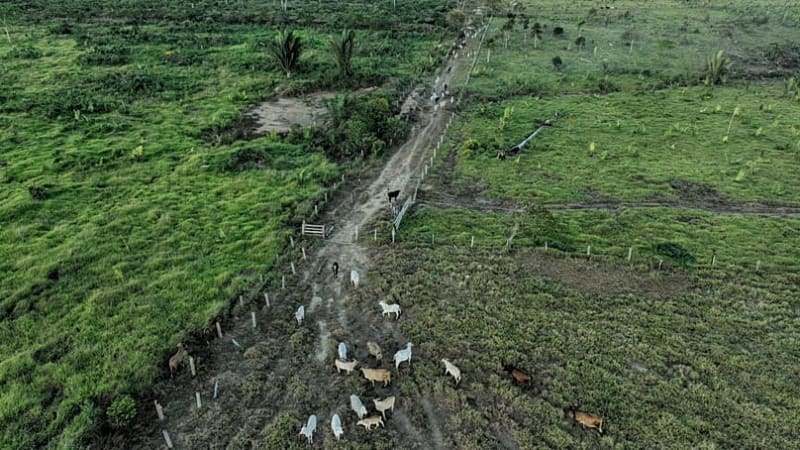
Akyp's birth matters far beyond one family. The Akuntsu's small territory stands out in satellite images as a green island of forest surrounded by endless cattle pastures and crop fields. About 40 percent of Rondonia's native forest has been cleared, with most remaining forest protected within Indigenous and conservation areas.
Research shows Indigenous territories are crucial for fighting climate change. A 2022 study found Indigenous lands in Brazil lost just 1 percent of native vegetation over three decades, compared to 20 percent on private land. Protecting these communities means protecting the Amazon, which regulates global climate patterns.
"This child is not only a symbol of the resistance of the Akuntsu people, but also a source of hope for Indigenous peoples," says Joenia Wapichana, president of Brazil's Indigenous protection agency. "He represents how recognition, protection and the management of this land are extremely necessary."
The baby's arrival shows that even after devastating loss, communities can find unexpected paths forward.
More Images
Based on reporting by Euronews
This story was written by BrightWire based on verified news reports.
Spread the positivity!
Share this good news with someone who needs it