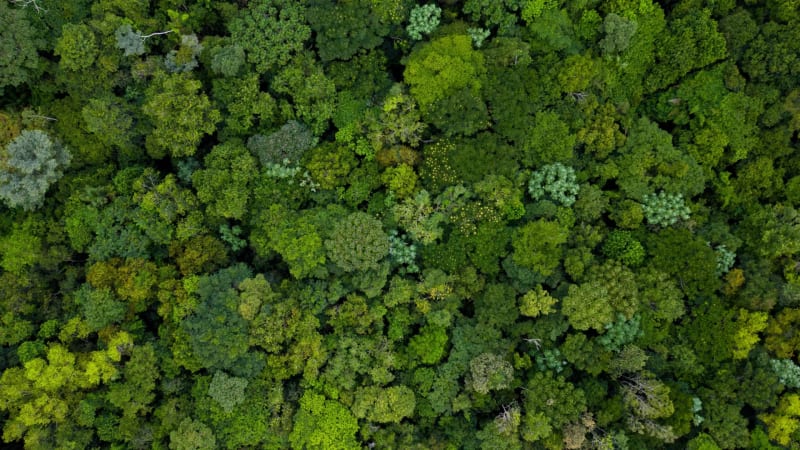
Amazon's Northern Andes Could Shelter 20,000 Tree Species
After tracking 40 years of forest data across South America, scientists discovered a silver lining in the climate story: while some Amazon regions are losing tree diversity, the Northern Andes is actually gaining species and could become a vital refuge. This massive study spanning 10 countries offers the first real hope for protecting thousands of threatened tropical trees.
Scientists just identified a potential safe haven for thousands of tree species struggling to survive climate change, and it's hiding in plain sight in the Northern Andes mountains.
A groundbreaking 40-year study published in Nature Ecology and Evolution reveals that while climate change is reshaping tropical forests across South America, not all the news is grim. Researchers led by Dr. Belen Fadrique at the University of Liverpool analyzed tree records from 406 forest plots across the Amazon and Andes, creating the most comprehensive picture yet of how these vital ecosystems are responding to environmental shifts.
The headline finding offers genuine hope. The Northern Andes region is gaining tree species even as other areas decline, potentially offering shelter to plants displaced from hotter, drier forests nearby. This discovery could reshape how conservationists protect the Amazon's incredible biodiversity.
The study tracked more than 20,000 tree species across ten countries with help from 160 researchers. They found that overall species numbers across South America have remained stable, but that stability masks dramatic regional differences. Hot spots like the Central Andes and Central Eastern Amazon are losing diversity, while the Northern Andes and Western Amazon are gaining ground.
Rainfall patterns turned out to be just as crucial as temperature. Forests with consistent rainfall and naturally dynamic conditions showed resilience, while those facing extreme seasonal swings struggled. This insight gives scientists new tools to predict which forests need protection most urgently.
The Bright Side
This research proves that nature still has cards to play in the climate crisis. The Northern Andes isn't just holding steady; it's actively becoming more diverse, suggesting some ecosystems can adapt and even thrive as conditions change. That resilience matters enormously for the millions of species that call these forests home.
The findings also highlight exactly where conservation efforts will have maximum impact. Professor Oliver Phillips from the University of Leeds, who leads the pan-Amazon RAINFOR network, emphasized protecting forests where the Amazon meets the Andes. These transition zones could serve as lifeboats for lowland species seeking cooler, wetter conditions.
The international team plans to dig deeper into which specific species are moving and whether forests are becoming more similar over time. Their work demonstrates what's possible when scientists collaborate across borders for decades, building datasets that reveal patterns invisible in shorter studies.
Four decades of patient observation by hundreds of botanists has given us something rare in climate science: a roadmap showing where hope lives in the landscape.
Based on reporting by Science Daily
This story was written by BrightWire based on verified news reports.
Spread the positivity!
Share this good news with someone who needs it