Americas Lead $60B Clean Energy Microgrid Boom Through 2030
The global microgrid market is surging toward $60 billion by 2030, with the Americas leading the charge as communities embrace locally powered grids that keep the lights on during storms and slash carbon emissions. From remote Canadian villages ditching diesel to U.S. cities building hurricane-proof power systems, these mini grids are proving that cleaner, stronger energy is finally here.
Communities across the Americas are building their own power grids, and it's transforming how we think about electricity.
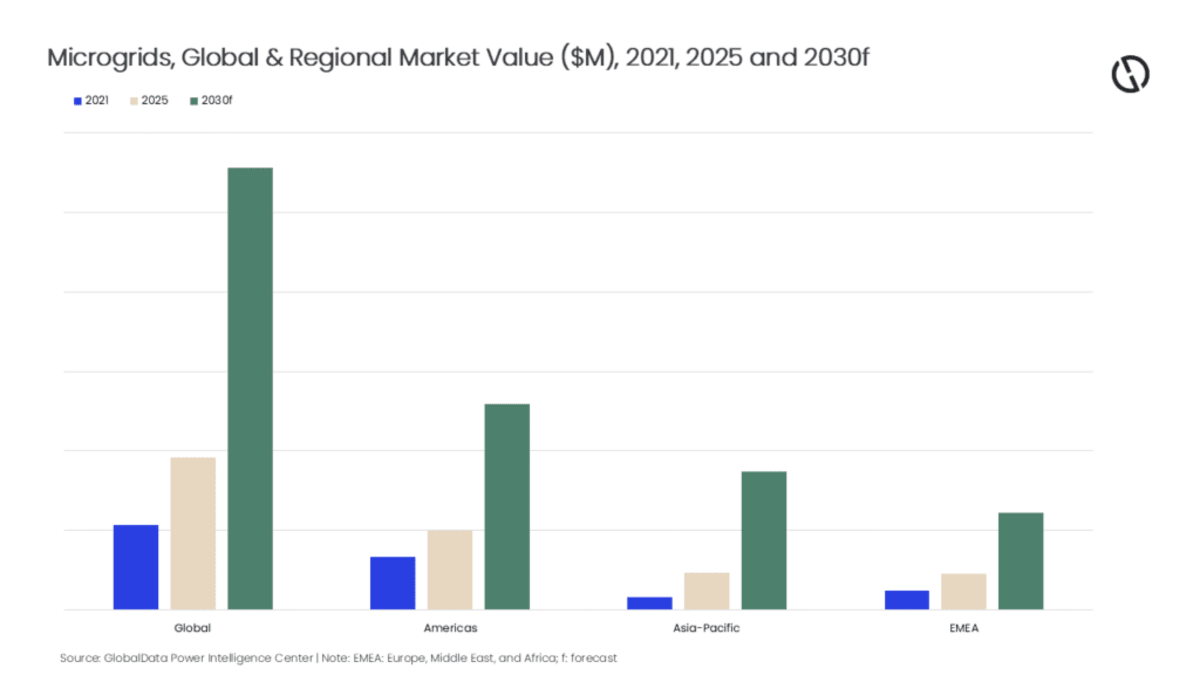
The global microgrid market is racing toward $60 billion through 2030, according to new analysis from GlobalData. These localized power systems can operate independently from traditional grids, combining solar panels, battery storage, and smart controls to keep communities powered even when main grids fail.
The Americas are driving this revolution, led by the United States where hurricanes, wildfires, and winter storms regularly knock out centralized power networks. Federal funding and clean energy policies are accelerating adoption across hospitals, schools, and critical infrastructure that simply cannot afford outages.
Canada is contributing momentum too, as remote communities install microgrids to escape expensive diesel generators while gaining reliable power. These systems are cutting energy costs and carbon emissions simultaneously, proving that environmental progress and practical benefits can go hand in hand.
"Microgrids are becoming an important part of modern power system planning as utilities, businesses, and communities look for more reliable, flexible, and low-carbon energy solutions," said Bhavana Sri Pullagura, senior power analyst at GlobalData. With electricity demand rising and extreme weather increasing, the timing couldn't be better.
The technology spans everything from neighborhood systems powering a few homes to massive installations serving data centers and manufacturing facilities. Grid-connected microgrids provide backup power and reduce peak demand costs, while remote systems bring electricity to isolated areas for the first time.
Asia-Pacific regions are scaling up too, with China, India, and Japan deploying hybrid systems across urban and rural applications. Europe is prioritizing decarbonization and energy security, while Middle Eastern and African nations are using microgrids for rural electrification.
The Ripple Effect
Beyond emergency backup, these systems are reducing transmission line losses and participating in smart grid programs that balance electricity supply and demand. As solar panels and battery costs continue falling, project economics keep improving, making clean local power accessible to more communities.
Major companies like Siemens, Schneider Electric, and ABB are delivering integrated control systems and grid management software. Storage components bridge gaps when the sun isn't shining or wind isn't blowing, ensuring consistent power delivery.
The shift represents more than just backup generators. These are complete power systems designed for modern needs: combining renewable generation, advanced controls, and community resilience into packages that strengthen local energy independence while supporting broader climate goals.
As hybrid designs and digital controls mature, microgrids are positioning communities to weather both literal storms and the energy transition ahead.
More Images



Based on reporting by PV Magazine
This story was written by BrightWire based on verified news reports.
Spread the positivity!
Share this good news with someone who needs it