Amsterdam's Electric Tug Cuts Airport Emissions by 80%
Amsterdam's airport is testing an electric tug that moves planes without burning fuel, slashing emissions by over 80% while giving pilots full control. It's a rare win for the environment, passengers, workers, and airline budgets all at once.
📺 Watch the full story above
If you've ever sat on a plane waiting to taxi, you've heard that constant whine of the auxiliary power unit burning fuel just to keep the lights on and prepare for takeoff.
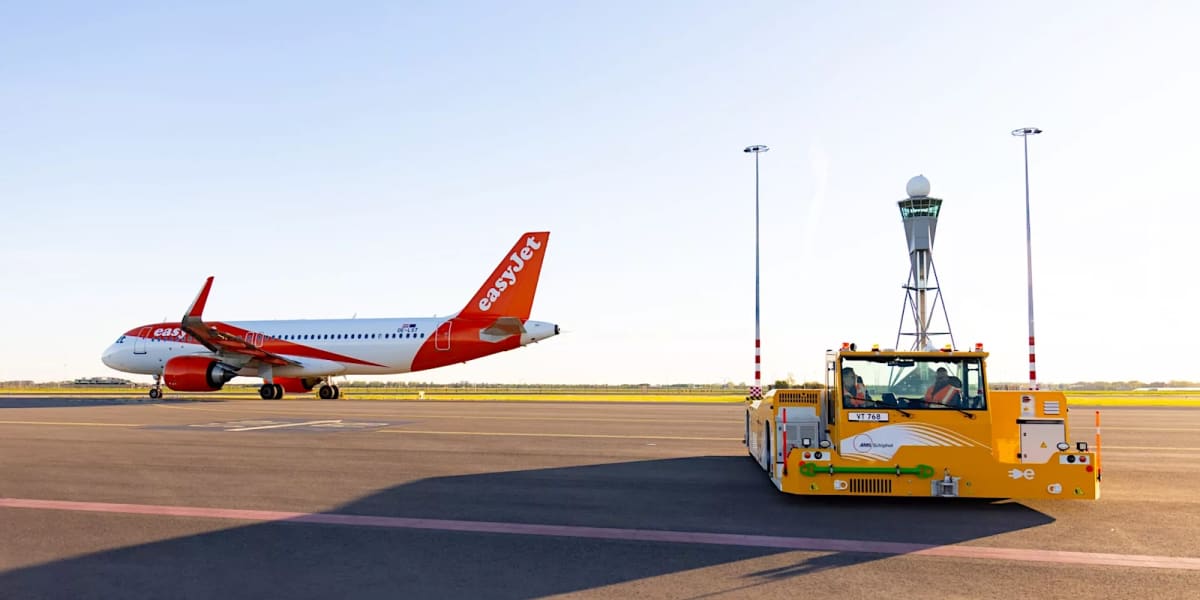
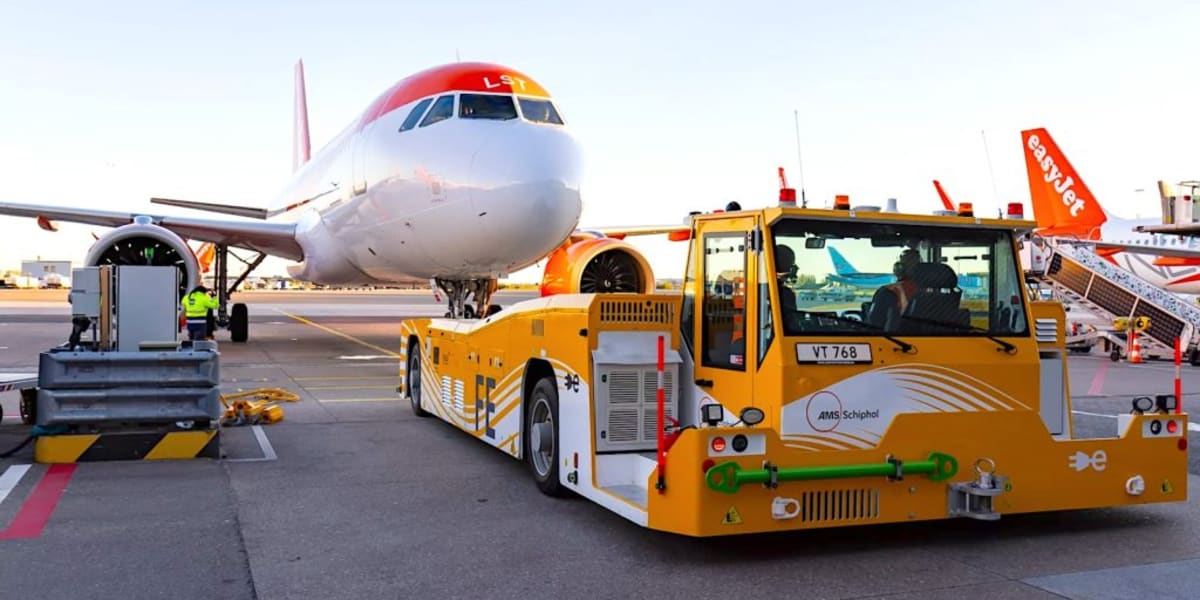
Amsterdam's Schiphol Airport just found a way to silence that noise and slash emissions at the same time. They're testing an electric aircraft tug called the TaxiBot that does something brilliantly simple: it moves planes around the tarmac and powers them using its own battery instead of the aircraft's fuel-guzzling engines.
Here's how it normally works. Planes either use diesel tugs to get pulled around while their auxiliary power units run in the tail, or they taxi using their main engines at low idle. Both options burn significant fuel, create noise pollution, and fill the air around airports with exhaust that ground crews have to breathe all day.
The TaxiBot changes everything. This all-electric tug connects to the plane's front landing gear and lets pilots maintain full control as they maneuver around the airport. The difference? Zero fuel burned, zero emissions created, and a much quieter experience for everyone involved.
The numbers tell an impressive story. By replacing traditional taxiing methods, the TaxiBot cuts ground-level airport emissions by more than 80%. That's not just good for the planet. It means cleaner air for the thousands of people who work at airports, quieter neighborhoods for people living nearby, and real savings on fuel costs for airlines.
"By deploying the TaxiBot, we're taking another practical step towards reduced emissions and noise," explains Esmé Valk, Chief of People & Transformation at Royal Schiphol Group. She calls it a move toward "a healthier and cleaner workplace" and "a more sustainable and modern airport."
The pilots appreciate maintaining control of their aircraft on the ground. Passengers benefit from not sitting in a metal tube listening to that endless APU whine. Ground crews get to work without breathing harmful exhaust fumes.
The Ripple Effect
Smart Airport Systems developed the TaxiBot in cooperation with TLD and Israel Aerospace Industries, and the technology is already expanding. The current TaxiBot is certified for Airbus A320neo aircraft, but Schiphol is working with EasyJet, KLM Cityhopper, Transavia, and other partners to certify it for Boeing 737s and Embraer planes.
Three more electric TaxiBots will join the fleet before the end of this year. As more airports adopt this technology, the impact multiplies: cleaner air in cities around the world, billions saved in fuel costs, and a blueprint for how small changes in airport operations can create massive environmental benefits.
EasyJet's William Vet puts it simply: "This immediately leads to lower fuel consumption, emissions, and ground noise." The transformation of airport ground operations from noisy, polluting necessities into clean, electric systems shows how innovation can tackle climate challenges without asking anyone to sacrifice convenience or control.
More Images


Based on reporting by Electrek
This story was written by BrightWire based on verified news reports.
Spread the positivity!
Share this good news with someone who needs it