Ancient DNA Reveals Neanderthal Family From 100,000 Years Ago
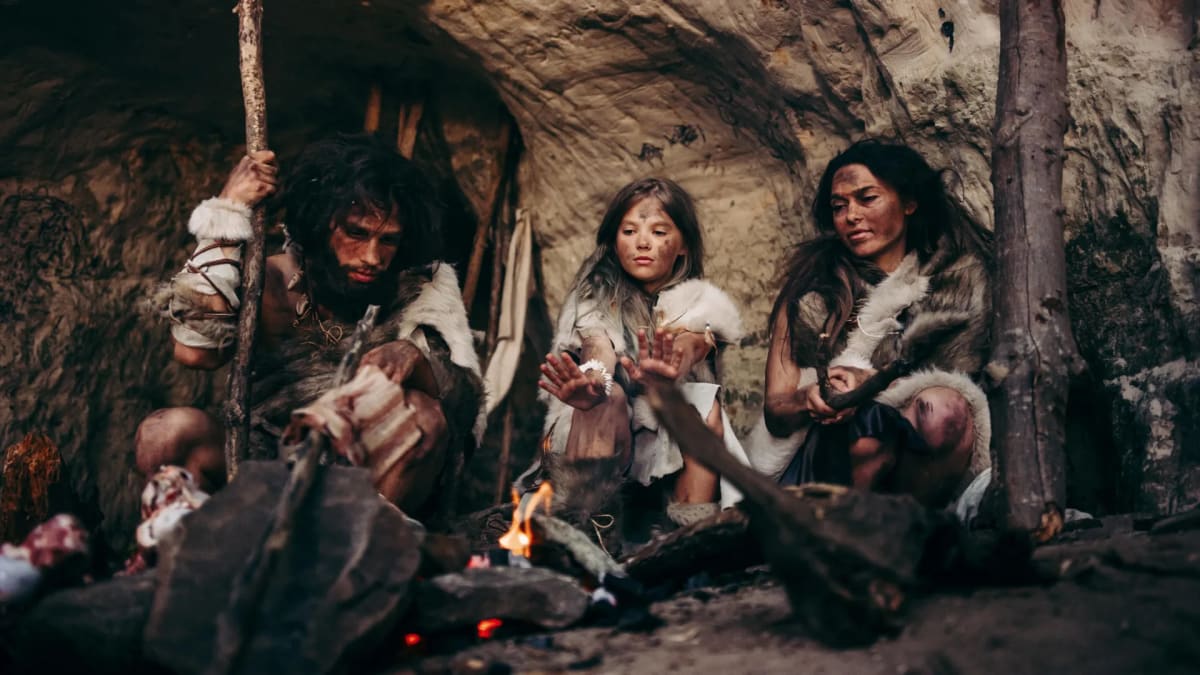
Scientists have discovered genetic evidence of a Neanderthal community living together in Poland 100,000 years ago, including what may be close relatives. This rare snapshot shows how our ancient cousins lived as groups across Europe.
Scientists just uncovered something remarkable hidden in eight teeth: a genetic portrait of Neanderthals who lived as a community 100,000 years ago.
Researchers analyzing ancient DNA from teeth found in Stajnia Cave in Poland have reconstructed the genetic profile of at least seven Neanderthals who lived in the same place during the same time period. This marks the first time scientists have captured such a clear picture of a Neanderthal group from a single location and era in Central-Eastern Europe.
"For the first time, we are able to observe a small group of Neanderthals from Central-Eastern Europe who lived around 100,000 years ago," says Andrea Picin, professor at the University of Bologna who coordinated the research. Most Neanderthal genetic data comes from scattered single fossils across different sites and time periods, making this discovery particularly special.
The findings, published in Current Biology, went beyond what scientists expected from the site. The cave has yielded evidence of a distinct group offering a rare glimpse into how these ancient humans may have lived together.
What makes this discovery even more fascinating is the evidence of possible family ties. Two teeth from juveniles and one from an adult share identical mitochondrial DNA, suggesting these individuals might have been closely related to each other.
The Ripple Effect
The genetic analysis revealed connections spanning thousands of miles across ancient Europe. The Stajnia group's mitochondrial DNA belongs to the same genetic branch found in Neanderthals from Spain, southeastern France, and the northern Caucasus.
This pattern shows that certain maternal lineages were once widespread across western Eurasia before later Neanderthal populations replaced them. The discovery is rewriting what scientists understand about population movements and biological connections during the Middle Paleolithic period.
Central-Eastern Europe, once considered a peripheral region in Neanderthal history, now appears to have played a central role in how different groups moved across Europe and interacted over large distances. Southern Poland is emerging as a key location for understanding not just Neanderthal biology, but their social structures and migration patterns.
The research also highlights important lessons about dating ancient remains. By comparing their results with similar fossils from France, scientists are learning to treat the oldest chronologies with greater caution, especially when radiocarbon values approach calibration limits.
This snapshot of a Neanderthal community is helping us see our ancient relatives not as isolated individuals, but as connected groups with families, relationships, and wide-ranging networks across an entire continent.
Based on reporting by Science Daily
This story was written by BrightWire based on verified news reports.
Spread the positivity!
Share this good news with someone who needs it