Ancient Fossils Fill Gap Before Life's Cambrian Explosion
Scientists discovered 554-million-year-old fossils in China that reveal complex animals existed millions of years earlier than previously thought. The find transforms our understanding of how life evolved on Earth.
Scientists just found proof that the dramatic burst of animal life 535 million years ago wasn't as sudden as we thought, filling a mystery gap that's puzzled researchers for decades.
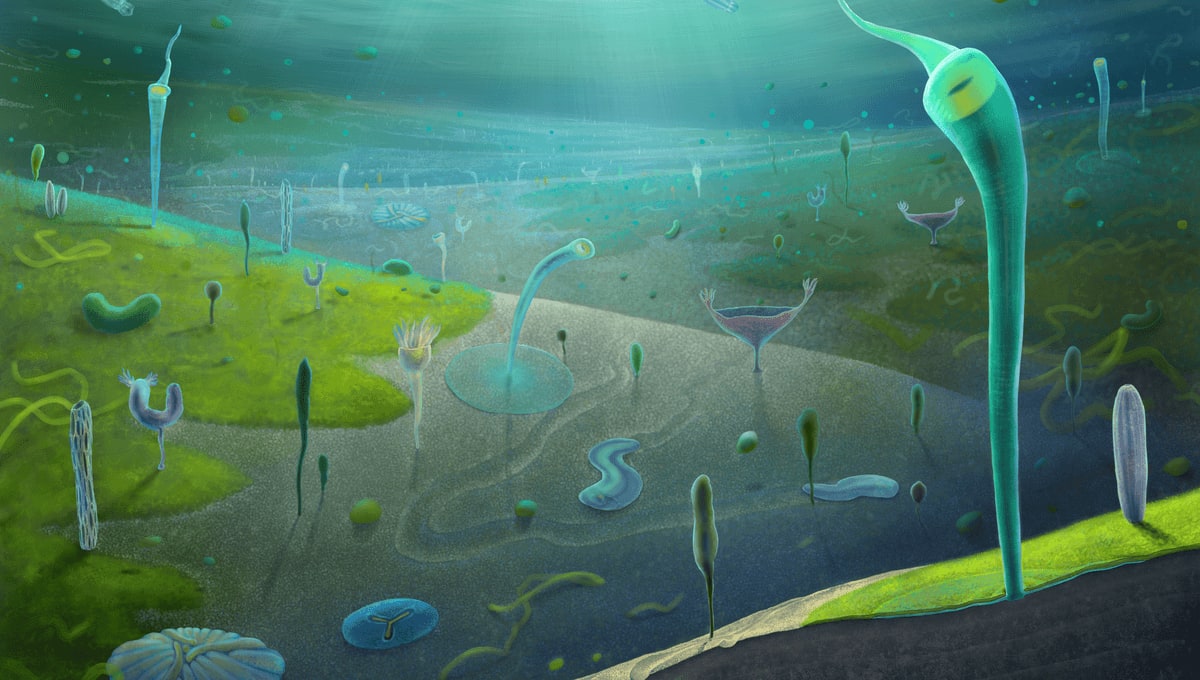
More than 700 fossils discovered in Jiangchuan, China, show that complex animals were already thriving on the seafloor during the Ediacaran Period, between 554 and 539 million years ago. Until now, these sophisticated life forms were thought to have first appeared millions of years later during the famous Cambrian Explosion.
The fossils include ancient ancestors of creatures we know today, including the earliest known relatives of starfish, sea cucumbers, and even the distant family tree that eventually led to vertebrates like us. These weren't the simple, soft-bodied organisms scientists expected from this period.
"Our discovery closes a major gap in the earliest phases of animal diversification," said Gaorong Li, then at Yunnan University and now at Oxford's Museum of Natural History. "For the first time, we demonstrate that many complex animals normally only found in the Cambrian were present in the Ediacaran period."
The discovery helps explain what scientists call the Cambrian Explosion, when the fossil record suddenly shows an incredible diversity of body shapes and types of animals. Rather than life appearing out of nowhere, these new fossils show the groundwork was being laid earlier than anyone could prove before.
Why This Inspires
What makes this discovery particularly exciting is what it reveals about evolution itself. The fossils show what researchers are calling a "transitional community," where animals were already experimenting with different lifestyles and body structures.
Some of the creatures were actively moving across the seafloor, while others stayed in one place. This ecological diversity shows that life was already figuring out different ways to survive and thrive.
The findings also answer questions raised by mysterious trace fossils found worldwide, which showed imprints of complex creatures but no actual bodies. Now scientists can finally see what some of those animals actually looked like.
With exceptional preservation that's rare for fossils this old, researchers are still identifying new species among the hundreds of specimens. Some don't match anything from either the Ediacaran or Cambrian periods, opening new windows into how early animals evolved.
This glimpse into ancient oceans reminds us that nature has always been innovative, constantly trying new approaches to life that eventually led to the incredible diversity we see today.
More Images



Based on reporting by Google: fossil discovery
This story was written by BrightWire based on verified news reports.
Spread the positivity!
Share this good news with someone who needs it