Ancient Maya Astronomer Identified for First Time in History
Archaeologists have discovered the name of an individual Maya mathematician for the first time ever, finally putting a face to one of history's most advanced ancient civilizations. A signature on a 1,200-year-old wall reveals Sak Tahn Waax, whose sophisticated calculations rival those of famous Greek scholars.
For the first time in history, we know the name of an ancient Maya mathematician who calculated the movements of planets across the sky.
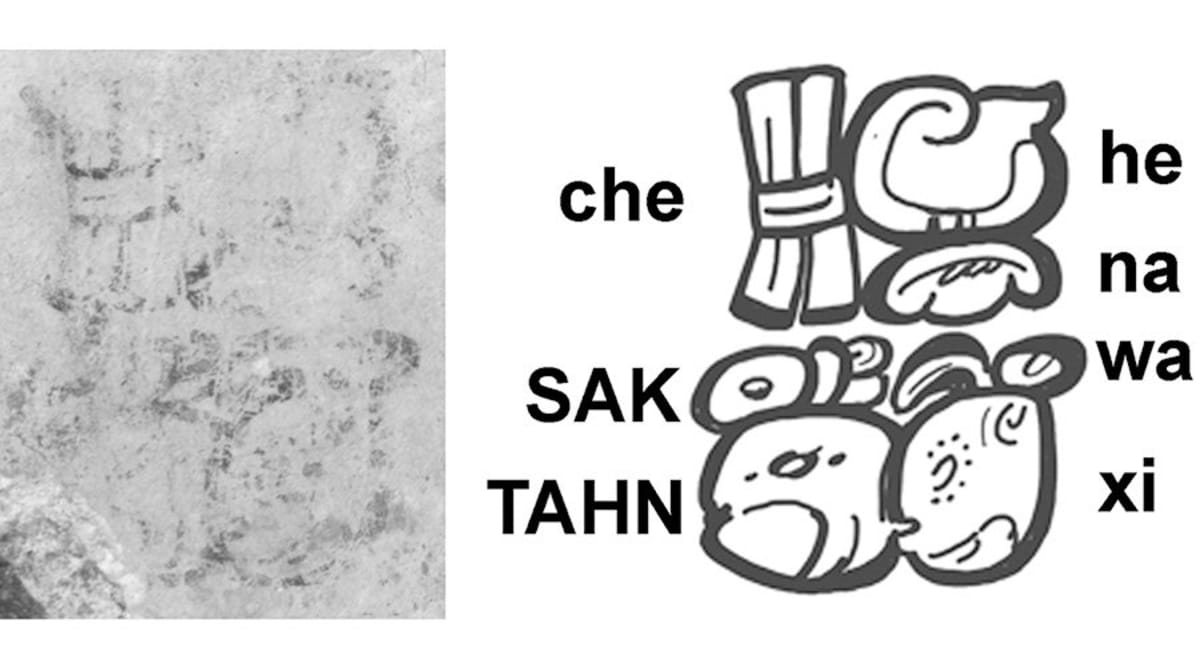
Archaeologists working at the Xultun site in Guatemala have identified an eighth-century scholar named Sak Tahn Waax, meaning "white-chested fox." His name appears as a signature beneath complex mathematical formulas engraved on a wall, marking an archaeological first after centuries of anonymous Maya brilliance.
The discovery solves a long-standing mystery. While Maya civilization produced remarkably accurate astronomical calculations and calendars that guided everything from agriculture to religious ceremonies, no individual had ever been credited with this work. Greek scholars like Ptolemy and Archimedes became legendary figures, but Maya scientists remained nameless despite their equally impressive achievements.
The inscription took years to decode. Researchers used color scans and multispectral imaging to reconstruct the faded engravings, which were first documented in 2011. The wall contains instructions for synchronizing the planetary cycles of Mars and Venus with the Maya calendar, ending with the proud declaration: "so says Sak Tahn Waax."
"It's really elegant, complex math," said archaeologist Heather Hurst from Skidmore College. "That's why he's signing it."
The room where researchers found the signature likely served as either a classroom or a workshop for producing books. Radiocarbon analysis and inscribed dates place it in the eighth century CE, during the height of Maya civilization's scientific golden age.
Why This Inspires
This discovery reminds us that behind every great achievement stand real people with names, families, and stories. Sak Tahn Waax wasn't just calculating planetary movements for academic purposes. His work helped shape Maya society, influencing when farmers planted crops, when priests held ceremonies, and how leaders made political decisions.
The find also opens new doors for research. Maya artists and scribes regularly signed ceramics, and political figures' names appear throughout architecture. Scientists now believe more mathematicians and astronomers may have signed their work, hidden in plain sight because researchers didn't know where to look.
Lead author Franco Rossi from MIT hopes the discovery will inspire deeper appreciation for Maya scholars whose expertise rivaled any civilization in the ancient world. The Maya precisely calculated the length of the solar year and tracked celestial bodies with stunning accuracy, all without modern instruments.
Hurst imagined what conversations might have unfolded between ancient scholars: "I would have loved to see Sak Tahn Waax and Ptolemy hanging out. They would have had a great discussion."
After 1,200 years of anonymity, one brilliant Maya scientist finally receives the recognition he deserves.
Based on reporting by Google: archaeological discovery
This story was written by BrightWire based on verified news reports.
Spread the positivity!
Share this good news with someone who needs it