Ancient Mystery Solved: Weird Worm Was a Deep-Sea Scavenger
Scientists just figured out what one of Earth's strangest creatures ate 500 million years ago. Fossils show tiny spiky Hallucigenia feasting together on a jellyfish corpse, revealing these bizarre animals were nature's ancient cleanup crew.
Imagine a creature so strange that scientists first drew it upside down. Now we finally know what it ate for dinner.
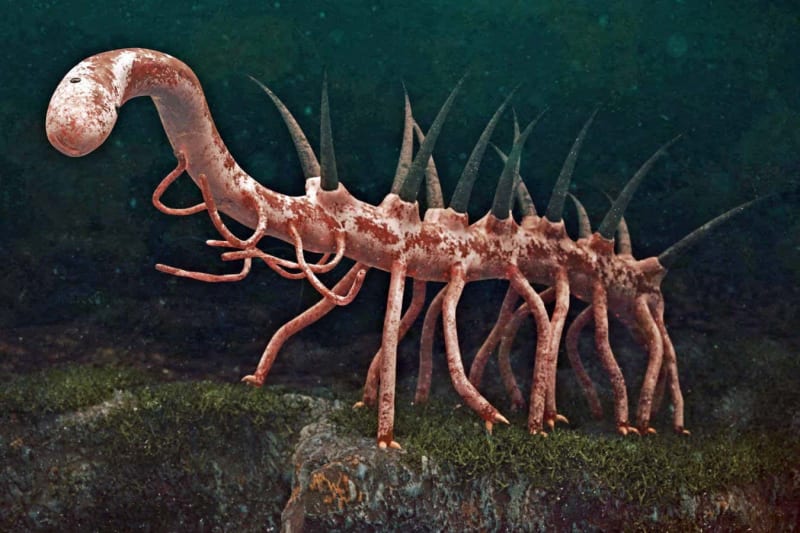
Hallucigenia stands out as one of the weirdest animals to ever walk the Earth. This tiny creature, barely two inches long, sported a worm-like body covered in sharp spines and multiple stubby legs that looked like something from a fever dream.
Scientists discovered fossils of this oddball back in the 1970s in British Columbia's famous Burgess Shale rock formation. The animal looked so bizarre that researchers initially mistook its defensive spines for legs and reconstructed the whole thing upside down.
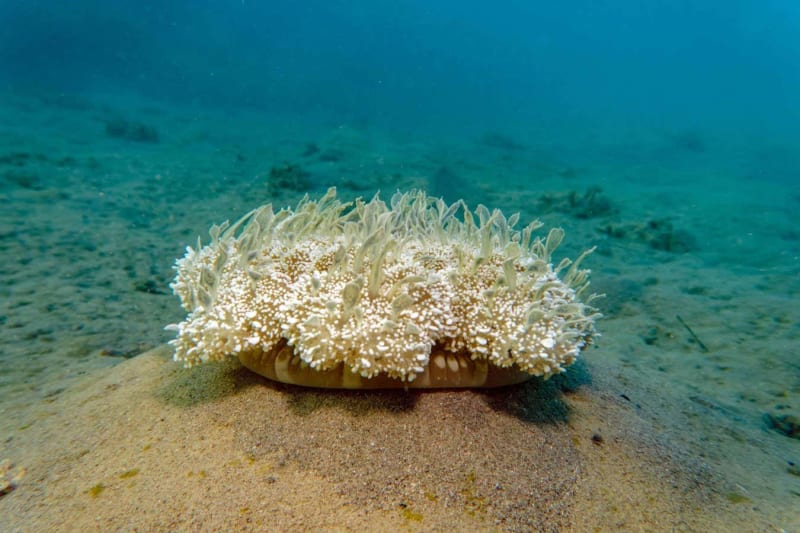
Fast forward to today, and paleontologists just cracked a major mystery about these ancient weirdos. A fresh look at those decades-old fossils reveals something remarkable: a group of Hallucigenia gathered around the corpse of a comb jelly, apparently sharing a meal.
This discovery changes everything we thought about how these creatures survived. The fossils suggest Hallucigenia lived as scavengers in the deep seas during the Cambrian period, roughly 539 to 487 million years ago.
That timing matters because the Cambrian period marks one of the most explosive moments in life's history. Major animal groups were emerging and evolving at breakneck speed, experimenting with wild body plans that would make modern creatures look boring by comparison.
Hallucigenia belongs to a fascinating family tree that connects to velvet worms, tardigrades (those nearly indestructible "water bears"), and arthropods like insects and spiders. Despite its alien appearance, this little scavenger helped pave the way for countless species alive today.
The feeding scene captured in stone offers a rare window into daily life on the ancient ocean floor. These weren't apex predators or fierce hunters. They were cleanup crew members, gathering together to make use of whatever food the deep sea provided.
Why This Inspires
Every weird-looking fossil tells a story about survival and adaptation. Hallucigenia thrived for millions of years not by being the biggest or fastest, but by finding its niche as a scavenger in a competitive new world.
This discovery reminds us that nature rewards creativity and that even the strangest outsiders can find their place and purpose.
More Images


Based on reporting by New Scientist
This story was written by BrightWire based on verified news reports.
Spread the positivity! 🌟
Share this good news with someone who needs it


