Ancient Sanskrit Could Unlock AI's Language Future
A leading tech institute director says Sanskrit's millennia-old linguistic frameworks perfectly match what artificial intelligence needs to understand human language. The ancient language's logical structure might be exactly what modern machines need.
What if a 3,000-year-old language held the key to teaching computers how humans really communicate?
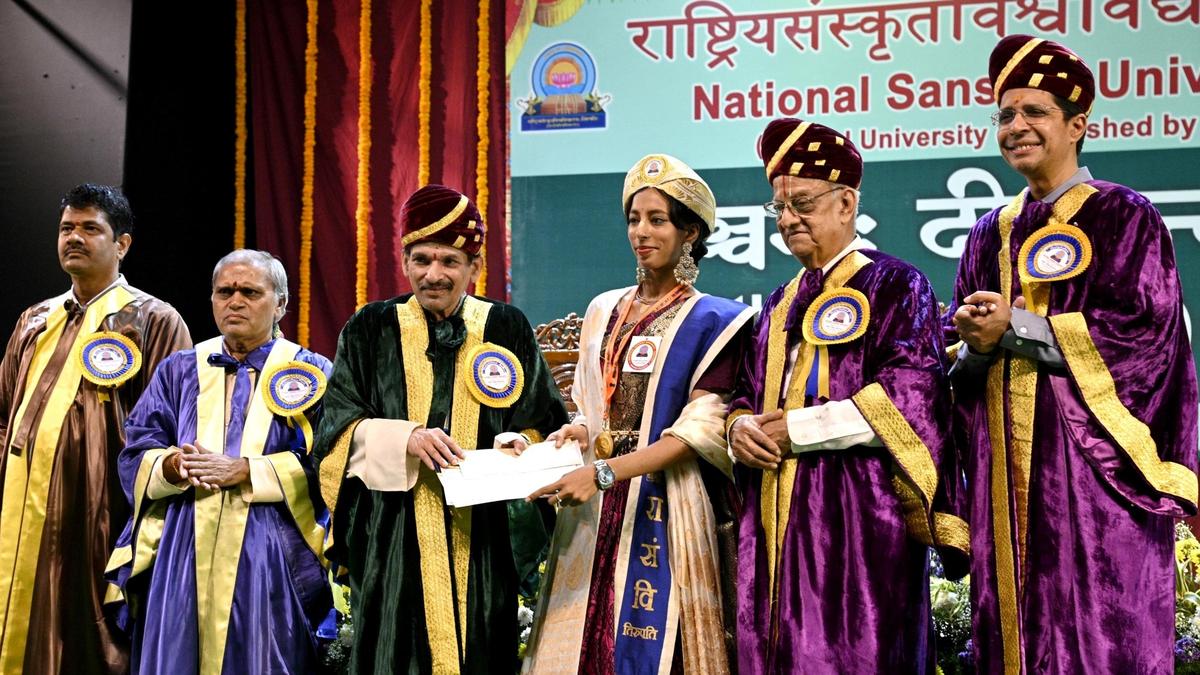
Professor Veezhinathan Kamakoti, Director of the Indian Institute of Technology Madras, made waves at the National Sanskrit University's convocation in April 2026 with a fascinating connection. He argued that Sanskrit isn't just relevant today, it's actually perfectly suited for advancing artificial intelligence.
The link comes down to how AI learns language. Modern machine learning relies on Natural Language Processing, where computers must grasp not just words, but meaning, context, and intention behind what people say.
Here's where Sanskrit shines. For thousands of years, ancient Sanskrit scholars developed incredibly sophisticated systems for analyzing exactly these concepts. Two frameworks called Nyaya and Mimamsa broke down logic, reasoning, and linguistic interpretation with stunning precision.
Professor Kamakoti pointed out that what AI researchers are struggling to teach machines today, Sanskrit philosophers were systematically studying centuries before computers existed. The language's grammatical structure is so logical and consistent that it mirrors the kind of rule-based systems AI uses to process information.
This isn't about replacing English or modern programming languages. It's about drawing insights from a linguistic tradition that spent millennia perfecting the very thing AI needs most: understanding how meaning works.
The Ripple Effect
The implications reach beyond just technology. If Sanskrit's frameworks can genuinely advance AI development, it validates the value of preserving ancient knowledge systems. What seems old-fashioned might contain solutions to cutting-edge problems.
Universities worldwide are already exploring Sanskrit's potential in computational linguistics. Researchers have noted its lack of ambiguity and precise grammar make it surprisingly computer-friendly. Some experts even call it the most suitable language for computer processing.
For students at the National Sanskrit University hearing Professor Kamakoti's message, it reframed their studies entirely. They're not just preserving history, they're potentially shaping technology's future.
India's growing AI sector could find unique advantages by blending this ancient wisdom with modern innovation. While Silicon Valley races ahead with conventional approaches, Indian researchers might unlock breakthroughs by looking backward as well as forward.
The professor's vision suggests the future of human-machine communication might be written in the world's oldest systematic language.
Based on reporting by The Hindu
This story was written by BrightWire based on verified news reports.
Spread the positivity!
Share this good news with someone who needs it