Ancient Tamil Names Found in Egyptian Tombs Reveal Lost Trade
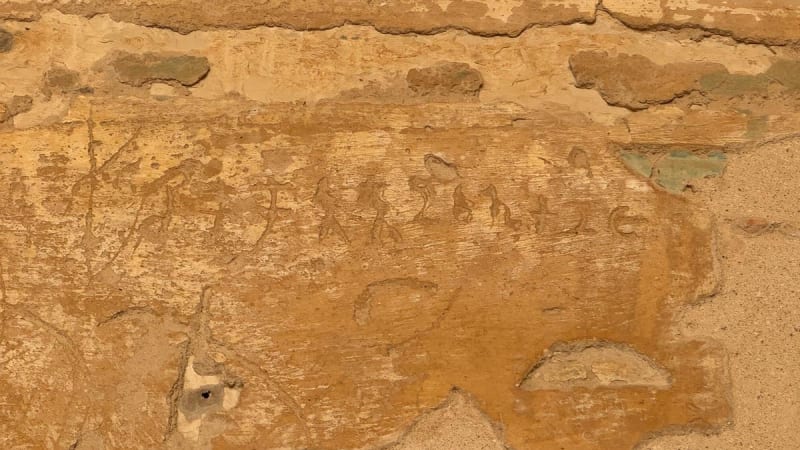
Researchers just discovered nearly 30 inscriptions in Tamil and other Indian scripts inside Egyptian royal tombs, proving ancient traders traveled farther than we knew. The names carved into tomb walls date back nearly 2,000 years.
Two professors just solved a mystery hiding in plain sight for a century inside Egypt's Valley of the Kings.
Charlotte Schmid from the French School of Asian Studies and Ingo Strauch from the University of Lausanne identified nearly 30 inscriptions in Tamil Brahmi, Prakrit, and Sanskrit carved into the walls of six tombs. The markings date between the 1st and 3rd centuries CE, proving ancient Indians visited Egypt's most sacred burial grounds.
The discovery happened during a 2024-2025 study when the researchers followed in the footsteps of French scholar Jules Baillet, who documented over 2,000 Greek graffiti marks in 1926 but missed the Indian inscriptions entirely. "When I first identified these inscriptions, I could not believe it," Strauch said, explaining that countless visitors had examined these tombs without spotting anything Indian.
One name appears eight times across five different tombs. Cikai Koṟṟaṉ carved his presence near entrances and high on interior walls, once reaching about four meters up. The name itself tells a story: the first part likely connects to the Sanskrit word for tuft or crown, while koṟṟaṉ comes from Tamil roots meaning victory and slaying.
The same name element appears in other Egyptian finds, including a pottery piece discovered at Berenike, a Red Sea port city. It also shows up in ancient Tamil poetry praising Chera kings from the same time period.
Other Tamil visitors left their mark too. One inscription reads "Kopāṉ varata kantan," meaning "Kopāṉ came and saw." This name has also been found carved in Tamil Nadu at Ammankovilpatti.
The researchers presented their findings at the International Conference on Tamil Epigraphy. They explained that these Indian visitors followed the local custom of carving names alongside Greek travelers, marking their presence in corridors and rooms throughout the tombs.
The Ripple Effect
This discovery opens a window into ancient global connections we're only beginning to understand. The inscriptions prove that people from southern India didn't just trade goods with the Roman Empire but traveled deep into Egypt, visiting sites reserved for pharaohs and nobility.
Tamil Nadu's State Department of Archaeology called the findings significant for understanding trade routes between ancient Tamilagam and the Roman world. Previous research focused mainly on coastal port cities like Berenike, but attention is now shifting to the Nile river valley, where more discoveries likely await.
These ancient travelers left more than their names on tomb walls. They left proof that curiosity, trade, and cultural exchange connected our world long before we imagined.
Based on reporting by The Hindu
This story was written by BrightWire based on verified news reports.
Spread the positivity!
Share this good news with someone who needs it

%2Fhttps%3A%2F%2Ftf-cmsv2-smithsonianmag-media.s3.amazonaws.com%2Ffiler_public%2F95%2F43%2F9543c0d6-d8e6-41b5-acd2-e351ebf3f44a%2Fvikingesoelvskat-rebild-2026-6-2048x1365.jpeg)