Ancient Teeth Reveal New Clues About Human Evolution
Scientists extracted proteins from 400,000-year-old teeth and discovered evidence that our ancient ancestor Homo erectus may have interbred with other human relatives, passing genes that still exist in some people today. This breakthrough shows how modern humans carry traces of ancestors who walked the Earth hundreds of thousands of years ago.
Scientists just discovered something remarkable hidden inside ancient teeth that connects us to human relatives who lived 400,000 years ago.
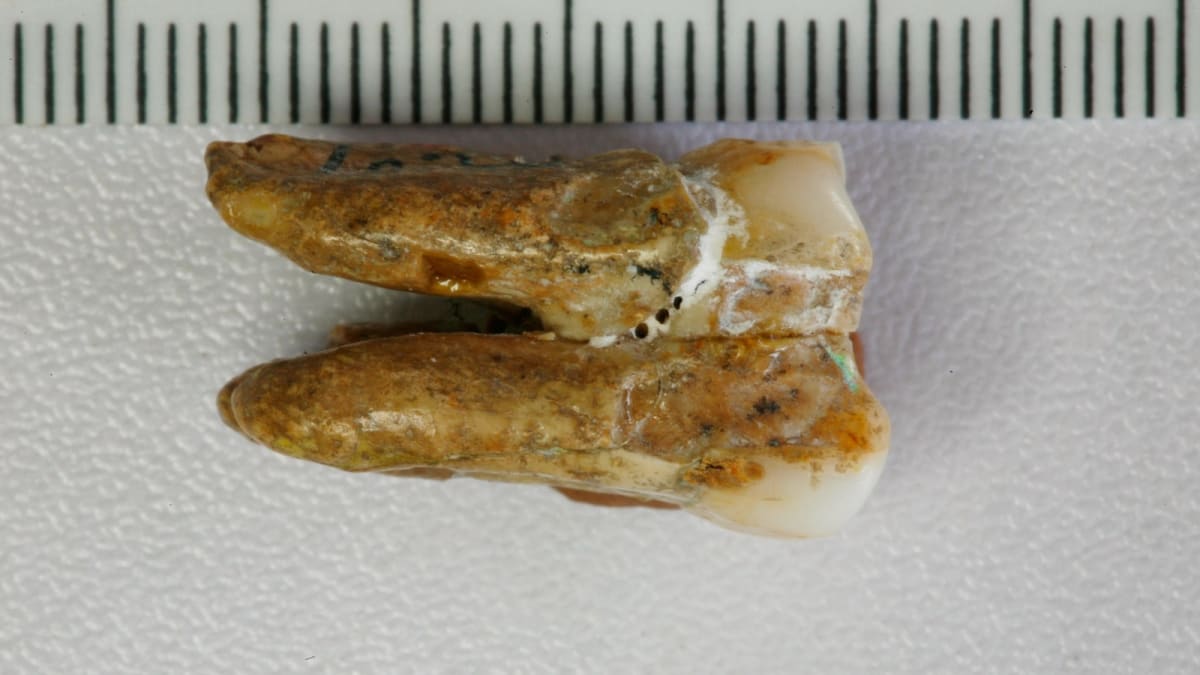
Researchers extracted proteins from six Homo erectus teeth found in China, revealing genetic clues about how our ancestors mingled and mated across different human species. The findings show that some modern humans still carry genes passed down through this ancient mixing.
The teeth belonged to Homo erectus, an early human ancestor that first appeared in Africa about 2 million years ago before spreading across Asia and possibly Europe. Scientists found their remains in countries from Indonesia to Spain, but until now, learning about their genetics seemed nearly impossible because DNA and proteins rarely survive that long.
The research team found two key mutations in the tooth enamel proteins. One mutation appears unique to East Asian members of Homo erectus, like a genetic signature specific to that population. The other mutation told a more complex story about our family tree.
That second variant exists today in a small percentage of modern humans and also appeared in Denisovans, an extinct human cousin. This suggests Homo erectus mated with Denisovans and passed along their genes. Later, when our direct ancestors interbred with Denisovans, those ancient Homo erectus genes made their way into modern human DNA.
"This traces who we are now back to our ancestors in a really cool and exciting way, using new methods," said paleoanthropologist Ryan McRae with the Smithsonian National Museum of Natural History, who wasn't involved in the research.
The exact family relationships between these early human relatives remain unclear. Homo erectus might actually be a direct ancestor to Denisovans rather than a separate branch that interbred with them. With such limited ancient evidence, scientists acknowledge the puzzle is tough to solve completely.
Why This Inspires
This discovery reminds us that human history is a story of connection rather than isolation. Our ancestors didn't live in separate boxes but met, mingled, and built relationships across different populations. Every person alive today carries echoes of these ancient encounters in their DNA.
The breakthrough also showcases how new scientific methods are unlocking secrets that seemed lost forever. When DNA can't survive, proteins in tooth enamel offer another window into the distant past.
Study author Qiaomei Fu from the Institute of Vertebrate Paleontology and Paleoanthropology in China says finding more fossils and testing for DNA remnants will help complete the human evolutionary story. Each new discovery brings us closer to understanding where we came from and how we became who we are today.
More Images




Based on reporting by Google News - Science
This story was written by BrightWire based on verified news reports.
Spread the positivity!
Share this good news with someone who needs it

%2Fhttps%3A%2F%2Ftf-cmsv2-smithsonianmag-media.s3.amazonaws.com%2Ffiler_public%2F48%2F84%2F4884a7a4-01f3-4618-9003-3e6d7673e627%2Fjan_brueghel_i__peter_paul_rubens_-_sight_museo_del_prado.jpg)