Ancient Tiger Fossils Found in Philippine Cave
Scientists discovered tiger fossils in a Philippine cave that prove these big cats roamed the island over 20,000 years ago. The bones also reveal how prehistoric humans may have lived alongside these majestic predators.
Deep in a cave on the island of Palawan, researchers uncovered evidence that tigers once prowled the Philippines thousands of years before recorded history.
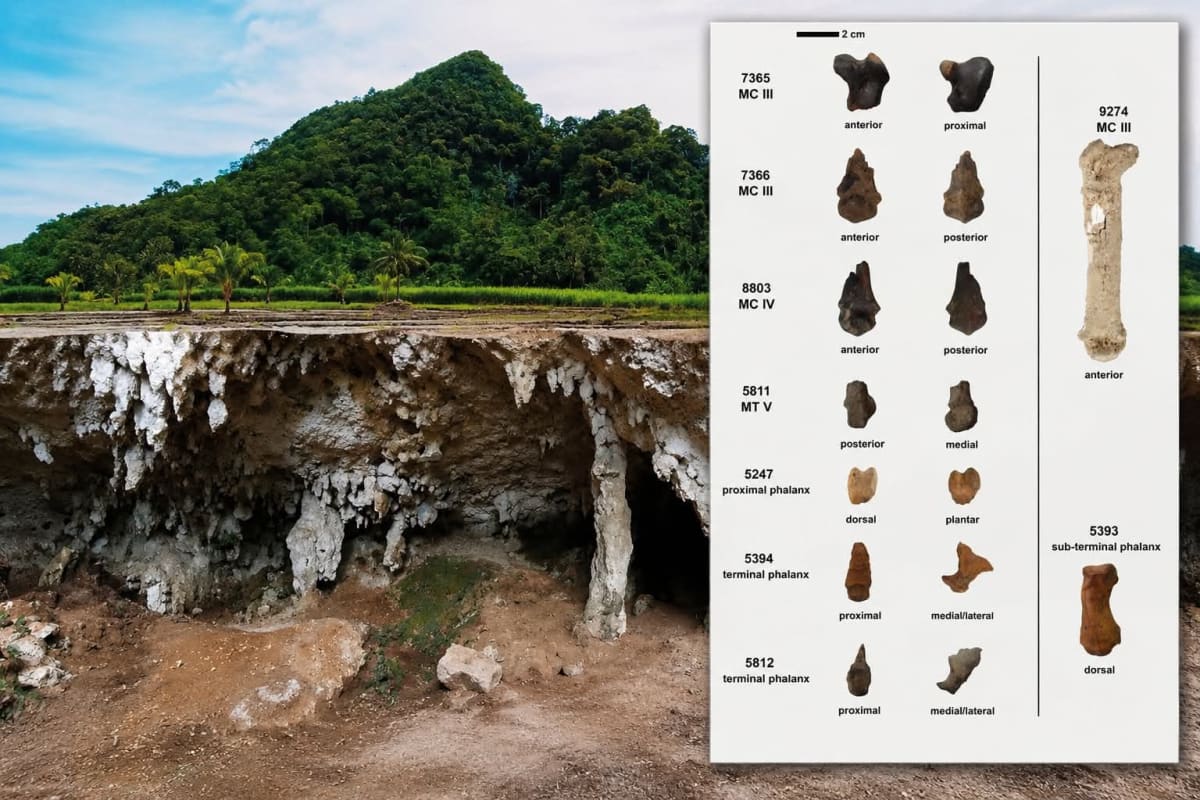
A team led by University of the Philippines archaeologist Janine Ochoa found nine tiger fossil specimens in Pilandok Cave in Quezon, Palawan. The bones date back 20,000 to 24,000 years ago, to a period known as the Last Glacial Maximum when sea levels were much lower than today.
The discovery gets even more fascinating. Three of the tiger foot bones show cut marks made by stone tools, suggesting prehistoric humans hunted or skinned these animals.
The pattern of cuts indicates people may have been removing the tiger's paws or pelt rather than eating the meat. Six bones also showed signs of burning or heat exposure.
This wasn't a one-time encounter either. Researchers found deer bones in the same cave layer with gnaw marks matching a large carnivore, likely from the same tigers whose fossils were discovered nearby.
The Pilandok tigers were smaller than modern continental tigers but larger than today's Sumatran tigers. They belonged to a group called Sunda tigers that adapted to island life in Southeast Asia.
This isn't the first tiger evidence found in Palawan. Three tiger foot bones were previously discovered in nearby Ille Cave, dating back 9,000 to 14,000 years ago.
Why This Inspires
This discovery rewrites what we know about the natural history of the Philippines and shows how ancient communities coexisted with apex predators. During the Ice Age, Palawan sat much closer to Borneo, where tiger fossils have also been found, making it possible for these cats to move between islands.
The researchers believe the selective use of tiger body parts suggests these animals held special meaning for prehistoric people. Tigers may have been seen as symbols of power, woven into the spiritual and social fabric of ancient Palawan communities.
Today, tigers are extinct in the Philippines, but this fossil record proves they once naturally inhabited these islands for over 10,000 years. Understanding this lost chapter of Philippine wildlife history helps scientists piece together how ecosystems and human societies evolved together across Southeast Asia.
The discovery reminds us that our relationship with nature has always been complex, and that the landscapes we know today once teemed with wildlife we can barely imagine.
Based on reporting by Google: fossil discovery
This story was written by BrightWire based on verified news reports.
Spread the positivity!
Share this good news with someone who needs it